THE CLASSIC COLLECTION✦The WesternersCLASSIC FREE BOOKS
The Westerners
Stewart Edward White
THE CLASSIC COLLECTION · 1900
"The Blazed Trail" by Stewart Edward White is a novel written in the early 20th century. This work captures the life of American pioneers, particularly focusing on the logging industry and the challenges faced in the wilderness. The story introduces us to characters such as Harry Thorpe and John Radway, who navigate the harsh realities of woodland life while grappling with their own aspirations and interpersonal relationships. The opening of the novel sets a vivid scene of the ruggedness and beauty of the American wilderness, exploring the archetype of the resourceful pioneer. White describes the American Pioneer as a self-reliant individual, accustomed to tackling the raw powers of nature, which creates a backdrop for the narrative. As the story unfolds, we are introduced to John Radway, a jobber tasked with logging operations, and his interactions with both seasoned woodsmen and other characters who depict the frontier life. The atmosphere is thick with the tension of impending challenges and the camaraderie among the workers, hinting at the adventure and hardships that are sure to come as they navigate their paths through the daunting wilderness.
Introduction adapted from the source catalogue; source summaries may be automatically generated.
Free to read · English · 111,545 words · No account needed
MAKE TIME FOR A GOOD BOOK
On by default. Untick to stop anonymous reading totals. Each page counts after 10 seconds in view. How this works.
Anonymous counting is on unless you have switched it off.
The man was an Indian, silent, solemn, with the straight, unwinking gaze
of his race.
“How do,” replied Thorpe.
The Indian without further ceremony threw his pack to the ground, and, squatting on his heels, watched the white man's preparations. When the meal was cooked, he coolly produced a knife, selected a clean bit of hemlock bark, and helped himself. Then he lit a pipe, and gazed keenly about him. The buckskin interested him.
“No good,” said he, feeling of its texture.
Thorpe laughed. “Not very,” he confessed.
“Good,” continued the Indian, touching lightly his own moccasins.
“What you do?” he inquired after a long silence, punctuated by the puffs
of tobacco.
“Hunt; trap; fish,” replied Thorpe with equal sententiousness.
“Good,” concluded the Indian, after a ruminative pause.
That night he slept on the ground. Next day he made a better shelter than Thorpe's in less than half the time; and was off hunting before the sun was an hour high. He was armed with an old-fashioned smooth-bore muzzle-loader; and Thorpe was astonished, after he had become better acquainted with his new companion's methods, to find that he hunted deer with fine bird shot. The Indian never expected to kill or even mortally wound his game; but he would follow for miles the blood drops caused by his little wounds, until the animals in sheer exhaustion allowed him to approach close enough for a dispatching blow. At two o'clock he returned with a small buck, tied scientifically together for toting, with the waste parts cut away, but every ounce of utility retained.
“I show,” said the Indian:--and he did. Thorpe learned the Indian tan; of what use are the hollow shank bones; how the spinal cord is the toughest, softest, and most pliable sewing-thread known.
The Indian appeared to intend making the birch-knoll his permanent headquarters. Thorpe was at first a little suspicious of his new companion, but the man appeared scrupulously honest, was never intrusive, and even seemed genuinely desirous of teaching the white little tricks of the woods brought to their perfection by the Indian alone. He ended by liking him. The two rarely spoke. They merely sat near each other, and smoked. One evening the Indian suddenly remarked:
“You look 'um tree.”
“What's that?” cried Thorpe, startled.
“You no hunter, no trapper. You look 'um tree, for make 'um lumber.”
The white had not begun as yet his explorations. He did not dare until the return of the logging crew or the passing of someone in authority at the up-river camp, for he wished first to establish in their minds the innocence of his intentions.
“What makes you think that, Charley?” he asked.
Your reading position is saved on this browser. Take it to another device with a library code. Reading pages adapt to text, rather than matching a printed edition.
Stewart Edward White
Stewart Edward White
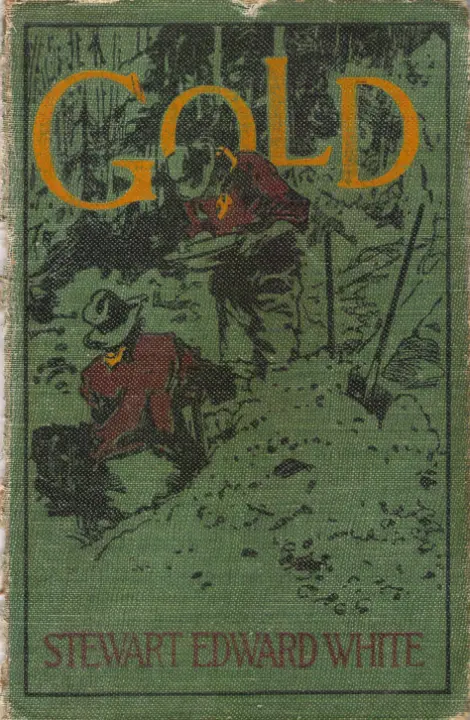
Stewart Edward White
Stewart Edward White
BEHIND THE BOOK
This eBook is for the use of anyone anywhere in the United States and most other parts of the world at no cost and with almost no restrictions whatsoever. You may copy it, give it away or re-use it under the terms of the Project Gutenberg License included with this eBook or online at www.gutenberg.org. If you are not located in the United States, you will have to check the laws of the country where you are located before using this eBook. Read the source licence.
The original source file, including credits and licence, is retained by this library. Request an original-format copy at no charge. Please include the book title and Project Gutenberg identifier #3413.
KEEP YOUR CURIOSITY GOING
Coulson Kernahan

Maurice Baring
Frances Wright
Cécile Tormay

Frederic Jesup Stimson

W. H. P. (William Henry Pope) Jarvis