THE CLASSIC COLLECTION✦The WesternersCLASSIC FREE BOOKS
The Westerners
Stewart Edward White
THE CLASSIC COLLECTION · 1900
"The Blazed Trail" by Stewart Edward White is a novel written in the early 20th century. This work captures the life of American pioneers, particularly focusing on the logging industry and the challenges faced in the wilderness. The story introduces us to characters such as Harry Thorpe and John Radway, who navigate the harsh realities of woodland life while grappling with their own aspirations and interpersonal relationships. The opening of the novel sets a vivid scene of the ruggedness and beauty of the American wilderness, exploring the archetype of the resourceful pioneer. White describes the American Pioneer as a self-reliant individual, accustomed to tackling the raw powers of nature, which creates a backdrop for the narrative. As the story unfolds, we are introduced to John Radway, a jobber tasked with logging operations, and his interactions with both seasoned woodsmen and other characters who depict the frontier life. The atmosphere is thick with the tension of impending challenges and the camaraderie among the workers, hinting at the adventure and hardships that are sure to come as they navigate their paths through the daunting wilderness.
Introduction adapted from the source catalogue; source summaries may be automatically generated.
Free to read · English · 111,545 words · No account needed
MAKE TIME FOR A GOOD BOOK
On by default. Untick to stop anonymous reading totals. Each page counts after 10 seconds in view. How this works.
Anonymous counting is on unless you have switched it off.
He arrived out of breath in a typical little mill town consisting of the usual unpainted houses, the saloons, mill, office, and general store. To the latter he addressed himself for information.
The proprietor, still sleepy, was mopping out the place.
“Does that boat stop here?” shouted Thorpe across the suds.
“Sometimes,” replied the man somnolently.
“Not always?”
“Only when there's freight for her.”
“Doesn't she stop for passengers?”
“Nope.”
“How does she know when there's freight?”
“Oh, they signal her from the mill--” but Thorpe was gone.
At the mill Thorpe dove for the engine room. He knew that elsewhere the clang of machinery and the hurry of business would leave scant attention for him. And besides, from the engine room the signals would be given. He found, as is often the case in north-country sawmills, a Scotchman in charge.
“Does the boat stop here this morning?” he inquired.
“Weel,” replied the engineer with fearful deliberation, “I canna say. But I hae received na orders to that effect.”
“Can't you whistle her in for me?” asked Thorpe.
“I canna,” answered the engineer, promptly enough this time.
“Why not?”
“Ye're na what a body might call freight.”
“No other way out of it?”
“Na.”
Thorpe was seized with an idea.
“Here!” he cried. “See that boulder over there? I want to ship that to Mackinaw City by freight on this boat.”
The Scotchman's eyes twinkled appreciatively.
“I'm dootin' ye hae th' freight-bill from the office,” he objected
simply.
“See here,” replied Thorpe, “I've just got to get that boat. It's worth twenty dollars to me, and I'll square it with the captain. There's your twenty.”
The Scotchman deliberated, looking aslant at the ground and thoughtfully oiling a cylinder with a greasy rag.
“It'll na be a matter of life and death?” he asked hopefully. “She aye stops for life and death.”
“No,” replied Thorpe reluctantly. Then with an explosion, “Yes, by God, it is! If I don't make that boat, I'll kill YOU.”
The Scotchman chuckled and pocketed the money. “I'm dootin' that's in order,” he replied. “I'll no be party to any such proceedin's. I'm goin' noo for a fresh pail of watter,” he remarked, pausing at the door, “but as a wee item of information: yander's th' wheestle rope; and a mon wheestles one short and one long for th' boat.”
He disappeared. Thorpe seized the cord and gave the signal. Then he ran hastily to the end of the long lumber docks, and peered with great eagerness in the direction of the black smoke.
Your reading position is saved on this browser. Take it to another device with a library code. Reading pages adapt to text, rather than matching a printed edition.
Stewart Edward White
Stewart Edward White
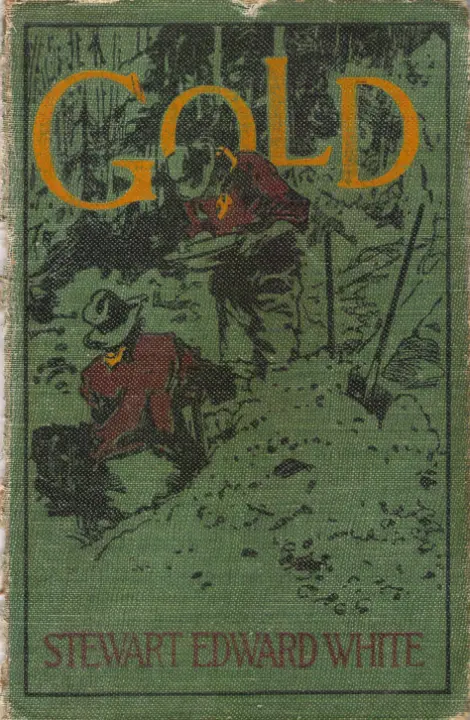
Stewart Edward White
Stewart Edward White
BEHIND THE BOOK
This eBook is for the use of anyone anywhere in the United States and most other parts of the world at no cost and with almost no restrictions whatsoever. You may copy it, give it away or re-use it under the terms of the Project Gutenberg License included with this eBook or online at www.gutenberg.org. If you are not located in the United States, you will have to check the laws of the country where you are located before using this eBook. Read the source licence.
The original source file, including credits and licence, is retained by this library. Request an original-format copy at no charge. Please include the book title and Project Gutenberg identifier #3413.
KEEP YOUR CURIOSITY GOING
Coulson Kernahan

Maurice Baring
Frances Wright
Cécile Tormay

Frederic Jesup Stimson

W. H. P. (William Henry Pope) Jarvis