THE CLASSIC COLLECTION✦The WesternersCLASSIC FREE BOOKS
The Westerners
Stewart Edward White
THE CLASSIC COLLECTION · 1900
"The Blazed Trail" by Stewart Edward White is a novel written in the early 20th century. This work captures the life of American pioneers, particularly focusing on the logging industry and the challenges faced in the wilderness. The story introduces us to characters such as Harry Thorpe and John Radway, who navigate the harsh realities of woodland life while grappling with their own aspirations and interpersonal relationships. The opening of the novel sets a vivid scene of the ruggedness and beauty of the American wilderness, exploring the archetype of the resourceful pioneer. White describes the American Pioneer as a self-reliant individual, accustomed to tackling the raw powers of nature, which creates a backdrop for the narrative. As the story unfolds, we are introduced to John Radway, a jobber tasked with logging operations, and his interactions with both seasoned woodsmen and other characters who depict the frontier life. The atmosphere is thick with the tension of impending challenges and the camaraderie among the workers, hinting at the adventure and hardships that are sure to come as they navigate their paths through the daunting wilderness.
Introduction adapted from the source catalogue; source summaries may be automatically generated.
Free to read · English · 111,545 words · No account needed
MAKE TIME FOR A GOOD BOOK
On by default. Untick to stop anonymous reading totals. Each page counts after 10 seconds in view. How this works.
Anonymous counting is on unless you have switched it off.
At nine o'clock neither of the partners had appeared. Thorpe entered the office and approached the desk.
“Is there a telegram here for Harry Thorpe?” he inquired.
The clerk to whom he addressed himself merely motioned with his head toward a young fellow behind the railing in a corner. The latter, without awaiting the question, shifted comfortably and replied:
“No.”
At the same instant steps were heard in the corridor, the door opened, and Mr. Morrison appeared on the sill. Then Thorpe showed the stuff of which he was made.
“Is this the desk for buying Government lands?” he asked hurriedly.
“Yes,” replied the clerk.
“I have some descriptions I wish to buy in.”
“Very well,” replied the clerk, “what township?”
Thorpe detailed the figures, which he knew by heart, the clerk took from a cabinet the three books containing them, and spread them out on the counter. At this moment the bland voice of Mr. Morrison made itself heard at Thorpe's elbow.
“Good morning, Mr. Smithers,” it said with the deliberation of the consciously great man. “I have a few descriptions I would like to buy in the northern peninsula.”
“Good morning, Mr. Morrison. Archie there will attend to you. Archie, see what Mr. Morrison wishes.”
The lumberman and the other clerk consulted in a low voice, after which the official turned to fumble among the records. Not finding what he wanted, he approached Smithers. A whispered consultation ensued between these two. Then Smithers called:
“Take a seat, Mr. Morrison. This gentleman is looking over these townships, and will have finished in a few minutes.”
Morrison's eye suddenly became uneasy.
“I am somewhat busy this morning,” he objected with a shade of command
in his voice.
“If this gentleman--?” suggested the clerk delicately.
“I am sorry,” put in Thorpe with brevity, “my time, too, is valuable.”
Morrison looked at him sharply.
“My deal is a big one,” he snapped. “I can probably arrange with this gentleman to let him have his farm.”
“I claim precedence,” replied Thorpe calmly.
“Well,” said Morrison swift as light, “I'll tell you, Smithers. I'll leave my list of descriptions and a check with you. Give me a receipt, and mark my lands off after you've finished with this gentleman.”
Now Government and State lands are the property of the man who pays for them. Although the clerk's receipt might not give Morrison a valid claim; nevertheless it would afford basis for a lawsuit. Thorpe saw the trap, and interposed.
Your reading position is saved on this browser. Take it to another device with a library code. Reading pages adapt to text, rather than matching a printed edition.
Stewart Edward White
Stewart Edward White
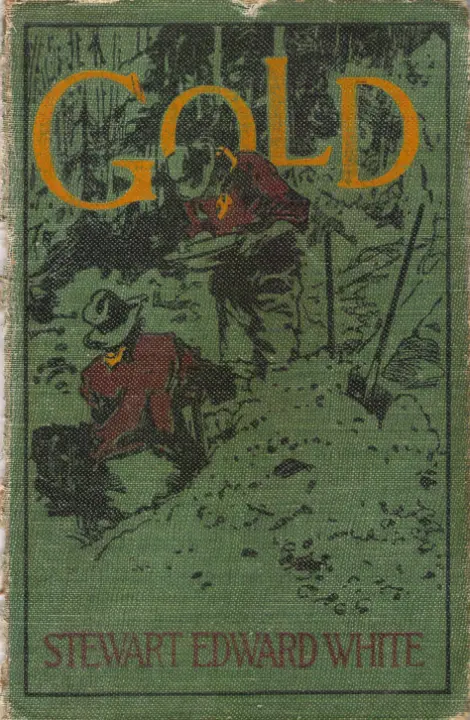
Stewart Edward White
Stewart Edward White
BEHIND THE BOOK
This eBook is for the use of anyone anywhere in the United States and most other parts of the world at no cost and with almost no restrictions whatsoever. You may copy it, give it away or re-use it under the terms of the Project Gutenberg License included with this eBook or online at www.gutenberg.org. If you are not located in the United States, you will have to check the laws of the country where you are located before using this eBook. Read the source licence.
The original source file, including credits and licence, is retained by this library. Request an original-format copy at no charge. Please include the book title and Project Gutenberg identifier #3413.
KEEP YOUR CURIOSITY GOING
Coulson Kernahan

Maurice Baring
Frances Wright
Cécile Tormay

Frederic Jesup Stimson

W. H. P. (William Henry Pope) Jarvis