THE CLASSIC COLLECTION✦The WesternersCLASSIC FREE BOOKS
The Westerners
Stewart Edward White
THE CLASSIC COLLECTION · 1900
"The Blazed Trail" by Stewart Edward White is a novel written in the early 20th century. This work captures the life of American pioneers, particularly focusing on the logging industry and the challenges faced in the wilderness. The story introduces us to characters such as Harry Thorpe and John Radway, who navigate the harsh realities of woodland life while grappling with their own aspirations and interpersonal relationships. The opening of the novel sets a vivid scene of the ruggedness and beauty of the American wilderness, exploring the archetype of the resourceful pioneer. White describes the American Pioneer as a self-reliant individual, accustomed to tackling the raw powers of nature, which creates a backdrop for the narrative. As the story unfolds, we are introduced to John Radway, a jobber tasked with logging operations, and his interactions with both seasoned woodsmen and other characters who depict the frontier life. The atmosphere is thick with the tension of impending challenges and the camaraderie among the workers, hinting at the adventure and hardships that are sure to come as they navigate their paths through the daunting wilderness.
Introduction adapted from the source catalogue; source summaries may be automatically generated.
Free to read · English · 111,545 words · No account needed
MAKE TIME FOR A GOOD BOOK
On by default. Untick to stop anonymous reading totals. Each page counts after 10 seconds in view. How this works.
Anonymous counting is on unless you have switched it off.
The men paired off naturally and fell into a dragging, dogged walk. Thorpe found himself unexpectedly with Big Junko. For a time they plodded on without conversation. Then the big man ventured a remark.
“I'm glad she's over,” said he. “I got a good stake comin'.”
“Yes,” replied Thorpe indifferently.
“I got most six hundred dollars comin',” persisted Junko.
“Might as well be six hundred cents,” commented Thorpe, “it'd make you
just as drunk.”
Big Junko laughed self-consciously but without the slightest resentment.
“That's all right,” said he, “but you betcher life I don't blow this
stake.”
“I've heard that talk before,” shrugged Thorpe.
“Yes, but this is different. I'm goin' to git married on this. How's
THAT?”
Thorpe, his attention struck at last, stared at his companion. He noted the man's little twinkling animal eyes, his high cheek bones, his flat nose, his thick and slobbery lips, his straggling, fierce mustache and eyebrows, his grotesque long-tailed cutaway coat. So to him, too, this primitive man reaching dully from primordial chaos, the great moment had yielded its vision.
“Who is she?” he asked abruptly.
“She used to wash at Camp Four.”
Thorpe dimly remembered the woman now--an overweighted creature with a certain attraction of elfishly blowing hair, with a certain pleasing full-cheeked, full-bosomed health.
The two walked on in re-established silence. Finally the giant, unable to contain himself longer, broke out again.
“I do like that woman,” said he with a quaintly deliberate seriousness. “That's the finest woman in this district.”
Thorpe felt the quick moisture rush to his eyes. There was something inexpressibly touching in those simple words as Big Junko uttered them.
“And when you are married,” he asked, “what are you going to do? Are you going to stay on the river?”
“No, I'm goin' to clear a farm. The woman she says that's the thing to do. I like the river, too. But you bet when Carrie says a thing, that's plenty good enough for Big Junko.”
“Suppose,” suggested Thorpe, irresistibly impelled towards the attempt, “suppose I should offer you two hundred dollars a month to stay on the river. Would you stay?”
“Carrie don't like it,” replied Junko.
“Two hundred dollars is big wages,” persisted Thorpe. “It's twice what I
give Radway.”
“I'd like to ask Carrie.”
“No, take it or leave it now.”
“Well, Carrie says she don't like it,” answered the riverman with a
sigh.
Thorpe looked at his companion fixedly. Somehow the bestial countenance had taken on an attraction of its own. He remembered Big Junko as a wild beast when his passions were aroused, as a man whose honesty had been doubted.
“You've changed, Junko,” said he.
Your reading position is saved on this browser. Take it to another device with a library code. Reading pages adapt to text, rather than matching a printed edition.
Stewart Edward White
Stewart Edward White
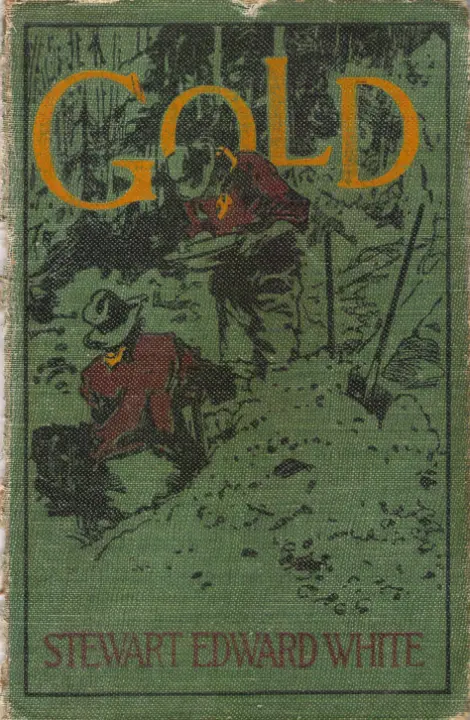
Stewart Edward White
Stewart Edward White
BEHIND THE BOOK
This eBook is for the use of anyone anywhere in the United States and most other parts of the world at no cost and with almost no restrictions whatsoever. You may copy it, give it away or re-use it under the terms of the Project Gutenberg License included with this eBook or online at www.gutenberg.org. If you are not located in the United States, you will have to check the laws of the country where you are located before using this eBook. Read the source licence.
The original source file, including credits and licence, is retained by this library. Request an original-format copy at no charge. Please include the book title and Project Gutenberg identifier #3413.
KEEP YOUR CURIOSITY GOING
Coulson Kernahan

Maurice Baring
Frances Wright
Cécile Tormay

Frederic Jesup Stimson

W. H. P. (William Henry Pope) Jarvis