THE CLASSIC COLLECTION✦The WesternersCLASSIC FREE BOOKS
The Westerners
Stewart Edward White
THE CLASSIC COLLECTION · 1900
"The Blazed Trail" by Stewart Edward White is a novel written in the early 20th century. This work captures the life of American pioneers, particularly focusing on the logging industry and the challenges faced in the wilderness. The story introduces us to characters such as Harry Thorpe and John Radway, who navigate the harsh realities of woodland life while grappling with their own aspirations and interpersonal relationships. The opening of the novel sets a vivid scene of the ruggedness and beauty of the American wilderness, exploring the archetype of the resourceful pioneer. White describes the American Pioneer as a self-reliant individual, accustomed to tackling the raw powers of nature, which creates a backdrop for the narrative. As the story unfolds, we are introduced to John Radway, a jobber tasked with logging operations, and his interactions with both seasoned woodsmen and other characters who depict the frontier life. The atmosphere is thick with the tension of impending challenges and the camaraderie among the workers, hinting at the adventure and hardships that are sure to come as they navigate their paths through the daunting wilderness.
Introduction adapted from the source catalogue; source summaries may be automatically generated.
Free to read · English · 111,545 words · No account needed
MAKE TIME FOR A GOOD BOOK
On by default. Untick to stop anonymous reading totals. Each page counts after 10 seconds in view. How this works.
Anonymous counting is on unless you have switched it off.
Once he took them over to see Camp One. They were immensely pleased, and were correspondingly loud in exclamations. Thorpe's comments were brief and dry. After the noon dinner he had the unfortunate idea of commending the singing of one of the men.
“Oh, I'd like to hear him,” cried Elizabeth Carpenter. “Can't you get him to sing for us, Mr. Thorpe?”
Thorpe went to the men's camp, where he singled out the unfortunate
lumber-jack in question.
“Come on, Archie,” he said. “The ladies want to hear you sing.”
The man objected, refused, pleaded, and finally obeyed what amounted to a command. Thorpe reentered the office with triumph, his victim in tow.
“This is Archie Harris,” he announced heartily. “He's our best singer just now. Take a chair, Archie.”
The man perched on the edge of the chair and looked straight out before
him.
“Do sing for us, won't you, Mr. Harris?” requested Mrs. Cary in her
sweetest tones.
The man said nothing, nor moved a muscle, but turned a brick-red. An embarrassed silence of expectation ensued.
“Hit her up, Archie,” encouraged Thorpe.
“I ain't much in practice no how,” objected the man in a little voice,
without moving.
“I'm sure you'll find us very appreciative,” said Elizabeth Carpenter.
“Give us a song, Archie, let her go,” urged Thorpe impatiently.
“All right,” replied the man very meekly.
Another silence fell. It got to be a little awful. The poor woodsman, pilloried before the regards of this polite circle, out of his element, suffering cruelly, nevertheless made no sign nor movement one way or the other. At last when the situation had almost reached the breaking point of hysteria, he began.
His voice ordinarily was rather a good tenor. Now he pitched it too high; and went on straining at the high notes to the very end. Instead of offering one of the typical woods chanteys, he conceived that before so grand an audience he should give something fancy. He therefore struck into a sentimental song of the cheap music-hall type. There were nine verses, and he drawled through them all, hanging whiningly on the nasal notes in the fashion of the untrained singer. Instead of being a performance typical of the strange woods genius, it was merely an atrocious bit of cheap sentimentalism, badly rendered.
The audience listened politely. When the song was finished it murmured
faint thanks.
“Oh, give us 'Jack Haggerty,' Archie,” urged Thorpe.
But the woodsman rose, nodded his head awkwardly, and made his escape. He entered the men's camp, swearing, and for the remainder of the day made none but blasphemous remarks.
Your reading position is saved on this browser. Take it to another device with a library code. Reading pages adapt to text, rather than matching a printed edition.
Stewart Edward White
Stewart Edward White
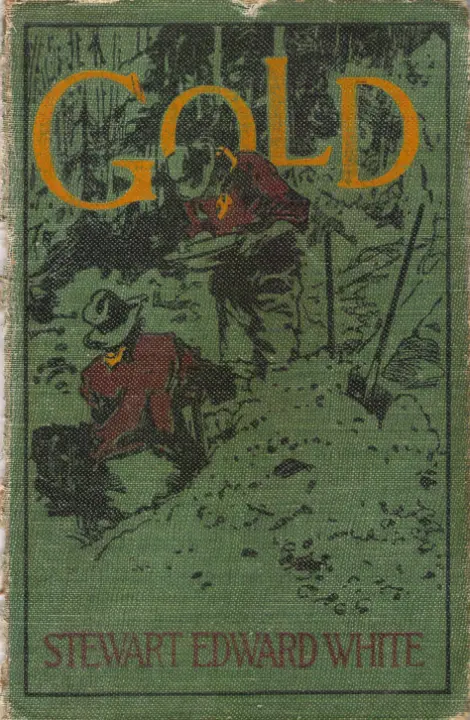
Stewart Edward White
Stewart Edward White
BEHIND THE BOOK
This eBook is for the use of anyone anywhere in the United States and most other parts of the world at no cost and with almost no restrictions whatsoever. You may copy it, give it away or re-use it under the terms of the Project Gutenberg License included with this eBook or online at www.gutenberg.org. If you are not located in the United States, you will have to check the laws of the country where you are located before using this eBook. Read the source licence.
The original source file, including credits and licence, is retained by this library. Request an original-format copy at no charge. Please include the book title and Project Gutenberg identifier #3413.
KEEP YOUR CURIOSITY GOING
Coulson Kernahan

Maurice Baring
Frances Wright
Cécile Tormay

Frederic Jesup Stimson

W. H. P. (William Henry Pope) Jarvis