THE CLASSIC COLLECTION✦The Pentateuch of printingCLASSIC FREE BOOKS
The Pentateuch of printing
William Blades
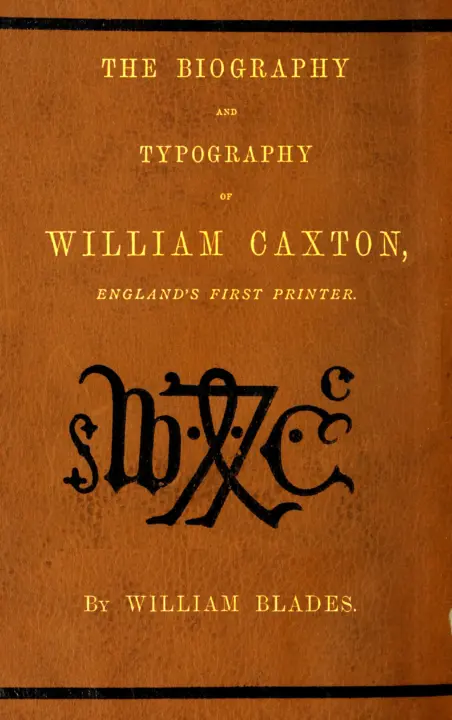
THE CLASSIC COLLECTION · 1861
"The biography and typography of William Caxton, England's first printer" by Blades is a historical and bibliographical study written in the late 19th century. It charts Caxton’s life and career alongside a meticulous analysis of his printed output, types, devices, and working methods, situating him within the rise of printing in England and the Low Countries. Drawing on company records, embassies, and court circles, it follows Caxton from Kentish origins through mercantile Bruges to Westminster, while also cataloguing his editions and discussing their rarity and features.
The opening of the volume sets the scope: a revised reprint that condenses earlier scholarship and adds notes on Caxton’s printer’s device and punctuation, while underscoring printing’s civilizational impact. It then outlines the plan—first a documentary life of Caxton, then detailed descriptions of his books by type, with appendices from Mercers’ and Bruges records. The narrative begins with Caxton’s birth in the Weald of Kent amid strong Flemish influence, a dialect anecdote about “eyren/eggs,” and a sober weighing of name variants to suggest a likely Causton connection. It proceeds to his 1438 apprenticeship to the wealthy mercer Robert Large, depicting London apprentice life, Large’s household and will, and vivid city scenes—dearth, pageantry, religious persecution, and civic unrest—culminating in Caxton’s departure abroad. In Bruges he emerges as a prosperous merchant, then Governor of the English Nation (Merchant Adventurers), mediating trade disputes, enforcing measures, and corresponding with London while treaties lapsed and were renewed; he begins translating the Recuyell under Duchess Margaret’s patronage and likely moves toward printing with Colard Mansion. A broad survey follows of 15th‑century bibliophilia—royal and ducal libraries in France and Burgundy, Louis de Bruges’s collection, English patrons—and of the book trades’ guild structure at Bruges and Antwerp. Finally, an initial technical chapter contrasts manuscripts and early print, explaining materials, binding habits, blank leaves, one‑page printing, signatures, hand‑painted initials, undated colophons, and typeforms that closely imitated contemporary handwriting.
Introduction adapted from the source catalogue; source summaries may be automatically generated.
Free to read · English · 119,581 words · No account needed
MAKE TIME FOR A GOOD BOOK
On by default. Untick to stop anonymous reading totals. Each page counts after 10 seconds in view. How this works.
Anonymous counting is on unless you have switched it off.
┌───────────────┬──────────────────────────┬─────────────────────────────┐ │ DATES. │ TRANSLATION. │ PRINTING. │ ├───────────────┼──────────────────────────┼─────────────────────────────┤ │ 1477--Nov. 18 │ │ Dictes, 1st edition (e) │ │ 1478--Feb. 20 │ │ Moral Proverbs (e) │ │ 1479--Feb. 3 │ │ Cordyale (b) │ │ Mar. 24 │ │ Cordyale (e) │ │ 1480--Apr. 22 │ Ovid, 15th Book (e) │ │ │ June 10 │ │ Chronicles, 1st edit. (e) │ │ Aug. 18 │ │ Description, 1st ed. (e) │ │ 1481--Jan. 2 │ Mirrour, 1st edit. (b) │ │ │ Mar. 8 │ Mirrour, 1st edit. (e) │ │ │ Mar. 12 │ Godfrey (b) │ │ │ June 6 │ Reynart, 1st edit. (e) │ │ │ June 7 │ Godfrey (e) │ │ │ Aug. 12 │ │ Tully (e) │ │ Nov. 20 │ │ Godfrey (e) │ │ 1482--July 2 │ Polycronicon (e) │ │ │ Oct. 8 │ │ Chronicles, 2nd ed .(e) │ │ 1483--June 1 │ Knight of the Toure (e)│ │ │ ” │ Æsop (e) │ │ │ June 6 │ │ Pylgremage (e) │ │ June 30 │ │ Festival (e) │ │ Sep. 2 │ │ Confessio (e) │ │ Nov. 20 │ │ Golden Legend (e) │ │ Dec. 23 │ Caton (e) │ │ │ 1484--Jan. 31 │ │ Knight of the Toure (e) │ │ Mar. 26 │ │ Æsop (e) │ │ ” │ │ Order of Chivalry (e) │ │ Sep. 13 │ Ryal Book (e) │ │ │ 1485--June 18 │ Charles (e) │ │ │ July 31 │ │ King Arthur (e) │ │ │ │ │ │ Aug. 31 │ Paris and Vienne (e) │ │ │ Dec. 1 │ │ Charles (e) │ │ Dec. 19 │ │ Paris and Vienne (e) │ │ 1486--June 8 │ Good Manners (e) │ │ │ 1487--May 11 │ │ Good Manners (e) │ │ 1489--Jan. 23 │ Fayts (b) │ │ │ May 7 │ Doctrinal (e) │ │ │ July 8 │ Fayts (e) │ │ │ ” │ │ Directorium, 2nd ed. (e) │ │ 1490--June 15 │ Art and Craft (e) │ │ │ June 22 │ Eneydos (e) │ │ │ July 14 │ │ Fayts (e) │ └───────────────┴──────────────────────────┴─────────────────────────────┘ (b) means begun. (e) means ended.
The same table shows that Caxton took ten weeks for the translation of the “Mirrour of the World,” containing 198 pages; twelve weeks for “Godefroy of Bologne,” 284 pages; and nearly six months for “Fayts of Arms,” 286 pages. The period occupied in printing “Cordyale,” 152 pages, was only seven weeks, whilst “Godfrey,” supposing the printing immediately to follow the completion of the translation, took nearly six months. The “Knight of the Tower,” 208 pages, required eight months; “Charles the Great,” 188 pages, five and a half months; “Paris and Vienne,” 70 pages, three and a half months; “Good Manners,” 132 pages, eleven months; and “Fayts of Arms,” 286 pages, more than a year.
Caxton’s own translations made in this country were The Whole Life of Jason; the Mirror of the World; Reynart the Fox; Godfrey of Bulloyn; the Golden Legend; the book called Caton; the Knight of the Tower; Æsop’s Fables; the Order of Chivalry; the Royal Book; the Life of Charles the Great; the History of the Knight Paris and the Fair Vienne; the Book of Good Manners; the Doctrinal of Sapience; the Fayts of Arms; the Art and Craft to Die Well; Eneydos; the Curial; the Life of St. Winifred; Blanchardin and Eglantine; the Four Sons of Aymon; and the Gouvernayle of Health. These contain more than 4,500 printed pages. The total produce of his press, excluding the books printed at Bruges, reaches to above 18,000 pages, nearly all of folio size. These figures speak more forcibly than any argument for the great industry and perseverance of Caxton; and to this list must be added the translation of the “Vitæ Patrum,” which he finished only a few hours before his death, but did not live to print.
Your reading position is saved on this browser. Take it to another device with a library code. Reading pages adapt to text, rather than matching a printed edition.
William Blades
William Blades
William Blades
BEHIND THE BOOK
This eBook is for the use of anyone anywhere in the United States and most other parts of the world at no cost and with almost no restrictions whatsoever. You may copy it, give it away or re-use it under the terms of the Project Gutenberg License included with this eBook or online at www.gutenberg.org. If you are not located in the United States, you will have to check the laws of the country where you are located before using this eBook. Read the source licence.
The original source file, including credits and licence, is retained by this library. Request an original-format copy at no charge. Please include the book title and Project Gutenberg identifier #78654.
KEEP YOUR CURIOSITY GOING
Cécile Tormay

Moritz Busch
John L. Ransom
Frances Wright
Cécile Tormay

Mabel Potter Daggett