THE CLASSIC COLLECTION✦Little Guzzy, and other storiesCLASSIC FREE BOOKS
Little Guzzy, and other stories
John Habberton
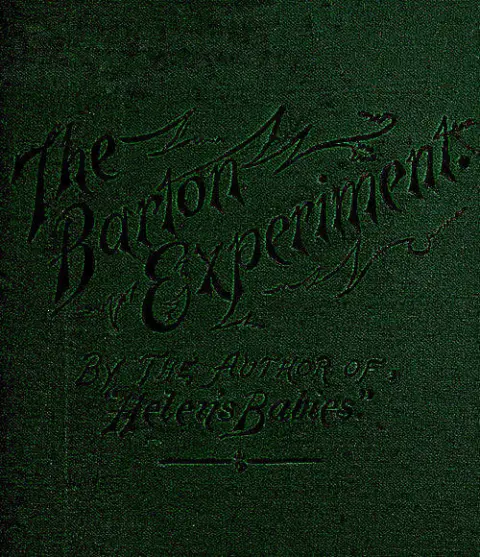
THE CLASSIC COLLECTION · 1877
"The Barton Experiment" by John Habberton is a novel written in the late 19th century. The book primarily explores themes related to temperance and social reform in a small American town called Barton, focusing on various characters who struggle with issues of alcohol addiction, community dynamics, and personal morality. Through the lens of reformers and everyday individuals, it delves into the complexities of human behavior and societal expectations. The opening of the novel sets the stage for a significant temperance meeting in Barton, organized to address the rampant alcohol consumption in the community. As the townspeople gather at the Methodist Church, they are introduced to a rich cast of characters, including the influential Major Ben Bailey who is poised to speak against alcohol, as well as Squire Tomple, who embodies the tension between business interests and moral activism. The atmosphere is charged with excitement and hope, but underlying currents of doubt about the efficacy of these reform efforts also begin to surface—particularly through the perspectives of individuals like George Doughty and the former rum-seller, Mr. Crupp. This juxtaposition highlights the struggle between idealism and realism within the movement, setting the foundation for the characters’ journeys throughout the novel.
Introduction adapted from the source catalogue; source summaries may be automatically generated.
Free to read · English · 41,026 words · No account needed
MAKE TIME FOR A GOOD BOOK
On by default. Untick to stop anonymous reading totals. Each page counts after 10 seconds in view. How this works.
Anonymous counting is on unless you have switched it off.
“You’re not sinkin’, old man--Jerry, dear; you’re gittin’ up. Keep
up, Jerry.”
“I’ll be all right in a day or two, Mariar, if I only get a taste. You don’t want a sick man a-layin’ around, not fit to do for his young ones?”
“You don’t need to, Jerry. I’ll do for ’em, if you’ll only--only make ’em proud of you.”
“It’ll make me good for more to you, old woman--one single mouthful will,” said Tappelmine.
“You’ve been better to me these three weeks than you ever was before, Jerry; keep on bein’ so, won’t you? It puts me in mind of old times--times when you used to laugh, an’ kiss me.”
“I’d be that way again,” said Tappelmine, “if I could only pick up
stren’th.”
“You’re that way now, Jerry, if you only stay as you are.”
“You’ll die, Mariar,” said the man, “if I don’t get out of this bed some way--you an’ the young uns.”
“I’d be glad enough,” said the woman, “if you’d only stay, Jerry.”
“An’ the boys an’ girls?” queried Tappelmine.
“Would be better off alongside of me in the ground, rather than have their dad go backwards again,” said Mrs. Tappelmine. “People turn up their noses at ’em now, Jerry.”
“What are you drivin’ at, Mariar?”
“Why, Jerry, when the children go ’long the road--God knows I don’t let ’em do it oftener than I can help--folks see ’em dirty, an’ wearin’ poor clothes, an’ not lookin’ over an’ above fed up, an’ they can’t help kind o’ twitchin’ up their faces at ’em once there was a time when I couldn’t have helped doin’ it to young ones lookin’ that way.”
“Curse people!” exclaimed Tappelmine.
“They do it to me, too,” continued the woman.
Tappelmine sprang up, and exclaimed fiercely,
“What for?”
“’Cause--’cause you’ve made ’em, I reckon, Jerry,” answered Mrs. Tappelmine with some difficulty, occasioned by some choking sobs which nearly took exclusive possession of her. “You know, Jerry, I don’t say it to complain--complainin’ never seems to bring one any good to a woman like me; but--if you only knowed how folks look at me in--in stores, an’ everywhere else, you--wouldn’t blame me for not likin’ it. I didn’t ever do anything to bring it about, unless ’twas in marryin’ you, and I ain’t sorry I did that; but I wish I didn’t ever have to see anybody again, if you’re goin’ to keep on drinkin’.”
The sick man fell back and was silent; his wife threw herself beside
him, crying,
Your reading position is saved on this browser. Take it to another device with a library code. Reading pages adapt to text, rather than matching a printed edition.
John Habberton
John Habberton
John Habberton
John Habberton
BEHIND THE BOOK
This eBook is for the use of anyone anywhere in the United States and most other parts of the world at no cost and with almost no restrictions whatsoever. You may copy it, give it away or re-use it under the terms of the Project Gutenberg License included with this eBook or online at www.gutenberg.org. If you are not located in the United States, you will have to check the laws of the country where you are located before using this eBook. Read the source licence.
The original source file, including credits and licence, is retained by this library. Request an original-format copy at no charge. Please include the book title and Project Gutenberg identifier #53031.
KEEP YOUR CURIOSITY GOING
Coulson Kernahan

Maurice Baring
Frances Wright
Cécile Tormay

Frederic Jesup Stimson

W. H. P. (William Henry Pope) Jarvis