THE CLASSIC COLLECTION✦Little Guzzy, and other storiesCLASSIC FREE BOOKS
Little Guzzy, and other stories
John Habberton
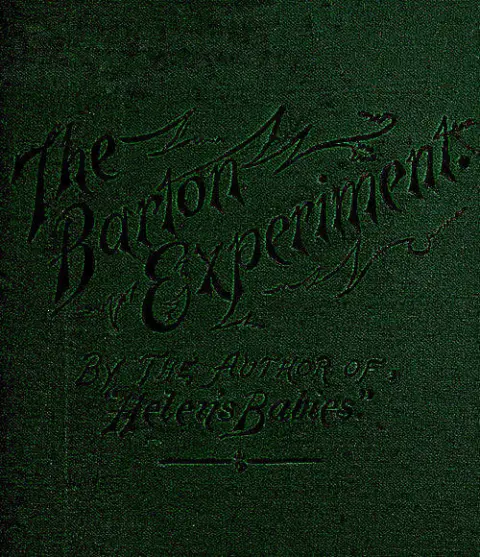
THE CLASSIC COLLECTION · 1877
"The Barton Experiment" by John Habberton is a novel written in the late 19th century. The book primarily explores themes related to temperance and social reform in a small American town called Barton, focusing on various characters who struggle with issues of alcohol addiction, community dynamics, and personal morality. Through the lens of reformers and everyday individuals, it delves into the complexities of human behavior and societal expectations. The opening of the novel sets the stage for a significant temperance meeting in Barton, organized to address the rampant alcohol consumption in the community. As the townspeople gather at the Methodist Church, they are introduced to a rich cast of characters, including the influential Major Ben Bailey who is poised to speak against alcohol, as well as Squire Tomple, who embodies the tension between business interests and moral activism. The atmosphere is charged with excitement and hope, but underlying currents of doubt about the efficacy of these reform efforts also begin to surface—particularly through the perspectives of individuals like George Doughty and the former rum-seller, Mr. Crupp. This juxtaposition highlights the struggle between idealism and realism within the movement, setting the foundation for the characters’ journeys throughout the novel.
Introduction adapted from the source catalogue; source summaries may be automatically generated.
Free to read · English · 41,026 words · No account needed
MAKE TIME FOR A GOOD BOOK
On by default. Untick to stop anonymous reading totals. Each page counts after 10 seconds in view. How this works.
Anonymous counting is on unless you have switched it off.
The postmaster slyly tipped a grave wink at Lawyer Bottom, and the lawyer sagely laid a wise forefinger athwart his own nose. Dr. White dropped a short bark, intended for a cough, which somehow provoked a smile all around. Suddenly a small boy rushed into the store, exclaiming,
“O Deacon Jones! Tom Adams fell out of the wagon and broke his leg!”
The deacon’s ecstatic expression instantly vanished into thin air, and he asked, with a face full of misery,
“And the horses ran away?”
“No,” said the boy. “They’re all right.”
Dr. White sprang up, seized his cane, and asked, “Where is he?”
“That’s so,” asked the deacon, still more sorrowful of countenance, as he continued, “just as corn’s beginnin’ to come in, too, an’ needin’ to be measured an’ sacked; that’s just the way things go in this wicked world!”
Lawyer Bottom, who did not believe much in God, and believed still less
in the deacon, asked,
“Well, deacon, then you wouldn’t advise me to take somebody on my hands for the sake of the spiritual payment I’ll be likely to get out of the operation?”
The deacon rallied himself by a tremendous effort, but his countenance did not indicate that the answer he was about to make would be of that softness that turns away wrath; he was saved from disgracing himself, however, by still another boy, who came flying through the main street on horseback, shouting,
“Fire! fire! The woolen mill! Fire!”
The deacon’s store emptied in an instant of every one but Parson Brown, for all the other listeners were men of some means, and stockholders in the mill.
“Here!” shouted the deacon, cutting the cords of a “nest” of pails; “take buckets along with you; like enough it’ll need everybody’s help, and the mill’s only half insured, too! Parson, would you mind sittin’ here until my boy gets back? I’m losin’ enough to-day without having to shut up store, too.”
“Certainly, I’ll stay,” said the old preacher, limping to the front of the store, and laying his hand on the shoulder of the troubled storekeeper; “but, Brother Jones, if the light of that burning mill should show you anything inside of yourself, don’t cover your eyes. It’s for righteousness’ sake I ask it.”
Your reading position is saved on this browser. Take it to another device with a library code. Reading pages adapt to text, rather than matching a printed edition.
John Habberton
John Habberton
John Habberton
John Habberton
BEHIND THE BOOK
This eBook is for the use of anyone anywhere in the United States and most other parts of the world at no cost and with almost no restrictions whatsoever. You may copy it, give it away or re-use it under the terms of the Project Gutenberg License included with this eBook or online at www.gutenberg.org. If you are not located in the United States, you will have to check the laws of the country where you are located before using this eBook. Read the source licence.
The original source file, including credits and licence, is retained by this library. Request an original-format copy at no charge. Please include the book title and Project Gutenberg identifier #53031.
KEEP YOUR CURIOSITY GOING
Coulson Kernahan

Maurice Baring
Frances Wright
Cécile Tormay

Frederic Jesup Stimson

W. H. P. (William Henry Pope) Jarvis