THE CLASSIC COLLECTION✦Little Guzzy, and other storiesCLASSIC FREE BOOKS
Little Guzzy, and other stories
John Habberton
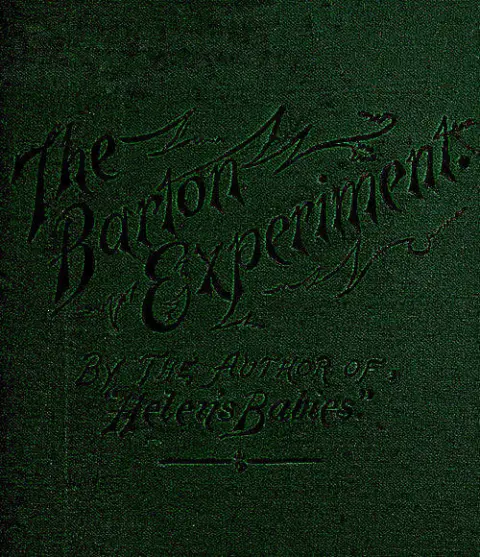
THE CLASSIC COLLECTION · 1877
"The Barton Experiment" by John Habberton is a novel written in the late 19th century. The book primarily explores themes related to temperance and social reform in a small American town called Barton, focusing on various characters who struggle with issues of alcohol addiction, community dynamics, and personal morality. Through the lens of reformers and everyday individuals, it delves into the complexities of human behavior and societal expectations. The opening of the novel sets the stage for a significant temperance meeting in Barton, organized to address the rampant alcohol consumption in the community. As the townspeople gather at the Methodist Church, they are introduced to a rich cast of characters, including the influential Major Ben Bailey who is poised to speak against alcohol, as well as Squire Tomple, who embodies the tension between business interests and moral activism. The atmosphere is charged with excitement and hope, but underlying currents of doubt about the efficacy of these reform efforts also begin to surface—particularly through the perspectives of individuals like George Doughty and the former rum-seller, Mr. Crupp. This juxtaposition highlights the struggle between idealism and realism within the movement, setting the foundation for the characters’ journeys throughout the novel.
Introduction adapted from the source catalogue; source summaries may be automatically generated.
Free to read · English · 41,026 words · No account needed
MAKE TIME FOR A GOOD BOOK
On by default. Untick to stop anonymous reading totals. Each page counts after 10 seconds in view. How this works.
Anonymous counting is on unless you have switched it off.
“Look here, now, young man,” said the captain, “you’re cracking on too much steam. Honestly, Fred, I’ve kept a sharp eye on you for two or three months, and I am right glad you can let whiskey alone. I’ve seen times when I wished I were in your boots; but steamboats can’t be run without liquor, however it may be with woolen mills.”
“That’s all nonsense,” said Fred. “You get trade because you run your boat on time, charge fair prices, and deliver your freight in good order. Who gives you business because you drink and treat?”
The captain, being unable to recall any shipper of the class alluded to by Fred, changed his course.
“’Tisn’t so much that,” said he; “it’s a question of reputation. How would I feel to go ashore at Pittsburg or Louisville or Cincinnati, and refuse to drink with anybody? Why, ’twould ruin me. It’s different with you who don’t have to meet anybody but religious old farmers. Besides, you’ve just been married.”
“And you’ve been married for five years,” said Fred, with a sudden sense of help at hand. “How do you suppose your wife feels?”
Captain Crayme’s jollity subsided a little, but with only a little
hesitation he replied,
“Oh! she’s used to it; she doesn’t mind it.”
“You’re the only person in town that thinks so, Sam,” said Fred.
Captain Crayme got up and paced his little state-room two or three times, with a face full of uncertainty. At last he replied,
“Well, between old friends, Fred, I don’t think so very strongly myself. Hang it! I wish I’d been brought up a preacher, or something of the kind, so I wouldn’t have had business ruining my chances of being the right sort of a family man. Emily don’t like my drinking, and I’ve promised to look up some other business; but ’tisn’t easy to get out of steamboating when you’ve got a good boat and a first-rate trade. Once she felt so awfully about it that I did swear off--don’t tell anybody, for God’s sake! but I did. I had to look out for my character along the river, though; so I swore off on the sly, and played sick. I’d give my orders to the mates and clerks from my bed in here, and then I’d lock myself in, and read novels and the Bible to keep from thinking. ’Twas awful dry work all around; but ‘whole hog or none’ is my style, you know. There was fun in it, though, to think of doing something that no other captain on the river ever did. But, thunder! by the time night came, I was so tired of loafing that I wrapped a blanket around my head and shoulders, like a Hoosier, sneaked out the outer door here, and walked the guards, between towns; but I was so frightened for fear some one would know me that the walk did me more harm than good. And blue! why a whole cargo of indigo would have looked like a snow-storm alongside of my feelings the second day; ’pon my word, Fred, I caught myself crying in the afternoon, just before dark, and I couldn’t find out what for either. I tell you, I was scared, and things got worse as time spun along; the dreams I had that night made me howl, and I felt worse yet when daylight came along again. Toward the next night I was just afraid to go to sleep; so I made up my mind to get well, go on duty, and dodge everybody that it seemed I ought to drink with. Why, the Lord bless your soul! the first time we shoved off from a town, I walked up to the bar, just as I always did after leaving towns; the barkeeper set out my particular bottle naturally enough, knowing nothing about my little game; I poured my couple of fingers, and dropped it down as innocent as a lamb before I knew what I was doing. By George! my boy, ’twas like opening lock-gates; I was just heavenly gay before morning. There was one good thing about it, though--I never told Emily I was going to swear off; I was going to surprise her, so I had the disappointment all to myself. Maybe she isn’t as happy as your wife; but, whatever else I’ve done, or not done, I’ve never lied to her.”
Your reading position is saved on this browser. Take it to another device with a library code. Reading pages adapt to text, rather than matching a printed edition.
John Habberton
John Habberton
John Habberton
John Habberton
BEHIND THE BOOK
This eBook is for the use of anyone anywhere in the United States and most other parts of the world at no cost and with almost no restrictions whatsoever. You may copy it, give it away or re-use it under the terms of the Project Gutenberg License included with this eBook or online at www.gutenberg.org. If you are not located in the United States, you will have to check the laws of the country where you are located before using this eBook. Read the source licence.
The original source file, including credits and licence, is retained by this library. Request an original-format copy at no charge. Please include the book title and Project Gutenberg identifier #53031.
KEEP YOUR CURIOSITY GOING
Coulson Kernahan

Maurice Baring
Frances Wright
Cécile Tormay

Frederic Jesup Stimson

W. H. P. (William Henry Pope) Jarvis