
Life of Edwin Forrest, the American Tragedian. Volume 2 (of 2)
William Rounseville Alger & Horatio, Jr. Alger
THE CLASSIC COLLECTION · 1883
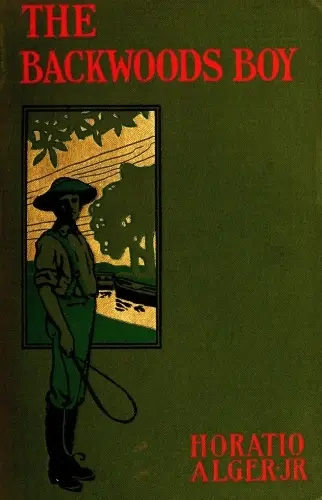
"The Backwoods Boy; or, The Boyhood and Manhood of Abraham Lincoln" by Horatio Alger, Jr. is a biographical account written in the late 19th century. This work chronicles the early life of Abraham Lincoln, detailing his humble beginnings and the formative years that shaped him into one of America's most revered leaders. The narrative focuses on Lincoln's character development and the circumstances surrounding his youth, providing insights into his upbringing in a log cabin, family dynamics, and the challenges he faced. The opening of the book introduces readers to young Abe Lincoln and his siblings standing outside their log cabin in Indiana, just before the arrival of their new stepmother. Through lively dialogue, Alger establishes the personality of Abe as a resilient and humorous boy who navigates the complexities of family life following their mother's death. The initial chapter sets the stage for Lincoln's understanding of hard work and education, as his new mother inspires him to seek knowledge amidst their rustic living conditions. This early glimpse into Lincoln's family life highlights significant themes of curiosity, responsibility, and the profound impact of parental figures during formative years.
Introduction adapted from the source catalogue; source summaries may be automatically generated.
Free to read · English · 56,690 words · No account needed
MAKE TIME FOR A GOOD BOOK
On by default. Untick to stop anonymous reading totals. Each page counts after 10 seconds in view. How this works.
Anonymous counting is on unless you have switched it off.
“I therefore consider that, in view of the Constitution and the laws, the Union is unbroken, and, to the extent of my ability, I shall take care, as the Constitution itself expressly enjoins upon me, that the laws of the Union shall be faithfully executed in all the States. Doing this, which I deem to be only a simple duty on my part, I shall perfectly perform it, so far as is practicable, unless my rightful masters, the American people, shall withhold the requisition, or in some authoritative manner direct the contrary.
“I trust this will not be regarded as a menace, but only as the declared purpose of the Union, that it will constitutionally defend and maintain itself.”
After arguing at some length against separation, Mr. Lincoln closes his address with an appeal to his fellow-citizens:
“My countrymen, one and all, think calmly and well upon this whole subject. Nothing valuable can be lost by taking time.
“If there be an object to hurry any of you, in hot haste, to a step which you would never take deliberately, that object will be frustrated by taking time; but no good object can be frustrated by it.
“Such of you as are now dissatisfied still have the old Constitution unimpaired, and, on the sensitive point, the laws of your own framing, under it; while the new administration will have no immediate power, if it would, to change either.
“If it were admitted that you who are dissatisfied hold the right side in the dispute, there is still no single reason for precipitate action. Intelligence, patriotism, Christianity, and a firm reliance on Him who has never yet forsaken this favored land, are still competent to adjust, in the best way, all our present difficulties.
“In your hands, my dissatisfied fellow-countrymen, and not in mine, is the momentous issue of civil war. The Government will not assail you.
“You can have no conflict without being yourselves the aggressors. You have no oath registered in heaven to destroy the Government, while I shall have the most solemn one to ‘preserve, protect, and defend’ it.
“I am loth to close. We are not enemies, but friends. We must not be enemies. Though passion may have strained, it must not break our bonds of affection.
“The mystic chords of memory, stretching from every battle-field and patriotic grave to every living heart and hearthstone all over this broad land, will yet swell the chorus of the Union, when again touched, as surely they will be, by the better angels of our nature.”
Your reading position is saved on this browser. Take it to another device with a library code. Reading pages adapt to text, rather than matching a printed edition.
William Rounseville Alger & Horatio, Jr. Alger

William Rounseville Alger & Horatio, Jr. Alger

Horatio, Jr. Alger

Horatio, Jr. Alger
BEHIND THE BOOK
This eBook is for the use of anyone anywhere in the United States and most other parts of the world at no cost and with almost no restrictions whatsoever. You may copy it, give it away or re-use it under the terms of the Project Gutenberg License included with this eBook or online at www.gutenberg.org. If you are not located in the United States, you will have to check the laws of the country where you are located before using this eBook. Read the source licence.
The original source file, including credits and licence, is retained by this library. Request an original-format copy at no charge. Please include the book title and Project Gutenberg identifier #52073.
KEEP YOUR CURIOSITY GOING

Abby Morton Diaz
Helen Hunt Jackson
Mary Frances Blaisdell
Stuart Dodgson Collingwood

Kate Douglas Smith Wiggin
Hesba Stretton