
Life of Edwin Forrest, the American Tragedian. Volume 2 (of 2)
William Rounseville Alger & Horatio, Jr. Alger
THE CLASSIC COLLECTION · 1883
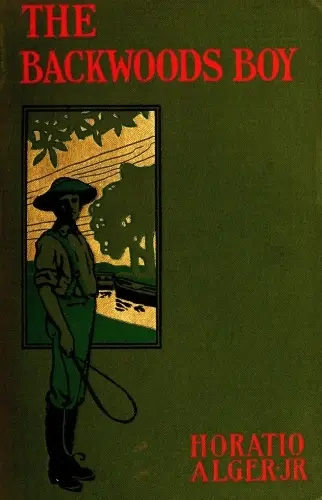
"The Backwoods Boy; or, The Boyhood and Manhood of Abraham Lincoln" by Horatio Alger, Jr. is a biographical account written in the late 19th century. This work chronicles the early life of Abraham Lincoln, detailing his humble beginnings and the formative years that shaped him into one of America's most revered leaders. The narrative focuses on Lincoln's character development and the circumstances surrounding his youth, providing insights into his upbringing in a log cabin, family dynamics, and the challenges he faced. The opening of the book introduces readers to young Abe Lincoln and his siblings standing outside their log cabin in Indiana, just before the arrival of their new stepmother. Through lively dialogue, Alger establishes the personality of Abe as a resilient and humorous boy who navigates the complexities of family life following their mother's death. The initial chapter sets the stage for Lincoln's understanding of hard work and education, as his new mother inspires him to seek knowledge amidst their rustic living conditions. This early glimpse into Lincoln's family life highlights significant themes of curiosity, responsibility, and the profound impact of parental figures during formative years.
Introduction adapted from the source catalogue; source summaries may be automatically generated.
Free to read · English · 56,690 words · No account needed
MAKE TIME FOR A GOOD BOOK
On by default. Untick to stop anonymous reading totals. Each page counts after 10 seconds in view. How this works.
Anonymous counting is on unless you have switched it off.
Young Lincoln’s successful trip to New Orleans led to his engagement for a similar trip in the early part of 1831. With him were associated John Hanks and John Johnston. Their employer was a Mr. Denton Offutt, of Lexington, Kentucky, and a part of the cargo consisted of a drove of hogs. Each of the three was to be paid at the rate of fifty cents per day, and the round sum of sixty dollars divided between them. Abe considered this very good pay, and was very glad to make the engagement. The three young men not only managed the boat, but built it, and this retarded the expedition. We read with some interest that while they were boarding themselves at Sangamontown, while building the boat, Abe officiated as cook to the entire satisfaction of his associates.
“At New Orleans,” says John Hanks, “we saw negroes chained, maltreated, whipped, and scourged. Lincoln saw it; his heart bled, he said nothing much, was silent from feeling, was sad, looked bad, felt bad, was thoughtful and abstracted. I can say, knowing it, that it was on this trip that he formed his opinions of slavery. It run its iron in him then and there,--May, 1831. I have heard him say so often and often.”
One day, soon after his return from his second river trip, Abe received a visit from a muscular, powerfully-built man, who accosted him thus: “You are Abe Lincoln, I reckon?”
“Yes,” said Abe; “you are right there.”
“I’ve heard you can wrestle some,” continued the stranger.
“A little,” answered young Lincoln, modestly.
“I’ve come to wrestle with you to see who’s the best man. My name’s
Daniel Needham.”
The stranger announced his name with evident pride, and young Lincoln recognized it as that of a man who had a high reputation as an amateur pugilist.
“I’m glad to know you,” said Lincoln, “and I don’t mind accepting your
challenge.”
Abe valued his popularity among the boys, and, though he did not feel sure of the result, he felt that it would not do to back out. He would lose his reputation, which was considerable.
“Where shall it be?” asked Needham.
“Just where and when you like,” answered Abe, promptly.
So the meeting was fixed in the “greenwood” at Wabash Point, and there it was that the two met in friendly rivalry.
Though Daniel Needham was older and more firmly knit, Lincoln was sinewy and strong, and his superior height, and long arms and legs gave him a great advantage--sufficient to compensate for his youth and spareness.
Your reading position is saved on this browser. Take it to another device with a library code. Reading pages adapt to text, rather than matching a printed edition.
William Rounseville Alger & Horatio, Jr. Alger

William Rounseville Alger & Horatio, Jr. Alger

Horatio, Jr. Alger

Horatio, Jr. Alger
BEHIND THE BOOK
This eBook is for the use of anyone anywhere in the United States and most other parts of the world at no cost and with almost no restrictions whatsoever. You may copy it, give it away or re-use it under the terms of the Project Gutenberg License included with this eBook or online at www.gutenberg.org. If you are not located in the United States, you will have to check the laws of the country where you are located before using this eBook. Read the source licence.
The original source file, including credits and licence, is retained by this library. Request an original-format copy at no charge. Please include the book title and Project Gutenberg identifier #52073.
KEEP YOUR CURIOSITY GOING

Abby Morton Diaz
Helen Hunt Jackson
Mary Frances Blaisdell
Stuart Dodgson Collingwood

Kate Douglas Smith Wiggin
Hesba Stretton