
Life of Edwin Forrest, the American Tragedian. Volume 2 (of 2)
William Rounseville Alger & Horatio, Jr. Alger
THE CLASSIC COLLECTION · 1883
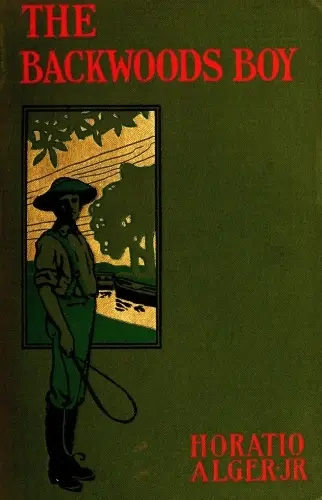
"The Backwoods Boy; or, The Boyhood and Manhood of Abraham Lincoln" by Horatio Alger, Jr. is a biographical account written in the late 19th century. This work chronicles the early life of Abraham Lincoln, detailing his humble beginnings and the formative years that shaped him into one of America's most revered leaders. The narrative focuses on Lincoln's character development and the circumstances surrounding his youth, providing insights into his upbringing in a log cabin, family dynamics, and the challenges he faced. The opening of the book introduces readers to young Abe Lincoln and his siblings standing outside their log cabin in Indiana, just before the arrival of their new stepmother. Through lively dialogue, Alger establishes the personality of Abe as a resilient and humorous boy who navigates the complexities of family life following their mother's death. The initial chapter sets the stage for Lincoln's understanding of hard work and education, as his new mother inspires him to seek knowledge amidst their rustic living conditions. This early glimpse into Lincoln's family life highlights significant themes of curiosity, responsibility, and the profound impact of parental figures during formative years.
Introduction adapted from the source catalogue; source summaries may be automatically generated.
Free to read · English · 56,690 words · No account needed
MAKE TIME FOR A GOOD BOOK
On by default. Untick to stop anonymous reading totals. Each page counts after 10 seconds in view. How this works.
Anonymous counting is on unless you have switched it off.
Three children stood in front of a rough log-cabin in a small clearing won from the surrounding forest. The country round about was wild and desolate. Not far away was a vast expanse of forest, including oaks, beeches, walnuts and the usual variety of forest trees.
We are in Indiana, and the patch of land on which the humble log-cabin stood is between the forks of Big Pigeon and Little Pigeon Creeks, a mile and a half east of Gentryville, a small village not then in existence.
The oldest of the three children was Nancy Lincoln, about twelve years old. Leaning against the cabin in a careless attitude was a tall, spindling boy, thin-faced, and preternaturally grave, with a swarthy complexion. He was barefoot and ragged; the legs of his pantaloons, which were much too short, revealing the lower part of his long legs; for in his boyhood, as in after days, he ran chiefly to legs.
Who in the wildest flight of a daring imagination would venture to predict that this awkward, sad-faced, ragged boy would forty years later sit in the chair of Washington, and become one of the rulers of the earth? I know of nothing more wonderful in the Arabian Nights than this.
The second boy was a cousin of the other two children--Dennis Hanks, who, after the death of his parents, had come to live in the Lincoln household.
The sun was near its setting. It seemed already to have set, for it was hidden by the forest trees behind which it had disappeared.
“Abe,” said the girl, addressing her brother, “do you think father will be home to-night?”
“I reckon,” answered Abe laconically, shifting from one foot to the
other.
“I hope so,” said Dennis. “It’s lonesome stayin’ here by ourselves.”
“There some one comin’ with father,” said Nancy slowly. “We’re goin’ to have a new mother. I hope we’ll like her.”
“It’ll seem good to have a woman in the house,” said Dennis. “It seems lonesome-like where they’re all men.”
“I reckon you mean yourself and me,” said Abe smiling.
The boy’s grave, thin face brightened up as he said this in a humorous
tone.
“Then I ought to be considered a woman if you two are goin’ to set up as men,” said Nancy. “But Dennis is right. It’ll be good for us if she’s the right sort. Some step-mothers ain’t.”
“I reckon you’re right,” said Abe again.
“I’m afraid she won’t like the house,” said Nancy. “It ain’t as good as it might be, though it’s better than the ‘camp’ we used to live in.”
Your reading position is saved on this browser. Take it to another device with a library code. Reading pages adapt to text, rather than matching a printed edition.
William Rounseville Alger & Horatio, Jr. Alger

William Rounseville Alger & Horatio, Jr. Alger

Horatio, Jr. Alger

Horatio, Jr. Alger
BEHIND THE BOOK
This eBook is for the use of anyone anywhere in the United States and most other parts of the world at no cost and with almost no restrictions whatsoever. You may copy it, give it away or re-use it under the terms of the Project Gutenberg License included with this eBook or online at www.gutenberg.org. If you are not located in the United States, you will have to check the laws of the country where you are located before using this eBook. Read the source licence.
The original source file, including credits and licence, is retained by this library. Request an original-format copy at no charge. Please include the book title and Project Gutenberg identifier #52073.
KEEP YOUR CURIOSITY GOING

Abby Morton Diaz
Helen Hunt Jackson
Mary Frances Blaisdell
Stuart Dodgson Collingwood

Kate Douglas Smith Wiggin
Hesba Stretton