
Life of Edwin Forrest, the American Tragedian. Volume 2 (of 2)
William Rounseville Alger & Horatio, Jr. Alger
THE CLASSIC COLLECTION · 1883
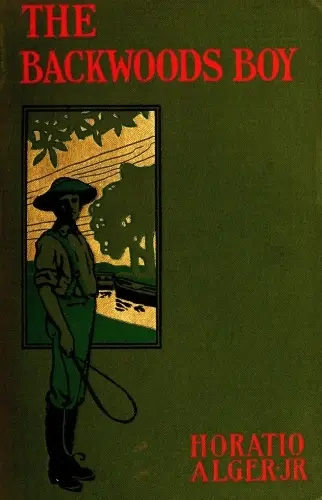
"The Backwoods Boy; or, The Boyhood and Manhood of Abraham Lincoln" by Horatio Alger, Jr. is a biographical account written in the late 19th century. This work chronicles the early life of Abraham Lincoln, detailing his humble beginnings and the formative years that shaped him into one of America's most revered leaders. The narrative focuses on Lincoln's character development and the circumstances surrounding his youth, providing insights into his upbringing in a log cabin, family dynamics, and the challenges he faced. The opening of the book introduces readers to young Abe Lincoln and his siblings standing outside their log cabin in Indiana, just before the arrival of their new stepmother. Through lively dialogue, Alger establishes the personality of Abe as a resilient and humorous boy who navigates the complexities of family life following their mother's death. The initial chapter sets the stage for Lincoln's understanding of hard work and education, as his new mother inspires him to seek knowledge amidst their rustic living conditions. This early glimpse into Lincoln's family life highlights significant themes of curiosity, responsibility, and the profound impact of parental figures during formative years.
Introduction adapted from the source catalogue; source summaries may be automatically generated.
Free to read · English · 56,690 words · No account needed
MAKE TIME FOR A GOOD BOOK
On by default. Untick to stop anonymous reading totals. Each page counts after 10 seconds in view. How this works.
Anonymous counting is on unless you have switched it off.
And indeed it was a happy day for Thomas Lincoln and his young family when his second wife took charge of his household. She was kind-hearted and energetic, and though she had three children of her own, she was never found wanting in care or affection for her husband’s children. She took a special interest in young Abe. She read him better than his father, and saw that there was that in him which it would pay to develop.
To begin with, she rigged him out in new clothes. His ragged condition had excited her sympathy, and she rightly judged that neat attire helps a boy’s or girl’s self-respect. I have no doubt that Abe, though he never had a weakness for fine clothes, surveyed himself complacently when for the first time he saw himself respectably dressed.
This is the description of Abe’s step-mother given many years after by Mrs. Chapman, the daughter of Dennis Hanks:
“His wife, my grandmother, is a very tall woman, straight as an Indian; fair complexion, and was, when I first remember her, very handsome, sprightly, talkative, and proud; wore her hair curled till gray; is kind-hearted and very charitable, and also very industrious.”
It may be mentioned here that this good lady lived long enough to see the neglected boy whom she so kindly took in hand elected to the highest place in the gift of his countrymen.
It was not long before Mrs. Lincoln began to broach her plans for the
benefit of her step-son.
“Abe,” she said one day, “have you ever been to school?”
“Yes, ma’am. I went to school a little while in Kentucky.”
“You didn’t learn much, I suppose?”
“Not much; I can read and write a little.”
“That’s a good beginning. In this country, Abe, you will never amount to much unless you get an education. Would you like to go to school?”
“Yes,” answered the boy earnestly.
“I will speak to your father about it. Is there any school near here?”
“Yes, Mr. Dorsey keeps school about a mile and a half from here, near the Little Pigeon Creek meeting-house.”
“You and Nancy and Dennis must go there.” Mrs. Lincoln broached the
subject to her husband.
“Abe ought to go to school, Thomas,” she said, “and so ought the other
children.”
“I don’t know as I can spare him,” said his father. “I need his help in the shop and on the farm.”
“He can find time out of school hours. The boy must have an education.”
“I agree to that, wife. It shall be as you say.”
Your reading position is saved on this browser. Take it to another device with a library code. Reading pages adapt to text, rather than matching a printed edition.
William Rounseville Alger & Horatio, Jr. Alger

William Rounseville Alger & Horatio, Jr. Alger

Horatio, Jr. Alger

Horatio, Jr. Alger
BEHIND THE BOOK
This eBook is for the use of anyone anywhere in the United States and most other parts of the world at no cost and with almost no restrictions whatsoever. You may copy it, give it away or re-use it under the terms of the Project Gutenberg License included with this eBook or online at www.gutenberg.org. If you are not located in the United States, you will have to check the laws of the country where you are located before using this eBook. Read the source licence.
The original source file, including credits and licence, is retained by this library. Request an original-format copy at no charge. Please include the book title and Project Gutenberg identifier #52073.
KEEP YOUR CURIOSITY GOING

Abby Morton Diaz
Helen Hunt Jackson
Mary Frances Blaisdell
Stuart Dodgson Collingwood

Kate Douglas Smith Wiggin
Hesba Stretton