
Life of Edwin Forrest, the American Tragedian. Volume 2 (of 2)
William Rounseville Alger & Horatio, Jr. Alger
THE CLASSIC COLLECTION · 1883
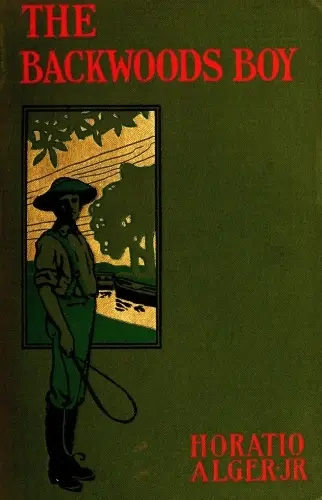
"The Backwoods Boy; or, The Boyhood and Manhood of Abraham Lincoln" by Horatio Alger, Jr. is a biographical account written in the late 19th century. This work chronicles the early life of Abraham Lincoln, detailing his humble beginnings and the formative years that shaped him into one of America's most revered leaders. The narrative focuses on Lincoln's character development and the circumstances surrounding his youth, providing insights into his upbringing in a log cabin, family dynamics, and the challenges he faced. The opening of the book introduces readers to young Abe Lincoln and his siblings standing outside their log cabin in Indiana, just before the arrival of their new stepmother. Through lively dialogue, Alger establishes the personality of Abe as a resilient and humorous boy who navigates the complexities of family life following their mother's death. The initial chapter sets the stage for Lincoln's understanding of hard work and education, as his new mother inspires him to seek knowledge amidst their rustic living conditions. This early glimpse into Lincoln's family life highlights significant themes of curiosity, responsibility, and the profound impact of parental figures during formative years.
Introduction adapted from the source catalogue; source summaries may be automatically generated.
Free to read · English · 56,690 words · No account needed
MAKE TIME FOR A GOOD BOOK
On by default. Untick to stop anonymous reading totals. Each page counts after 10 seconds in view. How this works.
Anonymous counting is on unless you have switched it off.
Seeing a gentleman driving along the Springfield road in a carriage, he ran up to him and politely said:
“Sir, will you have the goodness to take my overcoat to town for me?”
“With pleasure,” answered the gentleman. “But how will you get it
again?”
“Oh, very easily,” said Mr. Lincoln, “as I intend to remain in it.”
“Jump in,” said the gentleman laughing. And the future President had a
pleasant ride.
The President’s Influence.
Judge Baldwin, of California, an old and highly respectable and sedate gentleman, called on General Halleck, and, presuming on a familiar acquaintance in California a few years since, solicited a pass outside of the lines to see a brother in Virginia, not thinking he would meet with a refusal, as both his brother and himself were good Union men.
“We have been deceived too often,” said General Halleck, “and I regret I can’t grant it.”
Judge B. then went to Stanton, and was very briefly disposed of with the
same result.
Finally he obtained an interview with Mr. Lincoln and stated his case.
“Have you applied to General Halleck?” said the President.
“And met with a flat refusal,” said Judge B.
“Then you must see Stanton,” continued the President.
“I have, and with the same result,” was the reply.
“Well, then,” said the President, with a smile of good humor, “I can do nothing, for you must know that I have very little influence with this administration.”
The German Lieutenant.
A lieutenant, whom debts compelled to leave his father-land, succeeded in being admitted to President Lincoln, and, by reason of his commendable and winning deportment and intelligent appearance, was promised a lieutenant’s commission in a cavalry regiment.
He was so enraptured with his success, that he deemed it a duty to inform the President that he belonged to one of the oldest noble houses in Germany.
“Oh, never mind that,” said Mr. Lincoln, with a twinkle of the eye; “you will not find that to be any obstacle to your advancement.”
A Pass for Richmond.
A gentleman called on the President, and solicited a pass for Richmond.
“Well,” said Mr. Lincoln, “I would be very happy to oblige you if my passes were respected; but the fact is, sir, I have, within the last two years, given passes to two hundred and fifty thousand men to go to Richmond, and not one has got there yet.”
Mr. Lincoln and the Preacher.
An officer under the Government called at the Executive Mansion, accompanied by a clerical friend.
Your reading position is saved on this browser. Take it to another device with a library code. Reading pages adapt to text, rather than matching a printed edition.
William Rounseville Alger & Horatio, Jr. Alger

William Rounseville Alger & Horatio, Jr. Alger

Horatio, Jr. Alger

Horatio, Jr. Alger
BEHIND THE BOOK
This eBook is for the use of anyone anywhere in the United States and most other parts of the world at no cost and with almost no restrictions whatsoever. You may copy it, give it away or re-use it under the terms of the Project Gutenberg License included with this eBook or online at www.gutenberg.org. If you are not located in the United States, you will have to check the laws of the country where you are located before using this eBook. Read the source licence.
The original source file, including credits and licence, is retained by this library. Request an original-format copy at no charge. Please include the book title and Project Gutenberg identifier #52073.
KEEP YOUR CURIOSITY GOING

Abby Morton Diaz
Helen Hunt Jackson
Mary Frances Blaisdell
Stuart Dodgson Collingwood

Kate Douglas Smith Wiggin
Hesba Stretton