
Life of Edwin Forrest, the American Tragedian. Volume 2 (of 2)
William Rounseville Alger & Horatio, Jr. Alger
THE CLASSIC COLLECTION · 1883
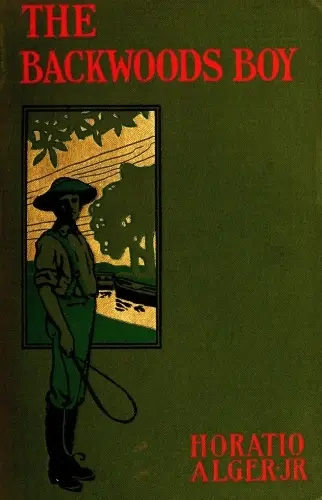
"The Backwoods Boy; or, The Boyhood and Manhood of Abraham Lincoln" by Horatio Alger, Jr. is a biographical account written in the late 19th century. This work chronicles the early life of Abraham Lincoln, detailing his humble beginnings and the formative years that shaped him into one of America's most revered leaders. The narrative focuses on Lincoln's character development and the circumstances surrounding his youth, providing insights into his upbringing in a log cabin, family dynamics, and the challenges he faced. The opening of the book introduces readers to young Abe Lincoln and his siblings standing outside their log cabin in Indiana, just before the arrival of their new stepmother. Through lively dialogue, Alger establishes the personality of Abe as a resilient and humorous boy who navigates the complexities of family life following their mother's death. The initial chapter sets the stage for Lincoln's understanding of hard work and education, as his new mother inspires him to seek knowledge amidst their rustic living conditions. This early glimpse into Lincoln's family life highlights significant themes of curiosity, responsibility, and the profound impact of parental figures during formative years.
Introduction adapted from the source catalogue; source summaries may be automatically generated.
Free to read · English · 56,690 words · No account needed
MAKE TIME FOR A GOOD BOOK
On by default. Untick to stop anonymous reading totals. Each page counts after 10 seconds in view. How this works.
Anonymous counting is on unless you have switched it off.
“Think for a moment of the President of a great nation, and that nation engaged in one of the most terrible wars waged against men, himself worn down with anxiety and labor, subjected to the alternations of success and defeat, racked by complaints of the envious, the disloyal, and the unreasonable, pressed to the decision of grave questions of public policy, and encumbered by the numberless and nameless incidents of civil and martial responsibility, yet able so far to forget them all as to give himself up for the time being to the errand of a little boy, who had braved an interview uninvited, and of whom he knew nothing, but that he had a story to tell of his mother and of his ambition to serve her.”
Of a different character, but equally characteristic of Mr. Lincoln, is a story told by General Charles G. Dahlgren, brother of Admiral Dahlgren:
“As Mr. Lincoln and my brother were about to go to dinner, and while the President was washing his hands, Secretary Stanton entered excitedly with a telegram in his hand and said, ‘Mr. President, I have just received a dispatch from Portland that Jake Thompson is there waiting to take the steamer to England and I want to arrest him.’ Mr. Lincoln began to wipe his hands on a towel, and said, in a long, drawling voice, ‘Better let him slide.’
“‘But, Mr. President,’ said Secretary Stanton, ‘this man is one of the chief traitors--was one of Buchanan’s Cabinet, betrayed the country then, and has fought against us ever since. He should be punished.’
“‘W-e-l-l,’ said the President, ‘if Jake Thompson is satisfied with the issue of the war, I am. B-e-t-t-e-r let him slide.’
“‘Such men should be punished to the full extent of the law,’ said Mr. Stanton. ‘Why, if we don’t punish the leaders of the rebellion, what shall we say to their followers?’
“B-e-t-t-e-r let them slide, Stanton,” said the President, laying aside
his towel.
“Mr. Stanton went out, evidently annoyed, and Mr. Lincoln, turning to my brother, said: ‘Dahl, that is one of the things I don’t intend to allow. When the war is over, I want it to stop, and let both sides go to work and heal the wounds, which, Heaven knows, are bad enough; but jogging and pulling them is not the best way to heal a sore.’
“And the old General, turning to his work, said, with a sigh, ‘If that policy had been carried out, the wounds would have healed long ago.’”
The following story, told by M. J. Ramsdell, shows that Mr. Lincoln judged men sometimes by their spirit rather than their military qualifications:
Your reading position is saved on this browser. Take it to another device with a library code. Reading pages adapt to text, rather than matching a printed edition.
William Rounseville Alger & Horatio, Jr. Alger

William Rounseville Alger & Horatio, Jr. Alger

Horatio, Jr. Alger

Horatio, Jr. Alger
BEHIND THE BOOK
This eBook is for the use of anyone anywhere in the United States and most other parts of the world at no cost and with almost no restrictions whatsoever. You may copy it, give it away or re-use it under the terms of the Project Gutenberg License included with this eBook or online at www.gutenberg.org. If you are not located in the United States, you will have to check the laws of the country where you are located before using this eBook. Read the source licence.
The original source file, including credits and licence, is retained by this library. Request an original-format copy at no charge. Please include the book title and Project Gutenberg identifier #52073.
KEEP YOUR CURIOSITY GOING

Abby Morton Diaz
Helen Hunt Jackson
Mary Frances Blaisdell
Stuart Dodgson Collingwood

Kate Douglas Smith Wiggin
Hesba Stretton