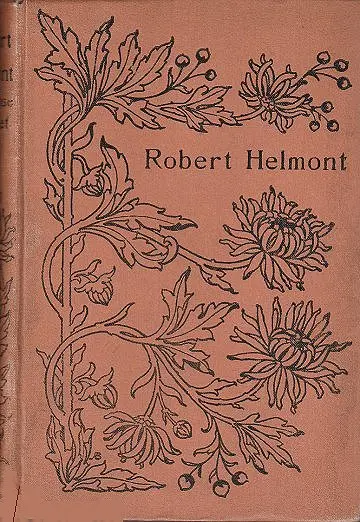
Robert Helmont: Diary of a Recluse, 1870-1871
Alphonse Daudet
THE CLASSIC COLLECTION · 1887
"Tartarin on the Alps" by Alphonse Daudet is a humorous novel written in the late 19th century. This work follows the adventures of Tartarin, a larger-than-life character who embodies the spirit of his hometown, Tarascon, known for its imaginative and boastful inhabitants. The story begins with Tartarin's misadventures in the Swiss Alps, highlighting themes of bravado and the clash between reality and fantasy as he engages with fellow tourists and prepares for an ascent. The opening of the novel introduces readers to a fog-shrouded evening at the Rigi-Kulm hotel, where tourists gather for dinner, fixated on the novelty of their surroundings. Among them is Tartarin, a rotund man cloaked in the garb of an Alpinist, who becomes the center of attention due to his unusual attire and exuberant demeanor. While he attempts to fit in and navigate the challenges of dining and engaging with other guests, he is met with a mix of confusion and disdain. The scene unfolds with comedic interactions that set the tone for Tartarin's escapades, while his aspirations to conquer the Alps ignite a humorous exploration of his character and existential musings on fame, identity, and recognition in a foreign land.
Introduction adapted from the source catalogue; source summaries may be automatically generated.
Free to read · English · 50,490 words · No account needed
MAKE TIME FOR A GOOD BOOK
On by default. Untick to stop anonymous reading totals. Each page counts after 10 seconds in view. How this works.
Anonymous counting is on unless you have switched it off.
Imagine the stupor of the painter in presence of this exorbitant Alpinist, who, alpenstock in hand and ice-axe on his shoulder, risking the annihilation of somebody at each of his many evolutions, was demonstrating to him by A + B that the motions of his William Tell were not correct.
“I know what I am talking about, au mouain... I beg you to believe
it...”
“Who are you?”
“Who am I!” exclaimed the Alpinist, now thoroughly vexed... So it was not to him that the door was opened; and drawing himself up he said: “Go ask my name of the panthers of the Zaccar, of the lions of Atlas... they will answer you, perhaps.”
The company recoiled; there was general alarm.
“But,” asked the painter, “in what way is my action wrong?”
“Look at me, té!”
Falling into position with a thud of his heels that made the planks beneath them smoke, Tar-tarin, shouldering his ice-axe like a crossbow, stood rigid.
“Superb! He’s right... Don’t stir...”
Then to the famulus: “Quick! a block, charcoal!..”
The fact is, the Tarasconese hero was something worth painting,--squat, round-shouldered, head bent forward, the muffler round his chin like a strap, and his flaming little eye taking aim at the terrified famulus.
Imagination, O magic power!.. He thought himself on the marketplace of Altorf, in front of his own child, he, who had never had any; an arrow in his bow, another in his belt to pierce the heart of the tyrant. His conviction became so strong that it conveyed itself to others.
“‘T is William Tell himself!..” said the painter, crouched on a stool and driving his sketch with a feverish hand. “Ah! monsieur, why did I not know you earlier? What a model you would have been for me!..”
“Really! then you see some resemblance?” said Tartarin, much flattered, but keeping his pose.
Yes, it was just so that the artist imagined his hero.
“The head, too?”
“Oh! the head, that’s no matter...” and the painter stepped back to look at his sketch. “Yes, a virile mask, energetic, just what I wanted--inasmuch as nobody knows anything about William Tell, who probably never existed.”
Tartarin dropped the cross-bow from stupefaction.
“Outre! {*}.. Never existed!.. What is that you are saying?”
* “Outre” and “boufre” are Tarasconese oaths of mysterious
etymology.
“Ask these gentlemen...”
Astier-Réhu, solemn, his three chins in his white cravat, said: “That is
a Danish legend.”
“Icelandic..” affirmed Schwanthaler, no less majestic.
“Saxo Grammaticus relates that a valiant archer named Tobé or
Paltanoke...”
“Es ist in der Vilkinasaga geschrieben...”
Both together:--
was condemned by the | dass der Islandische König
King of Denmark Harold | Needing...”
of the Blue Teeth...” |
Your reading position is saved on this browser. Take it to another device with a library code. Reading pages adapt to text, rather than matching a printed edition.
Alphonse Daudet
Alphonse Daudet
Alphonse Daudet
Alphonse Daudet
BEHIND THE BOOK
This eBook is for the use of anyone anywhere in the United States and most other parts of the world at no cost and with almost no restrictions whatsoever. You may copy it, give it away or re-use it under the terms of the Project Gutenberg License included with this eBook or online at www.gutenberg.org. If you are not located in the United States, you will have to check the laws of the country where you are located before using this eBook. Read the source licence.
The original source file, including credits and licence, is retained by this library. Request an original-format copy at no charge. Please include the book title and Project Gutenberg identifier #25768.
KEEP YOUR CURIOSITY GOING
Coulson Kernahan

Maurice Baring
Frances Wright
Cécile Tormay

Frederic Jesup Stimson

W. H. P. (William Henry Pope) Jarvis