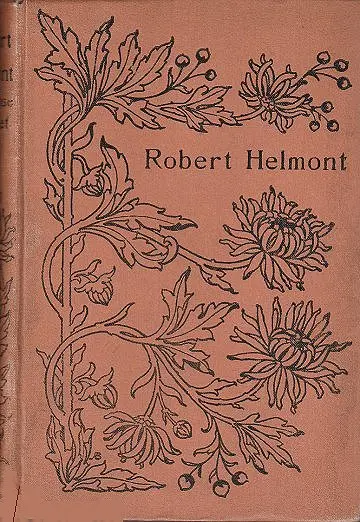
Robert Helmont: Diary of a Recluse, 1870-1871
Alphonse Daudet
THE CLASSIC COLLECTION · 1887
"Tartarin on the Alps" by Alphonse Daudet is a humorous novel written in the late 19th century. This work follows the adventures of Tartarin, a larger-than-life character who embodies the spirit of his hometown, Tarascon, known for its imaginative and boastful inhabitants. The story begins with Tartarin's misadventures in the Swiss Alps, highlighting themes of bravado and the clash between reality and fantasy as he engages with fellow tourists and prepares for an ascent. The opening of the novel introduces readers to a fog-shrouded evening at the Rigi-Kulm hotel, where tourists gather for dinner, fixated on the novelty of their surroundings. Among them is Tartarin, a rotund man cloaked in the garb of an Alpinist, who becomes the center of attention due to his unusual attire and exuberant demeanor. While he attempts to fit in and navigate the challenges of dining and engaging with other guests, he is met with a mix of confusion and disdain. The scene unfolds with comedic interactions that set the tone for Tartarin's escapades, while his aspirations to conquer the Alps ignite a humorous exploration of his character and existential musings on fame, identity, and recognition in a foreign land.
Introduction adapted from the source catalogue; source summaries may be automatically generated.
Free to read · English · 50,490 words · No account needed
MAKE TIME FOR A GOOD BOOK
On by default. Untick to stop anonymous reading totals. Each page counts after 10 seconds in view. How this works.
Anonymous counting is on unless you have switched it off.
Imagine, therefore, how happy he was and how his heart was beating as he stood before that memorial chapel raised to a hero by the gratitude of a whole people. It seemed to him that William Tell in person, still dripping with the waters of the lake, his crossbow and his arrows in hand, was about to open the door to him.
“No entrance... I am at work... This is not the day...” cried a loud voice from within, made louder by the sonority of the vaulted roof.
“Monsieur Astier-Réhu, of the French Academy...”
“Herr Doctor Professor Schwanthaler...”
“Tartarin of Tarascon...”
In the arch above the portal, perched upon a scaffolding, appeared a half-length of the painter in working-blouse, palette in hand.
“My famulus will come down and open to you, messieurs,” he said with respectful intonations.
“I was sure of it, pardi!” thought Tartarin; “I had only to name
myself.”
However, he had the good taste to stand aside modestly, and only entered
after all the others.
The painter, superb fellow, with the gilded, ruddy head of an artist of the Renaissance, received his visitors on the wooden steps which led to the temporary staging put up for the purpose of painting the roof. The frescos, representing the principal episodes in the life of William Tell, were finished, all but one, namely: the scene of the apple in the market-place of Altorf. On this he was now at work, and his young famulus, as he called him, feet and legs bare under a toga of the middle ages, and his hair archangelically arranged, was posing as the son of William Tell.
All these archaic personages, red, green, yellow, blue, made taller than nature in narrow streets and under the posterns of the period, intended, of course, to be seen at a distance, impressed the spectators rather sadly. However, they were there to admire, and they admired. Besides, none of them knew anything.
“I consider that a fine characterization,” said the pontifical Astier-Réhu, carpet-bag in hand.
And Schwanthaler, a camp-stool under his arm, not willing to be behindhand, quoted two verses of Schiller, most of it remaining in his flowing beard. Then the ladies exclaimed, and for a time nothing was heard but:--
“Schön!.. schön...”
“Yes... lovely...”
“Exquisite! delicious!..”
One might have thought one’s self at a confectioner’s.
Abruptly a voice broke forth, rending with the ring of a trumpet that
composed silence.
“Badly shouldered, I tell you... That crossbow is not in place...”
Your reading position is saved on this browser. Take it to another device with a library code. Reading pages adapt to text, rather than matching a printed edition.
Alphonse Daudet
Alphonse Daudet
Alphonse Daudet
Alphonse Daudet
BEHIND THE BOOK
This eBook is for the use of anyone anywhere in the United States and most other parts of the world at no cost and with almost no restrictions whatsoever. You may copy it, give it away or re-use it under the terms of the Project Gutenberg License included with this eBook or online at www.gutenberg.org. If you are not located in the United States, you will have to check the laws of the country where you are located before using this eBook. Read the source licence.
The original source file, including credits and licence, is retained by this library. Request an original-format copy at no charge. Please include the book title and Project Gutenberg identifier #25768.
KEEP YOUR CURIOSITY GOING
Coulson Kernahan

Maurice Baring
Frances Wright
Cécile Tormay

Frederic Jesup Stimson

W. H. P. (William Henry Pope) Jarvis