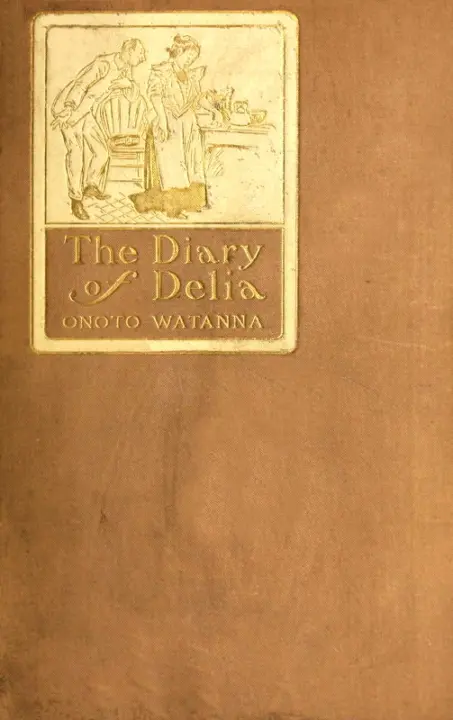
The diary of Delia : Being a veracious chronicle of the kitchen, with some side-lights on the parlour
Onoto Watanna
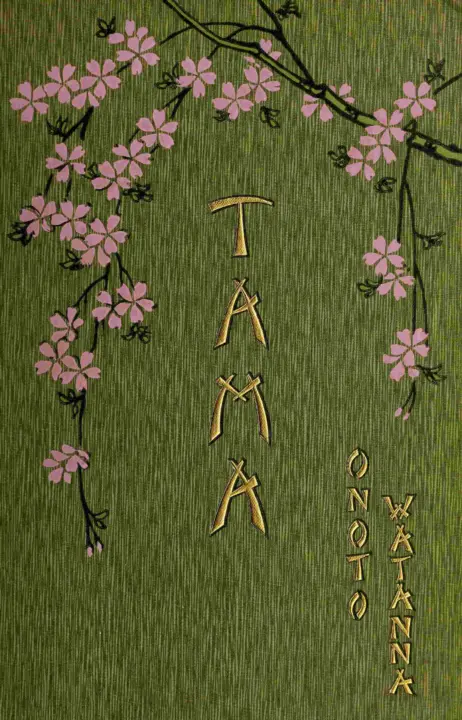
THE CLASSIC COLLECTION · 1910
"Tama" by Onoto Watanna is a novel written in the early 20th century. The story unfolds in Fukui, Japan, and centers around the themes of cultural clash, mystery, and the supernatural, particularly through the character of the enigmatic Fox-Woman. The book delves into Japanese mythology and folklore, exploring the complex relationships between Western and Japanese characters as they navigate a world filled with both charm and danger. At the start of the novel, Fukui anticipates the arrival of a foreign professor, referred to as the "Tojin-san," stirring excitement and apprehension among its citizens. While preparations unfold for his welcome—complete with tales of his dietary needs and the mysterious Fox-Woman stalking the region—whispers of superstition and fear permeate the community. As the Tojin-san struggles against the cultural superstitions surrounding him, he becomes increasingly intrigued by the legend of the Fox-Woman. The opening vividly describes the bustling atmosphere of a transitioning Japan and sets the stage for a tale that intertwines folklore, personal struggle, and the search for understanding across cultural divides.
Introduction adapted from the source catalogue; source summaries may be automatically generated.
Free to read · English · 30,243 words · No account needed
MAKE TIME FOR A GOOD BOOK
On by default. Untick to stop anonymous reading totals. Each page counts after 10 seconds in view. How this works.
Anonymous counting is on unless you have switched it off.
He stood up unsteadily, his hand resting upon the table. Some one had knocked upon his door. He smiled, in the old grim, bitter way.
He could not be tricked by his imagination again. She was very far away by now, miles from Fukui, for it was past midnight, and her cortège would take an unbroken course toward the great highway which eventually would lead them to the metropolis.
But the knocking was repeated, softly, gently, a sound such as a little timid bird in the wet night might have made in beating its wings upon the wall.
He heard the soft moving of the doors, and still he did not stir.
Now she stood between them, her eyes fully upon him, drawing, compelling his gaze. Upon her vivid, passionate little face there was, at last, that look of peace and rest that comes to one upon a journey’s end.
The water dripped from her haori, and clung in glittering drops upon her
hair, her lashes.
He could not even speak her name. He could only gaze at her entranced, as at that other time when he had come to consciousness within the woods, and had found her face hovering like a spirit’s above his own.
She said as if answering the question he could not speak:
“Yaes—it is I—To-o-jin-san!”
With a motion, inexpressibly sweet, she put out her little hands, just as she had done ere she could see, and a beseeching, quivering little smile was on her lips.
“In the honorable wet dark—all those way—I have come bag to you, kind
Tojin-san!”
His voice shook so that he did not recognize it as his own.
“You found your way—”
“Wiz these my eyes closed,” she said, “ad udder end those whole worl’—tha’s same thing Tojin-san—I find way bag unto you!”
“Why?” he demanded with a rough passion that yet tore and intoxicated
him.
She reached out her arms to him yearningly, pleadingly.
“Tek me ad you arms again!” she said. “Toach me on my lips wiz yours. I will tell you—then!”
His last reserve was gone; he had no wish to hold it. Subtly,
irresistibly, she had drawn him to her; now he had taken her back into
his arms!
He felt her little fingers, as of old, passing across his face until they found his lips, and there she placed her own.
● Transcriber’s note:
○ Missing or obscured punctuation was silently corrected.
○ Typographical errors were silently corrected.
○ Inconsistent spelling and hyphenation were made consistent only when a predominant form was found in this book.
Your reading position is saved on this browser. Take it to another device with a library code. Reading pages adapt to text, rather than matching a printed edition.
Onoto Watanna
Onoto Watanna
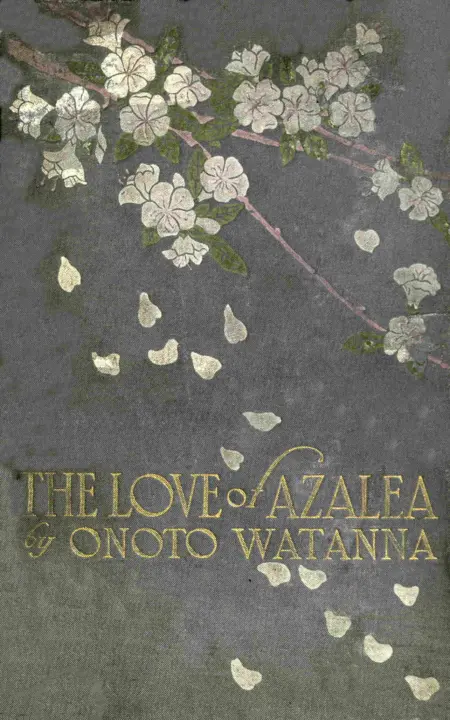
Onoto Watanna
Onoto Watanna
BEHIND THE BOOK
This eBook is for the use of anyone anywhere in the United States and most other parts of the world at no cost and with almost no restrictions whatsoever. You may copy it, give it away or re-use it under the terms of the Project Gutenberg License included with this eBook or online at www.gutenberg.org. If you are not located in the United States, you will have to check the laws of the country where you are located before using this eBook. Read the source licence.
The original source file, including credits and licence, is retained by this library. Request an original-format copy at no charge. Please include the book title and Project Gutenberg identifier #63681.
KEEP YOUR CURIOSITY GOING
Coulson Kernahan

Maurice Baring
Frances Wright
Cécile Tormay
Francis Greenleaf Allinson & Anne C. E. (Anne Crosby Emery) Allinson

Frederic Jesup Stimson