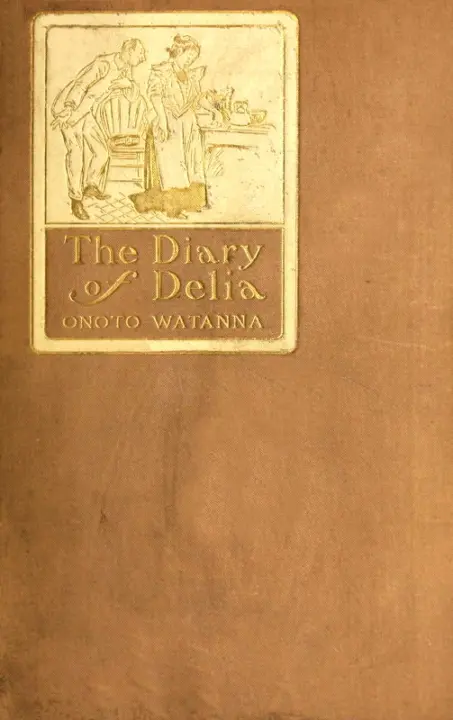
The diary of Delia : Being a veracious chronicle of the kitchen, with some side-lights on the parlour
Onoto Watanna
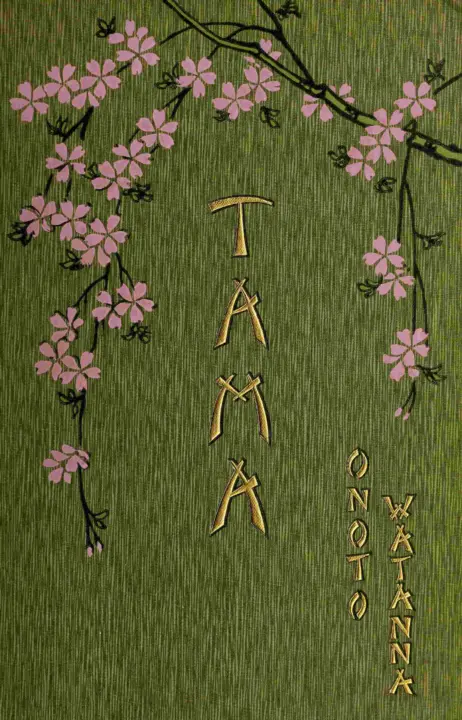
THE CLASSIC COLLECTION · 1910
"Tama" by Onoto Watanna is a novel written in the early 20th century. The story unfolds in Fukui, Japan, and centers around the themes of cultural clash, mystery, and the supernatural, particularly through the character of the enigmatic Fox-Woman. The book delves into Japanese mythology and folklore, exploring the complex relationships between Western and Japanese characters as they navigate a world filled with both charm and danger. At the start of the novel, Fukui anticipates the arrival of a foreign professor, referred to as the "Tojin-san," stirring excitement and apprehension among its citizens. While preparations unfold for his welcome—complete with tales of his dietary needs and the mysterious Fox-Woman stalking the region—whispers of superstition and fear permeate the community. As the Tojin-san struggles against the cultural superstitions surrounding him, he becomes increasingly intrigued by the legend of the Fox-Woman. The opening vividly describes the bustling atmosphere of a transitioning Japan and sets the stage for a tale that intertwines folklore, personal struggle, and the search for understanding across cultural divides.
Introduction adapted from the source catalogue; source summaries may be automatically generated.
Free to read · English · 30,243 words · No account needed
MAKE TIME FOR A GOOD BOOK
On by default. Untick to stop anonymous reading totals. Each page counts after 10 seconds in view. How this works.
Anonymous counting is on unless you have switched it off.
“TO what are you listening, Tama?”
He had come upon her pressed closely against a latticed screen, whose opening looked out upon the river leading to the city below.
She started at his coming, and turned toward him, her back against the
screen.
“I listen to the noise of thad river,” she said, and there was a conciliating, pleading note in her voice.
“You cannot hear the river from here. It is very shallow—barely stirs. There is something else you are listening to?”
“It is the uguisu,” she said quickly, as though she sought to disarm his fears. “It no longer sings, Tojin-san. I listen for hees voice again.”
“It never sang, my child, save at night. What is it that troubles you? You seem always to be listening, waiting—so fearfully—so anxiously. You are afraid of something. Tell me what it is?”
His deep, lowered voice was as caressing and tender as a mother’s. She faltered, turned from him. Her voice overran with vague sighs.
“I hear even those mos’ sof’ of honorable whisper. I hear some noise of—trobble! I am afraid—for you—kind Tojin-san.”
“For me! I am amply protected here in Fukui. I have a body-guard of samourai, besides Genji Negato, who will come back quickly enough when he has mastered his foolish fears.”
“The samourai gone,” she said, simply.
He was silent a moment, realizing there was nothing to be gained by attempting to deceive her. How, when or where she learned of these matters he never knew; but she knew perhaps more than he did of what was happening in Fukui.
“Even if it is so,” he finally said, “and the samourai too are gone, you have nothing to fear. Less than a week ago a courier brought word to me from Tokio. I am expecting friends in Fukui very shortly now.”
“Frien?” she repeated wistfully. “Like unto you, kind Tojin-san?”
“Yes—white men, and Japanese, too, for that matter. I have good friends in Tokio. They are coming here to see you, my child.”
“Alas!” she said, shrinking slightly from him, “Why do they come?”
“I asked them to come,” he said, very gravely. “I feel I am right, and that by a simple operation we will be able to make you see, as other people do, my child.”
The word appeared to trouble her.
“I see already, Tojin-san,” she said.
“What do you see, Tama?” he asked her huskily.
The words came floodingly, tumultuously to her lips. The misty eyes were blue as the sea and as beautiful.
“I see thee, Tojin-san. Thou art beautiful ad my sight, lig’ unto the
gods.”
Your reading position is saved on this browser. Take it to another device with a library code. Reading pages adapt to text, rather than matching a printed edition.
Onoto Watanna
Onoto Watanna
Onoto Watanna
Onoto Watanna
BEHIND THE BOOK
This eBook is for the use of anyone anywhere in the United States and most other parts of the world at no cost and with almost no restrictions whatsoever. You may copy it, give it away or re-use it under the terms of the Project Gutenberg License included with this eBook or online at www.gutenberg.org. If you are not located in the United States, you will have to check the laws of the country where you are located before using this eBook. Read the source licence.
The original source file, including credits and licence, is retained by this library. Request an original-format copy at no charge. Please include the book title and Project Gutenberg identifier #63681.
KEEP YOUR CURIOSITY GOING
Coulson Kernahan

Maurice Baring
Frances Wright
Cécile Tormay
Francis Greenleaf Allinson & Anne C. E. (Anne Crosby Emery) Allinson

Frederic Jesup Stimson