THE CLASSIC COLLECTION✦The childrenCLASSIC FREE BOOKS
The children
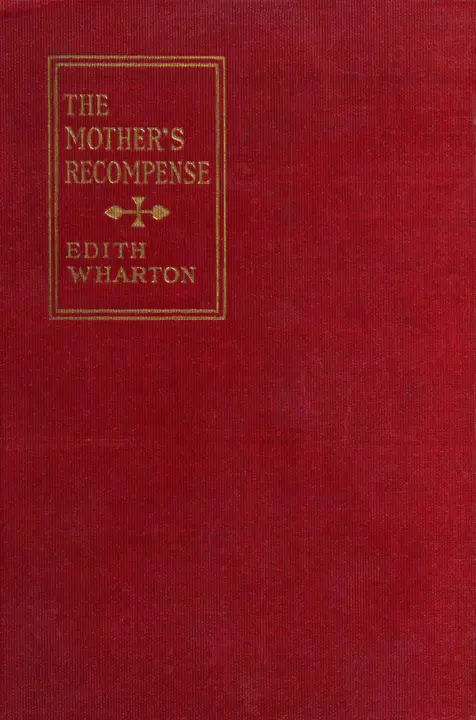
Edith Wharton
THE CLASSIC COLLECTION · 1910
"Tales of Men and Ghosts" by Edith Wharton is a collection of short stories written during the early 20th century. The stories delve into the complexities of human relationships, drawing on themes of societal expectations, personal longing, and the spectral presence of the past, often weaving elements of the supernatural into the narrative. The collection begins with the story of Hubert Granice, a middle-aged man wrestling with his sense of failure, loneliness, and the weight of his unresolved past. The opening of "Tales of Men and Ghosts" introduces Hubert Granice, who anxiously awaits the arrival of his lawyer, Mr. Peter Ascham. Granice paces in his library, reflecting on his past failures as a playwright and the toll they have taken on him. As he prepares for an important conversation with his lawyer, he grapples with thoughts of self-destruction and the implications of his unfulfilled ambitions. The narrative builds tension as Granice, amid his musings, reveals a dark secret: he confesses to having murdered his cousin, Joseph Lenman, out of desperation and frustration. As the lawyer arrives, Segueing into a deeper examination of the characters and themes, Granice's story raises questions about guilt, identity, and the longing for understanding in a world that seems indifferent.
Introduction adapted from the source catalogue; source summaries may be automatically generated.
Free to read · English · 96,798 words · No account needed
MAKE TIME FOR A GOOD BOOK
On by default. Untick to stop anonymous reading totals. Each page counts after 10 seconds in view. How this works.
Anonymous counting is on unless you have switched it off.
DURING the ensuing weeks the letters grew fewer and fewer, and Betton foresaw the approach of the fatal day when his secretary, in common decency, would have to say: “I can’t draw my pay for doing nothing.”
What a triumph for Vyse!
The thought was intolerable, and Betton cursed his weakness in not having dismissed the fellow before such a possibility arose.
“If I tell him I’ve no use for him now, he’ll see straight through it, of course;--and then, hang it, he looks so poor!”
This consideration came after the other, but Betton, in rearranging them, put it first, because he thought it looked better there, and also because he immediately perceived its value in justifying a plan of action that was beginning to take shape in his mind.
“Poor devil, I’m damned if I don’t do it for him!” said Betton, sitting down at his desk.
Three or four days later he sent word to Vyse that he didn’t care to go over the letters any longer, and that they would once more be carried directly to the library.
The next time he lounged in, on his way to his morning ride, he found his secretary’s pen in active motion.
“A lot to-day,” Vyse told him cheerfully.
His tone irritated Betton: it had the inane optimism of the physician reassuring a discouraged patient.
“Oh, Lord--I thought it was almost over,” groaned the novelist.
“No: they’ve just got their second wind. Here’s one from a Chicago publisher--never heard the name--offering you thirty per cent. on your next novel, with an advance royalty of twenty thousand. And here’s a chap who wants to syndicate it for a bunch of Sunday papers: big offer, too. That’s from Ann Arbor. And this--oh, this one’s funny!”
He held up a small scented sheet to Betton, who made no movement to
receive it.
“Funny? Why’s it funny?” he growled.
“Well, it’s from a girl--a lady--and she thinks she’s the only person who understands ‘Abundance’--has the clue to it. Says she’s never seen a book so misrepresented by the critics--”
“Ha, ha! That is good!” Betton agreed with too loud a laugh.
“This one’s from a lady, too--married woman. Says she’s misunderstood, and would like to correspond.”
“Oh, Lord,” said Betton.--“What are you looking at?” he added sharply, as Vyse continued to bend his blinking gaze on the letters.
“I was only thinking I’d never seen such short letters from women. Neither one fills the first page.”
“Well, what of that?” queried Betton.
Your reading position is saved on this browser. Take it to another device with a library code. Reading pages adapt to text, rather than matching a printed edition.
Edith Wharton
Edith Wharton
Annie Eliot Trumbull & George A. (George Abiah) Hibbard & Bliss Perry & Edith Wharton & John Seymour Wood
Edith Wharton
BEHIND THE BOOK
This eBook is for the use of anyone anywhere in the United States and most other parts of the world at no cost and with almost no restrictions whatsoever. You may copy it, give it away or re-use it under the terms of the Project Gutenberg License included with this eBook or online at www.gutenberg.org. If you are not located in the United States, you will have to check the laws of the country where you are located before using this eBook. Read the source licence.
The original source file, including credits and licence, is retained by this library. Request an original-format copy at no charge. Please include the book title and Project Gutenberg identifier #4514.
KEEP YOUR CURIOSITY GOING
Coulson Kernahan

Maurice Baring
Frances Wright
Cécile Tormay

Frederic Jesup Stimson

W. H. P. (William Henry Pope) Jarvis