THE CLASSIC COLLECTION✦The childrenCLASSIC FREE BOOKS
The children
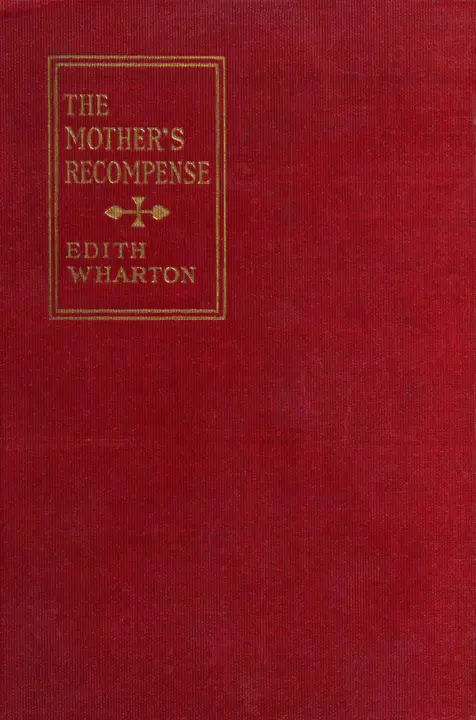
Edith Wharton
THE CLASSIC COLLECTION · 1910
"Tales of Men and Ghosts" by Edith Wharton is a collection of short stories written during the early 20th century. The stories delve into the complexities of human relationships, drawing on themes of societal expectations, personal longing, and the spectral presence of the past, often weaving elements of the supernatural into the narrative. The collection begins with the story of Hubert Granice, a middle-aged man wrestling with his sense of failure, loneliness, and the weight of his unresolved past. The opening of "Tales of Men and Ghosts" introduces Hubert Granice, who anxiously awaits the arrival of his lawyer, Mr. Peter Ascham. Granice paces in his library, reflecting on his past failures as a playwright and the toll they have taken on him. As he prepares for an important conversation with his lawyer, he grapples with thoughts of self-destruction and the implications of his unfulfilled ambitions. The narrative builds tension as Granice, amid his musings, reveals a dark secret: he confesses to having murdered his cousin, Joseph Lenman, out of desperation and frustration. As the lawyer arrives, Segueing into a deeper examination of the characters and themes, Granice's story raises questions about guilt, identity, and the longing for understanding in a world that seems indifferent.
Introduction adapted from the source catalogue; source summaries may be automatically generated.
Free to read · English · 96,798 words · No account needed
MAKE TIME FOR A GOOD BOOK
On by default. Untick to stop anonymous reading totals. Each page counts after 10 seconds in view. How this works.
Anonymous counting is on unless you have switched it off.
CULWIN paused again, and again Frenham sat motionless, the dusky contour of his young head reflected in the mirror at his back.
“And what became of Noyes afterward?” I finally asked, still disquieted by a sense of incompleteness, by the need of some connecting thread between the parallel lines of the tale.
Culwin twitched his shoulders. “Oh, nothing became of him--because he became nothing. There could be no question of ‘becoming’ about it. He vegetated in an office, I believe, and finally got a clerkship in a consulate, and married drearily in China. I saw him once in Hong Kong, years afterward. He was fat and hadn’t shaved. I was told he drank. He didn’t recognize me.”
“And the eyes?” I asked, after another pause which Frenham’s continued silence made oppressive.
Culwin, stroking his chin, blinked at me meditatively through the shadows. “I never saw them after my last talk with Gilbert. Put two and two together if you can. For my part, I haven’t found the link.”
He rose stiffly, his hands in his pockets, and walked over to the table on which reviving drinks had been set out.
“You must be parched after this dry tale. Here, help yourself, my dear fellow. Here, Phil--” He turned back to the hearth.
Frenham still sat in his low chair, making no response to his host’s hospitable summons. But as Culwin advanced toward him, their eyes met in a long look; after which, to my intense surprise, the young man, turning suddenly in his seat, flung his arms across the table, and dropped his face upon them.
Culwin, at the unexpected gesture, stopped short, a flush on his face.
“Phil--what the deuce? Why, have the eyes scared you? My dear boy--my dear fellow--I never had such a tribute to my literary ability, never!”
He broke into a chuckle at the thought, and halted on the hearth-rug, his hands still in his pockets, gazing down in honest perplexity at the youth’s bowed head. Then, as Frenham still made no answer, he moved a step or two nearer.
“Cheer up, my dear Phil! It’s years since I’ve seen them--apparently I’ve done nothing lately bad enough to call them out of chaos. Unless my present evocation of them has made you see them; which would be their worst stroke yet!”
His bantering appeal quivered off into an uneasy laugh, and he moved still nearer, bending over Frenham, and laying his gouty hands on the lad’s shoulders.
“Phil, my dear boy, really--what’s the matter? Why don’t you answer? Have you seen the eyes?”
Your reading position is saved on this browser. Take it to another device with a library code. Reading pages adapt to text, rather than matching a printed edition.
Edith Wharton
Edith Wharton
Annie Eliot Trumbull & George A. (George Abiah) Hibbard & Bliss Perry & Edith Wharton & John Seymour Wood
Edith Wharton
BEHIND THE BOOK
This eBook is for the use of anyone anywhere in the United States and most other parts of the world at no cost and with almost no restrictions whatsoever. You may copy it, give it away or re-use it under the terms of the Project Gutenberg License included with this eBook or online at www.gutenberg.org. If you are not located in the United States, you will have to check the laws of the country where you are located before using this eBook. Read the source licence.
The original source file, including credits and licence, is retained by this library. Request an original-format copy at no charge. Please include the book title and Project Gutenberg identifier #4514.
KEEP YOUR CURIOSITY GOING
Coulson Kernahan

Maurice Baring
Frances Wright
Cécile Tormay

Frederic Jesup Stimson

W. H. P. (William Henry Pope) Jarvis