THE CLASSIC COLLECTION✦The childrenCLASSIC FREE BOOKS
The children
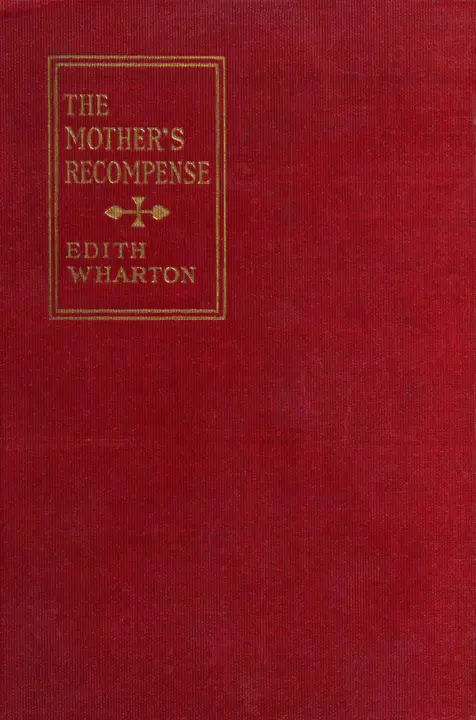
Edith Wharton
THE CLASSIC COLLECTION · 1910
"Tales of Men and Ghosts" by Edith Wharton is a collection of short stories written during the early 20th century. The stories delve into the complexities of human relationships, drawing on themes of societal expectations, personal longing, and the spectral presence of the past, often weaving elements of the supernatural into the narrative. The collection begins with the story of Hubert Granice, a middle-aged man wrestling with his sense of failure, loneliness, and the weight of his unresolved past. The opening of "Tales of Men and Ghosts" introduces Hubert Granice, who anxiously awaits the arrival of his lawyer, Mr. Peter Ascham. Granice paces in his library, reflecting on his past failures as a playwright and the toll they have taken on him. As he prepares for an important conversation with his lawyer, he grapples with thoughts of self-destruction and the implications of his unfulfilled ambitions. The narrative builds tension as Granice, amid his musings, reveals a dark secret: he confesses to having murdered his cousin, Joseph Lenman, out of desperation and frustration. As the lawyer arrives, Segueing into a deeper examination of the characters and themes, Granice's story raises questions about guilt, identity, and the longing for understanding in a world that seems indifferent.
Introduction adapted from the source catalogue; source summaries may be automatically generated.
Free to read · English · 96,798 words · No account needed
MAKE TIME FOR A GOOD BOOK
On by default. Untick to stop anonymous reading totals. Each page counts after 10 seconds in view. How this works.
Anonymous counting is on unless you have switched it off.
Betton studied the ironic “Unknown” for an appreciable space of time; then he broke into a laugh. He had suddenly recalled Vyse’s similar experience with “Hester Macklin,” and the light he was able to throw on that obscure episode was searching enough to penetrate all the dark corners of his own adventure. He felt a rush of heat to the ears; catching sight of himself in the glass, he saw a red ridiculous congested countenance, and dropped into a chair to hide it between flushed fists. He was roused by the opening of the door, and Vyse appeared on the threshold.
“Oh, I beg pardon--you’re ill?” said the secretary.
Betton’s only answer was an inarticulate murmur of derision; then he pushed forward the letter with the imprint of the Dead Letter Office.
“Look at that,” he jeered.
Vyse peered at the envelope, and turned it over slowly in his hands. Betton’s eyes, fixed on him, saw his face decompose like a substance touched by some powerful acid. He clung to the envelope as if to gain time.
“It’s from the young lady you’ve been writing to at Swazee Springs?” he
asked at length.
“It’s from the young lady I’ve been writing to at Swazee Springs.”
“Well--I suppose she’s gone away,” continued Vyse, rebuilding his
countenance rapidly.
“Yes; and in a community numbering perhaps a hundred and seventy-five souls, including the dogs and chickens, the local post-office is so ignorant of her movements that my letter has to be sent to the Dead Letter Office.”
Vyse meditated on this; then he laughed in turn. “After all, the same thing happened to me--with ‘Hester Macklin,’ I mean,” he recalled sheepishly.
“Just so,” said Betton, bringing down his clenched fist on the table. “ Just so,” he repeated, in italics.
He caught his secretary’s glance, and held it with his own for a moment. Then he dropped it as, in pity, one releases something scared and squirming.
“The very day my letter was returned from Swazee Springs she wrote me this from there,” he said, holding up the last Florida missive.
“Ha! That’s funny,” said Vyse, with a damp forehead.
“Yes, it’s funny; it’s funny,” said Betton. He leaned back, his hands in his pockets, staring up at the ceiling, and noticing a crack in the cornice. Vyse, at the corner of the writing-table, waited.
“Shall I get to work?” he began, after a silence measurable by minutes. Betton’s gaze descended from the cornice.
“I’ve got your seat, haven’t I?” he said, rising and moving away from
the table.
Your reading position is saved on this browser. Take it to another device with a library code. Reading pages adapt to text, rather than matching a printed edition.
Edith Wharton
Edith Wharton
Annie Eliot Trumbull & George A. (George Abiah) Hibbard & Bliss Perry & Edith Wharton & John Seymour Wood
Edith Wharton
BEHIND THE BOOK
This eBook is for the use of anyone anywhere in the United States and most other parts of the world at no cost and with almost no restrictions whatsoever. You may copy it, give it away or re-use it under the terms of the Project Gutenberg License included with this eBook or online at www.gutenberg.org. If you are not located in the United States, you will have to check the laws of the country where you are located before using this eBook. Read the source licence.
The original source file, including credits and licence, is retained by this library. Request an original-format copy at no charge. Please include the book title and Project Gutenberg identifier #4514.
KEEP YOUR CURIOSITY GOING
Coulson Kernahan

Maurice Baring
Frances Wright
Cécile Tormay

Frederic Jesup Stimson

W. H. P. (William Henry Pope) Jarvis