THE CLASSIC COLLECTION✦The show girlCLASSIC FREE BOOKS
The show girl
Max Pemberton
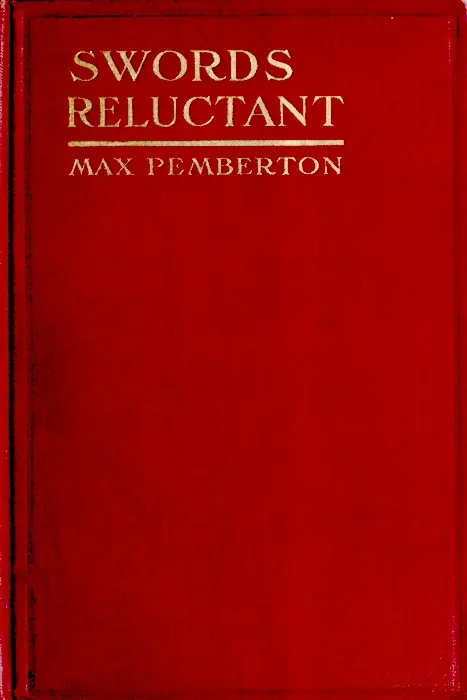
THE CLASSIC COLLECTION · 1912
"Swords Reluctant" by Max Pemberton is a novel written in the early 20th century. The story follows Gabrielle Silvester, the daughter of a Congregationalist minister, as she navigates the social and political complexities of her world following her return to England from America. With themes of peace, war, and the struggles of personal ambition, the narrative promises to delve into the political climate of the time through the interactions between Gabrielle, her father Gordon, and various significant figures such as the ambitious businessman John Faber. The opening portion of "Swords Reluctant" introduces us to Gabrielle, who has just returned from a transformative trip to America with her father, who was engaged in a peace initiative. As she reflects on her changed perceptions of life and society back in Hampstead, we see her grappling with newfound desires and ambitions, influenced by the exciting experiences she had aboard the ocean liner. The narrative quickly shifts to her father’s intriguing discussions about peace efforts and influential figures, particularly Faber, a millionaire characterized by his harsh pragmatism towards war and human nature. Gabrielle's internal struggle between her past and her burgeoning ambitions sets the stage for the broader conflicts concerning ideals of peace and the reality of human nature that will likely play out through the novel.
Introduction adapted from the source catalogue; source summaries may be automatically generated.
Free to read · English · 78,209 words · No account needed
MAKE TIME FOR A GOOD BOOK
On by default. Untick to stop anonymous reading totals. Each page counts after 10 seconds in view. How this works.
Anonymous counting is on unless you have switched it off.
Faber went straight down to Maryska's cabin and found her crouching upon a pillow. The long, jet black hair had been taken down, and lay in a tangled skein about her; she was very pale, and her eyes glowed as with a fever. Evidently she had been listening for his footsteps, for she turned instantly when he came in and fixed her eyes upon him.
"It's Mr. Faber," she said, but without satisfaction.
He took a chair and drew it to her bedside.
"Well, Maryska, are you feeling better, my dear?"
She paid not the slightest heed to the question. Sitting up in bed, she closed her gown about her chest and breathed a little heavily. Then she said, without warning:
"Where is my father?"
He bent his head, fearing to meet her gaze.
"My dear little girl, you'll remember all about that presently."
There was a long pause upon this.
"Yes," she said at last, and still apparently unmoved; "I do remember. Why did you let him die, Mr. Faber?"
"I, Maryska? I had nothing to do with it. If he had taken my advice he would not have left the Pasha's side. I was quite a long way off when it happened."
She insisted, looking at him with pathetic eyes.
"If you had not come to Ragusa, he would not have left me. I am sorry you came. Shall I be kept here long?"
"Do you mean in this ship?"
"Yes, of course. Is it your ship, then?"
"It's my ship--at least, I've hired it. Don't you like it, my dear?"
She looked round about her critically.
"You are not very rich," she said at last. "We came from America in a much larger ship than this. He was with me then."
Her eyes filled suddenly with tears, and she saw no longer either the cabin or the man. Faber covered the outstretched hand, and stroked it softly.
"My poor little girl! You must make your home with me now."
She shook her head.
"You are not rich; it would be different with you," she said; and then, in just the childish tone she had used at the Cantina, she exclaimed, "I don't believe you have much money."
He laughed, and reassured her.
"I've a great deal more than you or I will ever want, Maryska."
It was evident that the wolf-child was suspicious. The gipsy instincts
were awake.
"Will you give me some money if I want any?"
"I'll give you as much as you ask me for."
"Five crowns, say--would you give me five crowns?"
"Of course I would."
"Here and now?" and she held out her hand.
Your reading position is saved on this browser. Take it to another device with a library code. Reading pages adapt to text, rather than matching a printed edition.
Max Pemberton
Max Pemberton
Max Pemberton
Max Pemberton
BEHIND THE BOOK
This eBook is for the use of anyone anywhere in the United States and most other parts of the world at no cost and with almost no restrictions whatsoever. You may copy it, give it away or re-use it under the terms of the Project Gutenberg License included with this eBook or online at www.gutenberg.org. If you are not located in the United States, you will have to check the laws of the country where you are located before using this eBook. Read the source licence.
The original source file, including credits and licence, is retained by this library. Request an original-format copy at no charge. Please include the book title and Project Gutenberg identifier #42763.
KEEP YOUR CURIOSITY GOING
Coulson Kernahan

Maurice Baring
Frances Wright
Cécile Tormay

Frederic Jesup Stimson

W. H. P. (William Henry Pope) Jarvis