THE CLASSIC COLLECTION✦The show girlCLASSIC FREE BOOKS
The show girl
Max Pemberton
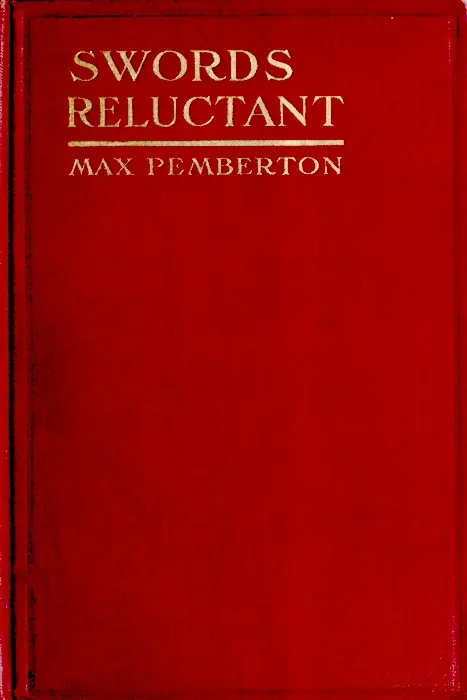
THE CLASSIC COLLECTION · 1912
"Swords Reluctant" by Max Pemberton is a novel written in the early 20th century. The story follows Gabrielle Silvester, the daughter of a Congregationalist minister, as she navigates the social and political complexities of her world following her return to England from America. With themes of peace, war, and the struggles of personal ambition, the narrative promises to delve into the political climate of the time through the interactions between Gabrielle, her father Gordon, and various significant figures such as the ambitious businessman John Faber. The opening portion of "Swords Reluctant" introduces us to Gabrielle, who has just returned from a transformative trip to America with her father, who was engaged in a peace initiative. As she reflects on her changed perceptions of life and society back in Hampstead, we see her grappling with newfound desires and ambitions, influenced by the exciting experiences she had aboard the ocean liner. The narrative quickly shifts to her father’s intriguing discussions about peace efforts and influential figures, particularly Faber, a millionaire characterized by his harsh pragmatism towards war and human nature. Gabrielle's internal struggle between her past and her burgeoning ambitions sets the stage for the broader conflicts concerning ideals of peace and the reality of human nature that will likely play out through the novel.
Introduction adapted from the source catalogue; source summaries may be automatically generated.
Free to read · English · 78,209 words · No account needed
MAKE TIME FOR A GOOD BOOK
On by default. Untick to stop anonymous reading totals. Each page counts after 10 seconds in view. How this works.
Anonymous counting is on unless you have switched it off.
The afternoon of the same day had found General d'Arny closeted with John Faber in a little room in the Avenue de l'Opéra. Here was the Paris agency of the great Charleston Company, and hither came d'Arny at his own suggestion.
A bent old man, not lacking dignity in a common way--dignity had gone to the journalistic dogs that afternoon. He entered the office trembling with excitement; he could not speak for some minutes, and when he did so, his tones rolled like thunder.
"It is finished," he said. "Read!" And he held out a paper with
quivering fingers.
Faber watched him with half-closed eyes. He was thinking of another day, when this man, a mere captain of the Chasseurs-à-Cheval then, had ridden down the Rue de Fleurus and commanded his men to hunt out the Communards. Some forty years ago, and no doubt the soldier had forgotten every hour of it. None the less, the sword of destiny was poised and would fall.
"What shall I read?" Faber rejoined, after a little spell of waiting. He knew every word his friend Bertie Morris had cabled to America, but his face was void of knowledge.
"Some talk of the deal," he ran on. "Well, I guess we expect it. Why
should they keep quiet?"
The soldier pulled himself together, and taking the paper from the outstretched hand, he began to turn the leaves quickly.
"It is on page 3," he said. "Yes, that is it, if you would be good
enough to read."
The clock ticked in a silent room for some minutes. Faber read the article to the end without moving a muscle of his usually expressive face. A great business man is often a great actor. He was one.
"There seems to have been a leakage," he said presently, and then, looking up, "Whom do you suspect?"
"I suspect! God in Heaven, what has suspicion to do with me?"
"I should have thought you were in the way of it--that is, if you take
it seriously this side."
The old man wormed with impatience.
"The Soir has it; there will not be a paper in Paris without it to-morrow. Do you not see that it is, in effect, the letter I wrote to you on Tuesday last?"
"Who's to blame for that? I told you at the beginning not to write."
"Is it to be imagined that you cannot receive letters?"
Faber leaned over the table, and began to speak with some warmth.
"See here," he said, "you're a Minister of Artillery in Paris. You receive, I suppose, some three or four hundred letters a day? Can you be responsible for them all?"
Your reading position is saved on this browser. Take it to another device with a library code. Reading pages adapt to text, rather than matching a printed edition.
Max Pemberton
Max Pemberton
Max Pemberton
Max Pemberton
BEHIND THE BOOK
This eBook is for the use of anyone anywhere in the United States and most other parts of the world at no cost and with almost no restrictions whatsoever. You may copy it, give it away or re-use it under the terms of the Project Gutenberg License included with this eBook or online at www.gutenberg.org. If you are not located in the United States, you will have to check the laws of the country where you are located before using this eBook. Read the source licence.
The original source file, including credits and licence, is retained by this library. Request an original-format copy at no charge. Please include the book title and Project Gutenberg identifier #42763.
KEEP YOUR CURIOSITY GOING
Coulson Kernahan

Maurice Baring
Frances Wright
Cécile Tormay

Frederic Jesup Stimson

W. H. P. (William Henry Pope) Jarvis