THE CLASSIC COLLECTION✦The show girlCLASSIC FREE BOOKS
The show girl
Max Pemberton
THE CLASSIC COLLECTION · 1912
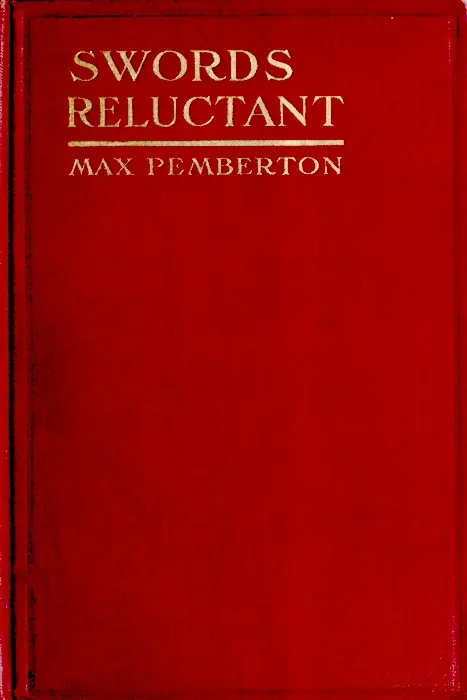
"Swords Reluctant" by Max Pemberton is a novel written in the early 20th century. The story follows Gabrielle Silvester, the daughter of a Congregationalist minister, as she navigates the social and political complexities of her world following her return to England from America. With themes of peace, war, and the struggles of personal ambition, the narrative promises to delve into the political climate of the time through the interactions between Gabrielle, her father Gordon, and various significant figures such as the ambitious businessman John Faber. The opening portion of "Swords Reluctant" introduces us to Gabrielle, who has just returned from a transformative trip to America with her father, who was engaged in a peace initiative. As she reflects on her changed perceptions of life and society back in Hampstead, we see her grappling with newfound desires and ambitions, influenced by the exciting experiences she had aboard the ocean liner. The narrative quickly shifts to her father’s intriguing discussions about peace efforts and influential figures, particularly Faber, a millionaire characterized by his harsh pragmatism towards war and human nature. Gabrielle's internal struggle between her past and her burgeoning ambitions sets the stage for the broader conflicts concerning ideals of peace and the reality of human nature that will likely play out through the novel.
Introduction adapted from the source catalogue; source summaries may be automatically generated.
Free to read · English · 78,209 words · No account needed
MAKE TIME FOR A GOOD BOOK
On by default. Untick to stop anonymous reading totals. Each page counts after 10 seconds in view. How this works.
Anonymous counting is on unless you have switched it off.
"How's a man to keep fit in our beastly country?--then, there's habit. I believe in doing to-morrow what you did yesterday--don't you? If I stop in England, it's covered court tennis, nothing more! How's a man to go through the winter on covered court tennis?"
"The survival of the fittest. Whatever will become of you on the yacht?"
He puffed stolidly.
"That's vegetation. I can lie on my back with any man--I'm a plus two at it. A man's year should include a month of it. Then I'm orderly; I know just what I'm going to do during the next two seasons, as sure as the moon and stars: cricket, four months; two months' shooting; a bit of hunting if I can get it in, and if I can't, then some pat ball on the links. What more do you want?"
"Are you putting the question to me?"
"I wasn't--but I will!"
"Oh, I should want a lot more: to begin with, a definite object."
"Ah, you're a girl. My opinion of men with definite objects is that they
are generally bores."
"But the country would not get on without them, would it?"
"Don't believe such nonsense, puss. Who's the greater man: Asquith or Foster? Would you sooner be Lloyd George or Bobs? Who's doing more for England--the man who helps to beat the Australians, or the lawyers who put threepence on the income tax? You ask the average man, and see what he says."
"The average man has not much brains; he is the servant in the house of intellect. I should never consult him about anything."
"Puss, I know what you're thinking about--it's that popgun man."
"Rather inconsequent, isn't it? You wouldn't average Mr. Faber?"
"No, I suppose he's clever enough. He makes money. Old Baker, our head at school, always used to say that the faculty of making money was one of the most contemptible. But it's useful, I admit."
"Oh, yes, we all admit that, and show our contempt of the faculty by
worshipping the possessor."
"Do you worship John Faber?"
"Collectively, yes; individually, not at all."
He thought upon it.
"I suppose you had a jolly time with him in Paris?"
"Oh, my dear Harry, what next? I saw him twice: once in the corridor of the hotel, then in his own rooms."
"In his rooms!"
"Yes; to tell him I never wished to see him again."
"Oh, you brick; that's the best thing I've heard. Of course, I knew you would. There's never been anything said, but you owed that to me--now, didn't you, puss?"
Your reading position is saved on this browser. Take it to another device with a library code. Reading pages adapt to text, rather than matching a printed edition.
Max Pemberton
Max Pemberton
Max Pemberton
Max Pemberton
BEHIND THE BOOK
This eBook is for the use of anyone anywhere in the United States and most other parts of the world at no cost and with almost no restrictions whatsoever. You may copy it, give it away or re-use it under the terms of the Project Gutenberg License included with this eBook or online at www.gutenberg.org. If you are not located in the United States, you will have to check the laws of the country where you are located before using this eBook. Read the source licence.
The original source file, including credits and licence, is retained by this library. Request an original-format copy at no charge. Please include the book title and Project Gutenberg identifier #42763.
KEEP YOUR CURIOSITY GOING
Coulson Kernahan

Maurice Baring
Frances Wright
Cécile Tormay

Frederic Jesup Stimson

W. H. P. (William Henry Pope) Jarvis