THE CLASSIC COLLECTION✦The show girlCLASSIC FREE BOOKS
The show girl
Max Pemberton
THE CLASSIC COLLECTION · 1912
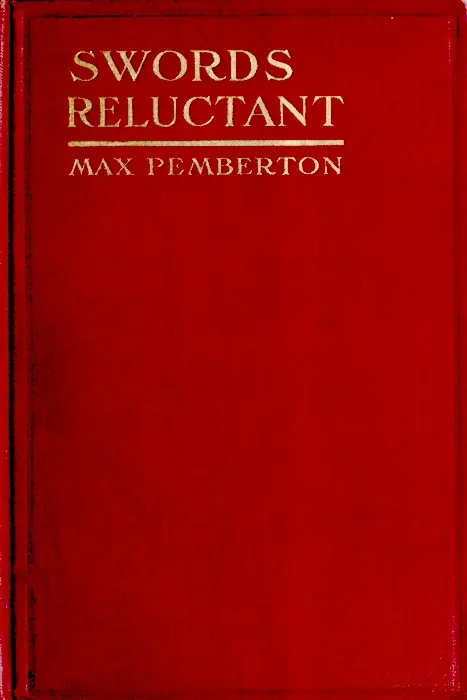
"Swords Reluctant" by Max Pemberton is a novel written in the early 20th century. The story follows Gabrielle Silvester, the daughter of a Congregationalist minister, as she navigates the social and political complexities of her world following her return to England from America. With themes of peace, war, and the struggles of personal ambition, the narrative promises to delve into the political climate of the time through the interactions between Gabrielle, her father Gordon, and various significant figures such as the ambitious businessman John Faber. The opening portion of "Swords Reluctant" introduces us to Gabrielle, who has just returned from a transformative trip to America with her father, who was engaged in a peace initiative. As she reflects on her changed perceptions of life and society back in Hampstead, we see her grappling with newfound desires and ambitions, influenced by the exciting experiences she had aboard the ocean liner. The narrative quickly shifts to her father’s intriguing discussions about peace efforts and influential figures, particularly Faber, a millionaire characterized by his harsh pragmatism towards war and human nature. Gabrielle's internal struggle between her past and her burgeoning ambitions sets the stage for the broader conflicts concerning ideals of peace and the reality of human nature that will likely play out through the novel.
Introduction adapted from the source catalogue; source summaries may be automatically generated.
Free to read · English · 78,209 words · No account needed
MAKE TIME FOR A GOOD BOOK
On by default. Untick to stop anonymous reading totals. Each page counts after 10 seconds in view. How this works.
Anonymous counting is on unless you have switched it off.
She drew nearer, her face aflame and her heart beating wildly.
"I must know this--please bear with me. I must have your answer!"
"It has been given you. I knew nothing."
She seemed dazed and not a little helpless now. Seating herself upon the edge of a chair near the fireplace, she began to speak her thoughts aloud.
"The secret is yours and mine. I would have told nobody. For you, it must be a hard thought to the end of your life. She was to have been married to-day. Will you tell me that if you had known it, it would have made a difference?"
He debated that, standing with his hands in his pockets, but his face
grave enough.
"Nothing would have made any difference between that man and me. He shot my father. Very well--he had to pay, sooner or later. But I don't think it would have been to-day, if I had known."
She was silent a little while. Then she said:
"I can think of nothing but such simple things. If I had stopped to tell you in the hall of the hotel--just that--there would not have been to-day! It was one of those chances that do not recur. I thought everyone knew that Claudine was to be married."
"The last thing a man knows about any woman who is a mere acquaintance. Have you seen her to-day?"
She shivered.
"I dare not go--I dare not!"
"She has relatives in Paris?"
"I suppose so--friends would put her to shame. Does it matter when he is
dead?"
"He was a rogue, or I would have spared him. He tried to cheat me from the start. I found nothing I could fix upon--and I looked for it!"
She would not consider it from that point of view.
"This will always be in your life and Claudine's. Time cannot alter judgments of this kind. It will grow with the years. I am very sorry for you, Mr. Faber."
He resented it; the patronage of women rarely failed to anger him.
"Leave me to my own affairs. I take the responsibility. I've taken a good many in my time. The girl's to be thought of. Who was she going to marry?"
"Captain Issy-Ferrault. I hardly know him: an officer of cavalry, they
say."
"Poor, I suppose, as most of the kind?"
"I cannot tell you."
"When will she marry him now?"
"Oh, surely, you understand?"
"I understand one thing: he's going to marry her."
"A child would know that it's impossible!"
"Then I am wiser than a child. Will you let me have his
address--to-morrow, say?"
"I am leaving Paris to-morrow."
Your reading position is saved on this browser. Take it to another device with a library code. Reading pages adapt to text, rather than matching a printed edition.
Max Pemberton
Max Pemberton
Max Pemberton
Max Pemberton
BEHIND THE BOOK
This eBook is for the use of anyone anywhere in the United States and most other parts of the world at no cost and with almost no restrictions whatsoever. You may copy it, give it away or re-use it under the terms of the Project Gutenberg License included with this eBook or online at www.gutenberg.org. If you are not located in the United States, you will have to check the laws of the country where you are located before using this eBook. Read the source licence.
The original source file, including credits and licence, is retained by this library. Request an original-format copy at no charge. Please include the book title and Project Gutenberg identifier #42763.
KEEP YOUR CURIOSITY GOING
Coulson Kernahan

Maurice Baring
Frances Wright
Cécile Tormay

Frederic Jesup Stimson

W. H. P. (William Henry Pope) Jarvis