THE CLASSIC COLLECTION✦An outlaw’s diary: the CommuneCLASSIC FREE BOOKS
An outlaw’s diary: the Commune
Cécile Tormay
THE CLASSIC COLLECTION · 1903
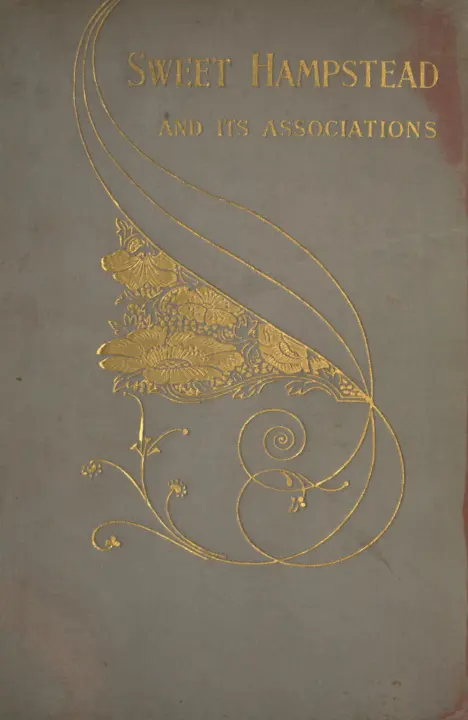
"Sweet Hampstead and Its Associations" by Mrs. Caroline A. White is a historical account written in the late 19th century. The book explores the rich history and notable figures associated with Hampstead, a picturesque area in London known for its natural beauty and cultural significance. It aims to fill a gap in the literature concerning Hampstead's important historical events and personalities from Queen Anne's reign to the author's own time. The opening of "Sweet Hampstead and Its Associations" delves into the author's motivations for writing the book, reflecting on the passage of time and her long-held desire to document Hampstead's past. She highlights a lack of comprehensive works on the subject and acknowledges her connections to the area's history, sharing fond memories intertwined with her personal experiences. Throughout this section, White expresses her passion for documenting forgotten incidents and characters that have shaped Hampstead’s charm, promising readers a journey through its historical landscape enriched by her own reflections and research.
Introduction adapted from the source catalogue; source summaries may be automatically generated.
Free to read · English · 118,334 words · No account needed
MAKE TIME FOR A GOOD BOOK
On by default. Untick to stop anonymous reading totals. Each page counts after 10 seconds in view. How this works.
Anonymous counting is on unless you have switched it off.
MARSH STITCHWORT (Stellaria glauca).—Same habitat as the
above.
WATER RANUNCULUS (R. aquatilis).—In the pond at the bottom of
the old watercourse.
NEEDLE GREEN-WEED, PETTY-WHIN (Genista anglica).—On high
ground on the West Heath.
COMMON BROOM (Cytisus scoparius).—Frequent on both Heaths, making the gravelly hollows luminous. These now effaced (1895).
BUCK BEAN (Menyanthes trifoliata).—On the sphagnum by the
watercourse.
MARSH RED RATTLE (Pedicularis palustris).—Beds of its rosy flowers in moist places frequent on the West Heath.
COTTON GRASS, DOWNY-STALKED (Eriophorum pubescens).—Once plentiful in May and June beside the watercourse, in the bed of which I found it lingering in the summer of 1873. Abundant June 3, 1874; lost 1895.
COTTON GRASS (Eriophorum angustifolium).—Same habitat.
MARSH PENNYWORT (Hydrocotyle vulgaris).—In damp places on the
West Heath.
CUCKOO-FLOWER, LADY’S SMOCK (Cardamine pratensis).—On bogs on West Heath, of a beautiful deep lilac hue.
COMMON MILKWORT (Polygala vulgaris).—I call it gay-wings. Blue, pink, purple and white, disports itself in all the grassy hollows on the Western Heath.
SWEET WOODRUFF (Asperula odorata).—In the shade of the trees in the neighbourhood of the red viaduct, near Lord Mansfield’s grounds, Lower Heath.
SCARLET PIMPERNEL, SHEPHERD’S WEATHER-GLASS (Anagallis arvensis).—Borders of the sandy roadsides, fields and paths.
LESSER STITCHWORT (Stellaria graminea).—In the little dells
on lower part of West Heath.
REST HARROW (Ononis arvensis).—On Upper Heath.
COMMON FURZE (Ulex europæus).—Everywhere amongst the gravelly mounds and hollows on the Upper Heath and North End Hill.
MARE’S-TAIL (Hippurus vulgaris).—Margins of ponds, Upper and
Lower Heath.
BROOKLIME (Veronica beccabunga).—In channel of the old
watercourse.
COMMON ELDER (Sambucus nigra).—Plentiful in hedgerows and lanes in the vicinity of the Heath. Constable noticed the beauty of its rounded cymes.
SPEEDWELL (Veronica spicata).—On West Heath, near Leg of
Mutton Pond.
SHEEP’S SORREL (Rumex acetosella).—Abundant on West Heath, its deep red clustered spikes of flowers conspicuous above the yet unopened white ones of Galium saxatile, among which it frequently appears.
GREATER STITCHWORT (Stellaria holostea).—Amongst the bushes near the Leg of Mutton Pond, West Heath.
WHITE DUTCH CLOVER (Trifolium repens).—Sparsely on the
West Heath, near the reservoir, and in the fields going to
Parliament Hill.
DWARF MALLOW (Malva rotundifolia).—Under the garden-wall of
Hill House, North End.
July.
DEVIL’S-BIT SCABIOUS (Scabiosa succisa).—On the higher part
of West Heath.
COMMON EYE-BRIGHT (Euphrasia officinalis).—On the high ground under the western plateau of the Heath. One of Milton’s flowers.
COMMON BUGLE (Ajuga reptans).—In moist places; abundant over
all the Heath; perennial.
UPRIGHT ST. JOHN’S WORT (Hypericum pulchrum).—On the dry banks above Leg of Mutton Pond, at the foot of the watercourse.
Your reading position is saved on this browser. Take it to another device with a library code. Reading pages adapt to text, rather than matching a printed edition.
BEHIND THE BOOK
This eBook is for the use of anyone anywhere in the United States and most other parts of the world at no cost and with almost no restrictions whatsoever. You may copy it, give it away or re-use it under the terms of the Project Gutenberg License included with this eBook or online at www.gutenberg.org. If you are not located in the United States, you will have to check the laws of the country where you are located before using this eBook. Read the source licence.
The original source file, including credits and licence, is retained by this library. Request an original-format copy at no charge. Please include the book title and Project Gutenberg identifier #64394.
KEEP YOUR CURIOSITY GOING
Cécile Tormay

Moritz Busch
John L. Ransom
Frances Wright
Cécile Tormay

Mabel Potter Daggett