THE CLASSIC COLLECTION✦An outlaw’s diary: the CommuneCLASSIC FREE BOOKS
An outlaw’s diary: the Commune
Cécile Tormay
THE CLASSIC COLLECTION · 1903
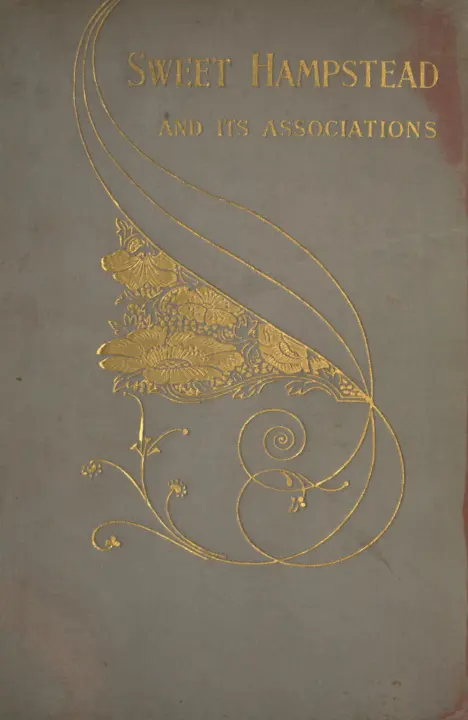
"Sweet Hampstead and Its Associations" by Mrs. Caroline A. White is a historical account written in the late 19th century. The book explores the rich history and notable figures associated with Hampstead, a picturesque area in London known for its natural beauty and cultural significance. It aims to fill a gap in the literature concerning Hampstead's important historical events and personalities from Queen Anne's reign to the author's own time. The opening of "Sweet Hampstead and Its Associations" delves into the author's motivations for writing the book, reflecting on the passage of time and her long-held desire to document Hampstead's past. She highlights a lack of comprehensive works on the subject and acknowledges her connections to the area's history, sharing fond memories intertwined with her personal experiences. Throughout this section, White expresses her passion for documenting forgotten incidents and characters that have shaped Hampstead’s charm, promising readers a journey through its historical landscape enriched by her own reflections and research.
Introduction adapted from the source catalogue; source summaries may be automatically generated.
Free to read · English · 118,334 words · No account needed
MAKE TIME FOR A GOOD BOOK
On by default. Untick to stop anonymous reading totals. Each page counts after 10 seconds in view. How this works.
Anonymous counting is on unless you have switched it off.
COMMON FILAGO (F. germanica).—Frequent about the gravel-pits,
Upper Heath.
WOOD SAGE (Teucrium scorodonia).—Abundant on Upper Heath.
COMMON BIRD’S-FOOT TREFOIL (Lotus corniculatus).—Abundant on
the West Heath.
GREATER BIRD’S-FOOT TREFOIL (Lotus major).—Near the old
watercourse, towards the pond.
PURPLE SANDWORT (Arenaria rubra).—On the sandy paths and hillocks east of Jack Straw’s Castle, Lower Heath.
TORMENTILLA (T. reptans).—Its red trailing stems, strawberry-shaped leaves, and bright yellow flowers, common everywhere upon the Heath all summer.
HEATH BEDSTRAW (Gallium saxatile).—Great spaces on the high ground of the Upper Heath snowy white with the dense panicles of this lovely little plant.
HAREBELL (Campanula rotundifolia).—Common over all the upper
parts of the Heath.[300]
LESSER SPEARWORT (Ranunculus flammula).—Along the margins of
the old watercourse.
CELERY-LEAVED CROWFOOT (R. sceleratus).—In the same
neighbourhood.
GREAT REEDMACE, OR CAT’S-TAIL (Typha latifolia).—In the pond on Lord Mansfield’s grounds, beside the viaduct, where an old boat lies stranded (1856).
WATER VIOLET (Viola palustris).—Margin of the same pond, and in the pool at the bottom of the watercourse behind Jack Straw’s Castle.
MEADOWSWEET, QUEEN OF THE MEADOW (Spiræa ulmaria).—In the bed of an old runnel on the right of the New Road going to Child’s Hill.
SUNDEW (Drosera rotundifolia).—Boggy places amongst sphagnum beds in the vicinity of the watercourse, West Heath.
COMMON YARROW, MILFOIL (Achillea millefolium).—Almost
everywhere on the Heath.
MOUSE-EAR HAWKWEED (Hieracium pilosella).—Runs over all the little mounds and hillocks on the Western Heath; abundant all the summer.
August.
COMMON CHAMOMILE (Anthemis nobilis).—In many places on the
Upper Heath.
DODDER (Cuscuta epithymum).—Found on furze bushes on the
Upper Heath August, 1859.
BETONY (Betonica officinalis).—Amongst furze clumps in a line
with the old watercourse.
FINE-LEAVED HEATH (Erica cinerea).—On the West Heath in
gravelly, grass-grown hollows.
LING (Calluna vulgaris).—Amongst the gravel-beds frequent.
YELLOW WATER-LILY (Nuphar lutea).—In the pond at the viaduct, Lower Heath. Note its flask-like seed-vessels, which have libelled it with the name of ‘brandy-bottle.’
COMMON ARROW-HEAD (Sagittaria sagittifolia).—Margins of the
same pond.
SMALL-FLOWERED HAIRY WILLOW HERB (Epilobium
parviflorum).—Lower end of old watercourse.
SWEETGALE (Myrica).—On West Heath.[301]
To this list I may add a few other plants found on the Heath and its vicinity by Messrs. Bliss, Hunter and others, leaving out those proper to Caen Wood, which is still rich in the plants that flourished on the Heath and in the woods when Gerard wrote:
HENBANE (Hyoscyamus niger).—Near the Vale of Health.
LESSER CENTAURY (Erythræa pulchella).—In the same habitat and
on the West Heath.
GREAT YELLOW LOOSESTRIFE (Lysimachia vulgaris).—In a field
near North End.
Your reading position is saved on this browser. Take it to another device with a library code. Reading pages adapt to text, rather than matching a printed edition.
BEHIND THE BOOK
This eBook is for the use of anyone anywhere in the United States and most other parts of the world at no cost and with almost no restrictions whatsoever. You may copy it, give it away or re-use it under the terms of the Project Gutenberg License included with this eBook or online at www.gutenberg.org. If you are not located in the United States, you will have to check the laws of the country where you are located before using this eBook. Read the source licence.
The original source file, including credits and licence, is retained by this library. Request an original-format copy at no charge. Please include the book title and Project Gutenberg identifier #64394.
KEEP YOUR CURIOSITY GOING
Cécile Tormay

Moritz Busch
John L. Ransom
Frances Wright
Cécile Tormay

Mabel Potter Daggett