THE CLASSIC COLLECTION✦An outlaw’s diary: the CommuneCLASSIC FREE BOOKS
An outlaw’s diary: the Commune
Cécile Tormay
THE CLASSIC COLLECTION · 1903
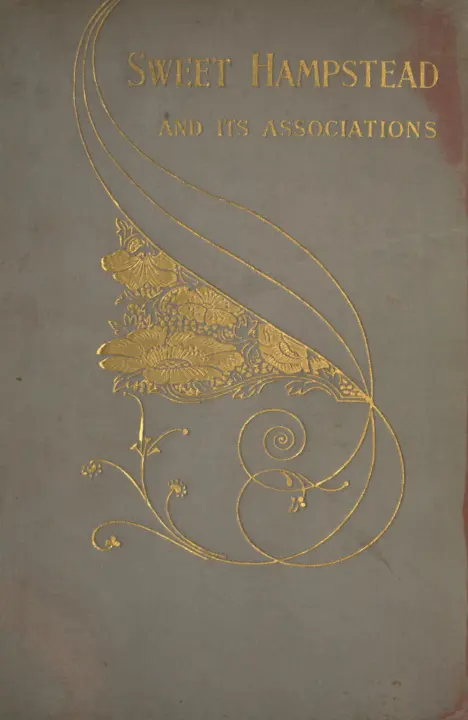
"Sweet Hampstead and Its Associations" by Mrs. Caroline A. White is a historical account written in the late 19th century. The book explores the rich history and notable figures associated with Hampstead, a picturesque area in London known for its natural beauty and cultural significance. It aims to fill a gap in the literature concerning Hampstead's important historical events and personalities from Queen Anne's reign to the author's own time. The opening of "Sweet Hampstead and Its Associations" delves into the author's motivations for writing the book, reflecting on the passage of time and her long-held desire to document Hampstead's past. She highlights a lack of comprehensive works on the subject and acknowledges her connections to the area's history, sharing fond memories intertwined with her personal experiences. Throughout this section, White expresses her passion for documenting forgotten incidents and characters that have shaped Hampstead’s charm, promising readers a journey through its historical landscape enriched by her own reflections and research.
Introduction adapted from the source catalogue; source summaries may be automatically generated.
Free to read · English · 118,334 words · No account needed
MAKE TIME FOR A GOOD BOOK
On by default. Untick to stop anonymous reading totals. Each page counts after 10 seconds in view. How this works.
Anonymous counting is on unless you have switched it off.
Otherwise they did not wander so far as Bishop’s Wood, or the old Target Bank, where the lilies of the valley grew so plentifully in Johnson’s time. Johnson was the pupil of Gerard, and the editor of a new edition of his master’s work, the ‘Great Herbal.’ To this lover of Nature, an apothecary by profession, is due the honour of having prepared the first catalogue of local plants ever published in England, the locality of these plants being the Heath and the Woods of Hampstead; many of the plants have survived the predatory habits of London flower-vendors, and still flourish in their old habitats.
Of the survivors, we are glad to give the following list from personal
acquaintance with them:
March and April.
COMMON DAISY (Bella perennis).—Perennial everywhere. We gathered it on the East Heath January 26, 1874.
BLACKTHORN (Prunus spinosa).—Upper and West Heath.
MARSH MARIGOLD (Caltha palustris).—The borders of the old watercourse at the back of Jack Straw’s Castle. This watercourse is now extinct (1895).
PASQUE FLOWER (Anemone Pulsatilla).—On a bank at the edge of the Upper Heath. A small bed of it amongst the whitethorn-trees going to the Leg of Mutton Pond.
DANDELION (Leontodon taraxacum).—In grassy places. East and
West Heaths, everywhere.
WOOD CROWFOOT, GOLDYLOCKS (Ranunculus auricomus).—Amongst the trees beyond the red viaduct, Lower Heath.
We look in vain for the primroses which adorned the hedgerows and overspread the woods in Gerard’s time, and the cowslips ankle-deep in the meadows between Kilburn and the Heath. Like the lilies of the valley, the orchids and ophreys, they have long since been exterminated by mendicant root-vendors, or buried under the foundations of modern streets.
May.
WILD HYACINTH, BLUEBELL (Hyacinthus non-scriptus).—Plentiful on the grassy banks beside the New Road leading to Child’s Hill.
SPEEDWELL GERMANDER (Veronica).—In the same neighbourhood.
WOOD SORREL (Oxalis acetosella).—Under the shade of some old thorn-stocks, south side of the watercourse, Upper Heath.
BUTCHER’S BROOM (Ruscus aculeatus).—Bushy places about the neighbourhood of the pond, near the red viaduct, Lower Heath.
SHEPHERD’S PURSE (Bursa pastoris).—Common by roadsides
everywhere.
CRAB APPLE (Pyrus malus).—On the right hand of the
watercourse behind Jack Straw’s Castle, descending the Heath,
near the pond.
HAWTHORN, HAGTHORN, MAYBUSH (Crategus oxyacanthus).—In the same neighbourhood, right and left.
DOG VIOLET (Viola canina).—In various places on the West
Heath.
DWARF WILLOW (Salix repens, Smith, Salex repens,
Bab.).—Near the bog opposite the grounds of Hill House, North
End.
June.
COMMON WATERCRESS (Nasturtium officinalis).—In a pool at the lower end of the watercourse.
RAGGED ROBIN (Lychnis flos-cuculi).—On the moist margin of
the same place near the pond.
Your reading position is saved on this browser. Take it to another device with a library code. Reading pages adapt to text, rather than matching a printed edition.
BEHIND THE BOOK
This eBook is for the use of anyone anywhere in the United States and most other parts of the world at no cost and with almost no restrictions whatsoever. You may copy it, give it away or re-use it under the terms of the Project Gutenberg License included with this eBook or online at www.gutenberg.org. If you are not located in the United States, you will have to check the laws of the country where you are located before using this eBook. Read the source licence.
The original source file, including credits and licence, is retained by this library. Request an original-format copy at no charge. Please include the book title and Project Gutenberg identifier #64394.
KEEP YOUR CURIOSITY GOING
Cécile Tormay

Moritz Busch
John L. Ransom
Frances Wright
Cécile Tormay

Mabel Potter Daggett