Seeing France with Uncle John
Anne Warner
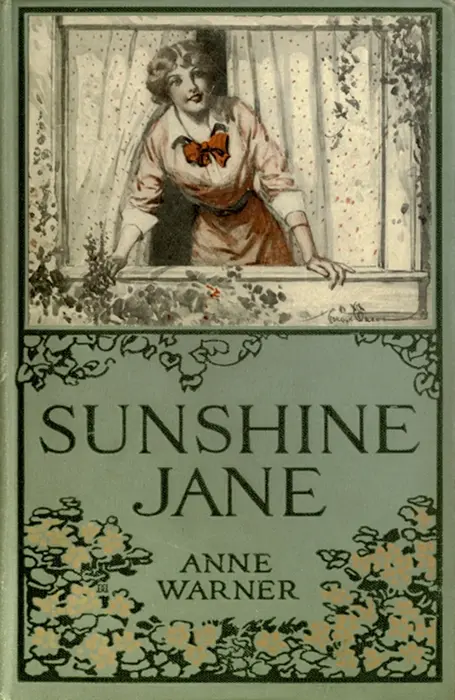
THE CLASSIC COLLECTION · 1913
"Sunshine Jane" by Anne Warner is a novel written in the early 20th century. The story revolves around a young nurse, Jane, who arrives in a small village to care for her invalid aunt, Susan, while Matilda, the other aunt, takes a much-needed vacation. The narrative hints at profound transformations both in Susan's life and in the village's dynamics as Jane's sunny disposition begins to challenge the status quo, introducing themes of optimism, healing, and personal growth. The opening of the novel introduces us to the village and its inhabitants, who are blissfully unaware of the significant changes brewing with Jane's arrival. As Jane travels to her aunt's home, we see glimpses of the somber, constricted lives of the villagers, particularly her aunts, whose perspectives on life are clouded by illness and dissatisfaction. Matilda, who has been an overbearing caretaker to Susan, is depicted as stern and controlling, while Susan's fragile self-worth is compounded by her dependency on Matilda. Jane's arrival is poised to disrupt this dynamic, as she embodies hope and the potential for joy, intent on making a positive impact during her stay. The reader gets a sense that this seemingly mundane setting is on the brink of change, propelled by Jane's vibrant spirit and the interwoven lives of the characters.
Introduction adapted from the source catalogue; source summaries may be automatically generated.
Free to read · English · 44,419 words · No account needed
MAKE TIME FOR A GOOD BOOK
On by default. Untick to stop anonymous reading totals. Each page counts after 10 seconds in view. How this works.
Anonymous counting is on unless you have switched it off.
JANE sat on the rear seat with old Mr. Cattermole, who was coming home to his daughter, Mrs. Mead.
"Ever been here before?" old Mr. Cattermole asked her.
"No, never."
"Hey?"
"No, never."
"Once?"
"Never."
"What?"
"Never!"
"I'll tell you what it is," said Mr. Cattermole, beaming benevolently, "it's the jolting. It keeps me from hearing what you say."
Jane nodded, smiling.
But old Mr. Cattermole wasn't long inconvenienced by the jolting.
"Who you going to stop with?" he asked next.
"Mrs. Ralston and Miss Drew."
"Who?"
"Mrs. Ralston and Miss Drew."
"Who? I don't hear you."
"Miss Drew."
"The Crews?--There ain't no such people in town."
"Miss Drew!" Jane became slightly crimson.
"I'll tell you," said Mr. Cattermole, "we'll wait. I can't hear. Really
I can't."
The next minute they arrived at Mrs. Cowmull's, since she lived in the first house on the street. Lorenzo Rath, the artist, who had been sitting on the middle seat with Madeleine, now pressed her hand, twisted about and shook Jane's, nodded to old Mr. Cattermole, leaned forward and dragged his suit-case from under the seat, and then wriggled out, over two boxes and under a flapping curtain, and down on to the sidewalk. Mrs. Cowmull was standing on the porch, trying to look hospitable and unconscious at the same time. "Here," said the stage driver, suddenly delivering Lorenzo's trunk on to the top of his head,--"and here's the lampshade and the codfish,--they get down here, too."
Lorenzo couldn't help laughing. "Au revoir," he cried, waving the lampshade as the steps began to move.
"We'll meet again soon," Madeleine cried, her face full of bright color.
"Yes, of course."
Then they were off.
"Seemed a nice young feller," said old Mr. Cattermole to Jane.
"Yes." She tried to speak loudly.
"Hey!"
"Yes."
"I'll tell you," said old Mr. Cattermole benevolently, "you come and see my granddaughter Emily, and then we'll talk. My granddaughter's a great student. You'll like her. She's full of the new ideas and new books and all that. We're very proud of her. Only she don't get married."
Then the stage stopped, and Mrs. Mead came running out. "Oh, Father, did you buy the new magazines,--on the train, you know?"
Old Mr. Cattermole was descending backwards with the care of a cat in an apple-tree. "It's my daughter," he said to Jane. "I can always hear her because she speaks so plain. Yes, Emma, it was dusty, very dusty."
"This lawn-sprinkler is your's, ain't it?" said the stage driver, jerking it off the roof into Mrs. Mead's arms. "Here's his bag, too."
Your reading position is saved on this browser. Take it to another device with a library code. Reading pages adapt to text, rather than matching a printed edition.
BEHIND THE BOOK
This eBook is for the use of anyone anywhere in the United States and most other parts of the world at no cost and with almost no restrictions whatsoever. You may copy it, give it away or re-use it under the terms of the Project Gutenberg License included with this eBook or online at www.gutenberg.org. If you are not located in the United States, you will have to check the laws of the country where you are located before using this eBook. Read the source licence.
The original source file, including credits and licence, is retained by this library. Request an original-format copy at no charge. Please include the book title and Project Gutenberg identifier #37972.
KEEP YOUR CURIOSITY GOING

David Patterson (Spirit) Hatch

David Patterson (Spirit) Hatch

David Patterson (Spirit) Hatch
Coulson Kernahan

Ralph Waldo Emerson

Maurice Baring