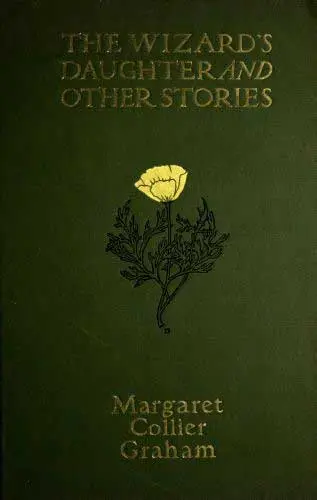
The Wizard’s Daughter, and Other Stories
Margaret Collier Graham
THE CLASSIC COLLECTION · 1895
"Stories of the Foot-hills" by Margaret Collier Graham is a collection of fictional narratives written in the late 19th century. The book appears to explore the lives of various characters in a rural Californian setting, addressing themes such as land rights, family dynamics, and interpersonal conflicts against the backdrop of the wilderness. The narrative is likely to focus on individuals like Lysander Sproul and his wife, Minervy, as they navigate their lives among neighbors and the complexity of their relationships. The opening of the story introduces Lysander Sproul, who is driving his mules toward a mesa and is contemplative about the surrounding land and his interactions with Colonel Nate Forrester, a wealthy figure in their community. As he travels, he encounters his wife, Minervy, who expresses both excitement and anxiety about his dealings with Forrester, particularly regarding the land they own and the contentious relationships with others, including his mother-in-law, Mrs. Withrow. There’s a sense of tension and struggle as the characters deal with issues related to property and water rights, foreshadowing potential conflicts that may arise in the storyline. As the narrative develops, it hints at broader societal themes while focusing on domestic life and the challenges that come with it.
Introduction adapted from the source catalogue; source summaries may be automatically generated.
Free to read · English · 47,936 words · No account needed
MAKE TIME FOR A GOOD BOOK
On by default. Untick to stop anonymous reading totals. Each page counts after 10 seconds in view. How this works.
Anonymous counting is on unless you have switched it off.
It was Friday evening, and Em laid five silver dollars on the kitchen
table beside her mother.
"You can give that to Ben," she said wearily.
Mrs. Wickersham glanced from the money to her daughter's dusty shoes,
and set, colorless face.
"Emmy, I'm afraid you've overdone," she said with a start.
"No, I haven't," answered the girl without flinching; "it's been a
little hard yesterday and to-day, and I'm tired, that's all. Don't tell
Ben."
"Are you too tired to go to the church sociable this evening?" pursued
the mother anxiously.
"Yes, I believe I am."
"I saw Steve Elliott and 'Rene Burnham driving that way a few minutes ago. I thought they was over at the camp." Mrs. Wickersham had resumed her work and had her back toward her daughter.
"They weren't there to-day," said Em listlessly.
"Does she go with him much?"
There was a rising resentment in Mrs. Wickersham's voice. Em glanced at
her anxiously.
"I don't know," she faltered.
"I don't see how she can act so!" the older woman broke out indignantly.
The girl's face turned a dull white; she opened her lips to breathe.
"I used to think she liked Benny," Mrs. Wickersham went on, speaking in a heated undertone. "I should think she'd be ashamed of herself."
Em's voice came back.
"I don't believe Ben cares, mother," she said soothingly.
"I don't care if he doesn't, she'd ought to," urged Mrs. Wickersham,
with maternal logic.
There was a sound of strained, ineffectual coughing in the front room. Mrs. Wickersham left her work and hurried away. When she came back Em was sitting on the doorstep with her forehead in her hands.
"Benny's got a notion he could drive over to the store to-morrow," her mother began excitedly; "he's got something in his head. He thinks if Joe Atkinson would bring their low buggy--I'm sure I don't know what to say;" the poor woman's voice trembled with responsibility.
Em got up with a quick, decisive movement.
"Don't say anything, mother. If Ben wants to go, he's got to go. I'll run over to Atkinson's right away."
Mrs. Wickersham caught her daughter's arm.
"No, no; not to-night. He said in the morning, he must be better, don't you think so, Emmy?" she pleaded.
"Of course," said Em fiercely. Then she turned and fastened a loosened hairpin in her mother's disordered hair. Even a caress wore its little mask of duty with Em. "Of course he's better, mother," she said more gently.
Your reading position is saved on this browser. Take it to another device with a library code. Reading pages adapt to text, rather than matching a printed edition.
Margaret Collier Graham
BEHIND THE BOOK
This eBook is for the use of anyone anywhere in the United States and most other parts of the world at no cost and with almost no restrictions whatsoever. You may copy it, give it away or re-use it under the terms of the Project Gutenberg License included with this eBook or online at www.gutenberg.org. If you are not located in the United States, you will have to check the laws of the country where you are located before using this eBook. Read the source licence.
The original source file, including credits and licence, is retained by this library. Request an original-format copy at no charge. Please include the book title and Project Gutenberg identifier #31687.
KEEP YOUR CURIOSITY GOING
Coulson Kernahan

Maurice Baring
Frances Wright
Cécile Tormay

Frederic Jesup Stimson

W. H. P. (William Henry Pope) Jarvis