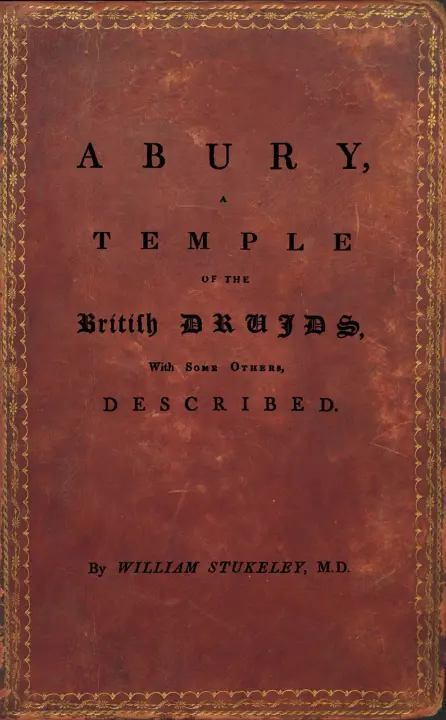
Abury, A Temple of the British Druids, With Some Others, Described
William Stukeley
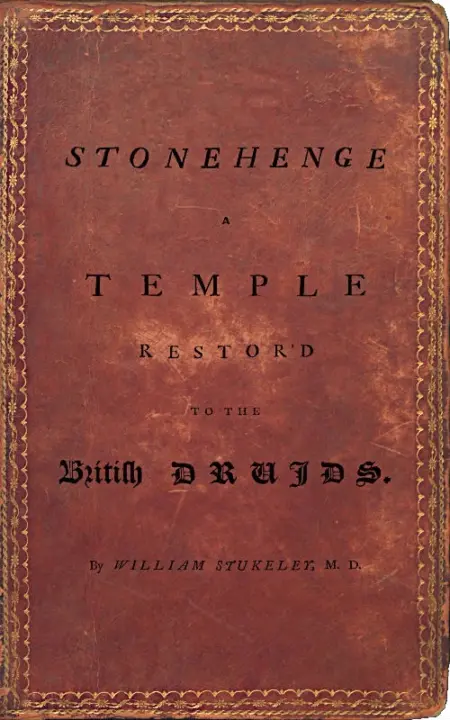
THE CLASSIC COLLECTION · 1740
"Stonehenge, a Temple Restor'd to the British Druids" by William Stukeley is a historical account written in the early 18th century. The book explores the origins and significance of Stonehenge, positing that it was built by the ancient Druids as a temple. Stukeley's investigation encompasses the physical description of the ruins, their architectural features, and the cultural context surrounding them, particularly concerning the Druids' religious practices. The opening of the text introduces Stukeley's fascination with ancient structures and outlines his systematic approach to studying the works of the Druids. He describes his summers spent measuring and contemplating the stone circles across Britain, including the famous Stonehenge. Stukeley argues that these monuments reflect a deep continuity of religious practice from ancient times, positioning the Druids within a historical lineage that traces back to patriarchal religions. His detailed reflection sets the stage for a comprehensive examination of the site's dimensions, material origins, and its place in the broader narrative of British history, revealing the book's intent to preserve and illuminate the memory of these ancient wonders.
Introduction adapted from the source catalogue; source summaries may be automatically generated.
Free to read · English · 48,776 words · No account needed
MAKE TIME FOR A GOOD BOOK
On by default. Untick to stop anonymous reading totals. Each page counts after 10 seconds in view. How this works.
Anonymous counting is on unless you have switched it off.
Had no statues, 55
Patriarchal altars, 30, 50, 52
Their temples fronted the east, 35
Their temples were consecrated and endowed, 52
Paying tythe, 52, 55
Bowing, a part of worship, 33, 34
They officiated barefooted, 55
They practised chastity, before officiating, ibid.
The priests wore white linen surplices at the time of
officiating, 24, 55
Their publick devotion was call’d praying, or invoking, in the
N A M E, 52
They believ’d a future state, 31
They gave notice of religious festivals by fire, 37
Those were the quarterly sacrifices, ibid.
The manner of sacrificing, 34, 54
They us’d water for purification, 11, 13, 14, 34
Of the water vases at Stonehenge, 11, 13, 14, 34
The stone table there, 34
Of the stones and cavities on the vallum, 11, 14
Crwm-lechen, bowing stones, 33, 34
Human sacrifices, 54
Heathen imitations of the Jews, 46, 60, 62
Main Ambres, rocking stones, gygonia, petræ ambrosiæ, Bæthylia,
18, 49, 50, 51, 52, 54
Ambrosia what? 51, 52
Horned, anointed, analogous to sacred, consecrated, 52, 59
The time when Hercules lived, 52, 53, 58
Hercules built patriarchal temples, where-ever he came, 54, 57
Probably he made the Main Ambre by Pensans, and Biscawoon, 54
Persepolis a patriarchal temple, 19, 46
Of the avenue of Stonehenge, 35, 39
Of its two wings, 35, 38, 41, 57
Eastern wing, its variation, 36, 56, 57, 64, 65
Of the Hippodrom or Cursus, 13, 41, 56
Its variation, 42, 57
The Romans borrowed the British chariots, 42
The eastern meta, its variation, 57
Other like works, in other parts of England, 43
The via Iceniana, 9
Of the barrows or sepulchral tumuli, 43
Druid barrows, 10, 45
Arch-Druids barrows, 38
Urn burial, 44, 46
The bodies lay north and south, 45
Beads of amber, glass, gold, &c. found, ibid.
Horses, dogs, and other animals buried with them, 46
Carvilius’s tomb, 4, 44, 46
The magnetical compass known to Hercules, the Phœnicians and
Arabians, 57
The oracle of Jupiter Ammon had a compass, 59, 61, 62
The golden fleece was a compass, 60, 62
How the compass was forgot, 55, 58, 63, 64
Apher grandson of Abraham, companion of Hercules, from
Arabia, 53, 62, 63
He gave name to Africa and to Britain, 53, 62, 63
A scheme of the variation of the compass, 65
A conjecture therefrom, when Stonehenge was founded, 65
Transcriber’s Notes:
- Blank pages have been removed. - A few obvious typographical errors have been silently corrected. - Otherwise spelling and hyphenation variations remain unchanged. - Text enclosed by underscores is in italics (italics). - Text enclosed by ‘►◄’ is in blackletter font (►blackletter◄). - Text enclosed by curly braces is a sidenote to an item not otherwise referred to in the text {sidenote}. - Made illustration captions more consistent.
Your reading position is saved on this browser. Take it to another device with a library code. Reading pages adapt to text, rather than matching a printed edition.
BEHIND THE BOOK
This eBook is for the use of anyone anywhere in the United States and most other parts of the world at no cost and with almost no restrictions whatsoever. You may copy it, give it away or re-use it under the terms of the Project Gutenberg License included with this eBook or online at www.gutenberg.org. If you are not located in the United States, you will have to check the laws of the country where you are located before using this eBook. Read the source licence.
The original source file, including credits and licence, is retained by this library. Request an original-format copy at no charge. Please include the book title and Project Gutenberg identifier #61567.
KEEP YOUR CURIOSITY GOING
Cécile Tormay

Moritz Busch
John L. Ransom
Frances Wright
Cécile Tormay

Mabel Potter Daggett