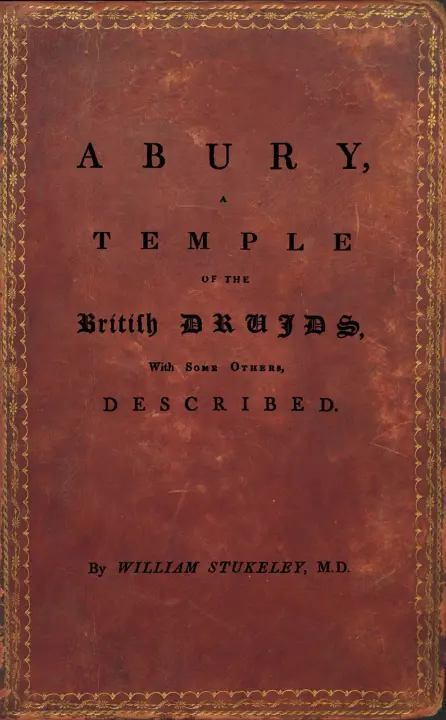
Abury, A Temple of the British Druids, With Some Others, Described
William Stukeley
THE CLASSIC COLLECTION · 1740
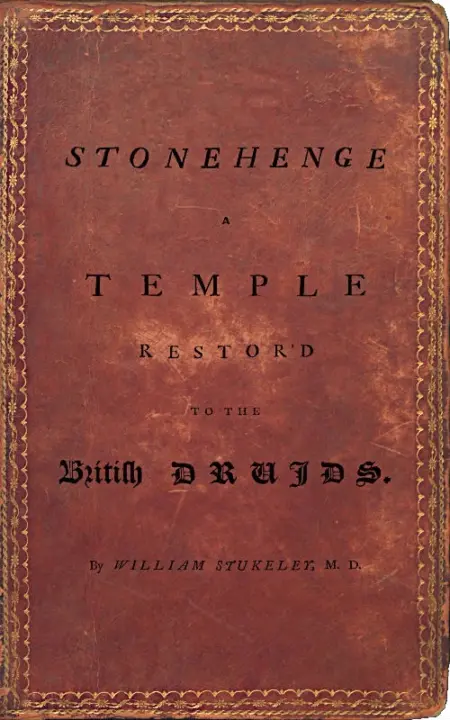
"Stonehenge, a Temple Restor'd to the British Druids" by William Stukeley is a historical account written in the early 18th century. The book explores the origins and significance of Stonehenge, positing that it was built by the ancient Druids as a temple. Stukeley's investigation encompasses the physical description of the ruins, their architectural features, and the cultural context surrounding them, particularly concerning the Druids' religious practices. The opening of the text introduces Stukeley's fascination with ancient structures and outlines his systematic approach to studying the works of the Druids. He describes his summers spent measuring and contemplating the stone circles across Britain, including the famous Stonehenge. Stukeley argues that these monuments reflect a deep continuity of religious practice from ancient times, positioning the Druids within a historical lineage that traces back to patriarchal religions. His detailed reflection sets the stage for a comprehensive examination of the site's dimensions, material origins, and its place in the broader narrative of British history, revealing the book's intent to preserve and illuminate the memory of these ancient wonders.
Introduction adapted from the source catalogue; source summaries may be automatically generated.
Free to read · English · 48,776 words · No account needed
MAKE TIME FOR A GOOD BOOK
On by default. Untick to stop anonymous reading totals. Each page counts after 10 seconds in view. How this works.
Anonymous counting is on unless you have switched it off.
Older than the time of the Roman Britons, 1, 2, 32
Older than the time of the Belgæ, who preceded the Roman
invasion, 4, 8, 9, 47
The history of the Belgæ seated about Stonehenge, in
Cæsar’s time, 4, 8, 47
Our Welsh the remains of the Belgæ, 8
The Cimbrians the same, 48
Of the Wansdike: made by Divitiacus, 4, 47
Of Vespasian’s camp Ambresbury, 49
The stones of Stonehenge are from the gray weathers on
Marlborough downs, 5, 47
Of their nature, magnitude, weight, 5, 6
Of their number, 30
Mr. Webb’s drawings of Stonehenge false, 3, 22, 25
Absurd to compare the work to Roman or Grecian orders, 6, 10,
16, 20, 21, 28
The cell not form’d from three equilateral triangles, 3, 18, 24,
33
But one entrance into the area, 3, 18, 23, 33
He makes one side of the cell out of a bit of a loose stone, 29
He has turn’d the cell a sixth part from its true situation, 3, 22
The cell not a hexagon, but an oval, 20, 22, 29
Demonstrated by Lord Pembroke’s measure, 28
Demonstrated by trigonometry, 22
Proved by the surgeons amphitheater, London, being an imitation
thereof, 25
Stonehenge not made by the Roman foot, 6
Webb makes the inner circle, of thirty stones, instead of forty,
20
He contracts 119 feet to 43, 33
He draws a stone on the vallum 120 foot out of its true place,
14
Stonehenge not a monument, 40
The Druids came with an oriental colony, upon the first Celtic
inhabitants, 62, 63
Introduc’d here by the Tyrian Hercules, 7, 31, 32, 50, 52, 55, 63
The colony were Phœnicians or Arabians, 63, 66
They found out our tin mines, 32, 55, 63
The Druids came hither about Abraham’s time or soon after, 2,
7, 31, 32, 49, 52
They were of the patriarchal religion, 1, 2, 17
Which was the same as christianity, 2, 54
Stonehenge prov’d the work of the Druids from the infinite number of the like, all over the Britannic isles, 3, 8
Farther suggestions: because accounted sacred, made by magic, medicinal, came from Ireland, Spain, Afric, Egypt. In some places the name of Druids remaining, 3, 5, 9, 47, 48
From the antiquities dug up about them, 4, 45, 46
Schetland isles the Hyperboreans of the Greeks, thence Abaris the Pythagorean philosopher, 40
Stonehenge not built by the Saxons, deduced from its name, 7, 47
Demonstrated to be older than Roman times, 9, 10
Such in countries never conquered by the Romans, 3
Stonehenge and such works built by the Phœnician colony, 8, 9,
32, 49
The cathedral of the Arch-Druid, 8, 10, 32
Called antiently the Ambres, 9, 47
Thence Vespasian’s camp, and Ambresbury nam’d, 49
Stonehenge call’d choir gaur: the great church or cathedral, 4,
47
Made with mortaise and tenon, unusual with the Romans, 18
Made by the ancient Hebrew, Phœnician cubit, 6, 12, 28
Its proportion to our foot, 6, 11, 15, 26, 30, 32
The ancient decempedum, 12
The Druids were geometricians, 16, 18, 27, 42
Knew the use of the compass, 57, 63
They carried a little ax to cut down misletoe, 39, 48
The Druids letter, 31, 54
The patriarchal temples were open, 19, 23, 30, 39, 40, 46, 52,
54, 58.
Moses’s tabernacle the first cover’d temple, 23, 24, 58
Patriarchal temples, 19, 40, 46, 50, 51, 54
Of rude stones, unchizel’d, 66
The kebla, 24, 30, 40, 54
Your reading position is saved on this browser. Take it to another device with a library code. Reading pages adapt to text, rather than matching a printed edition.
BEHIND THE BOOK
This eBook is for the use of anyone anywhere in the United States and most other parts of the world at no cost and with almost no restrictions whatsoever. You may copy it, give it away or re-use it under the terms of the Project Gutenberg License included with this eBook or online at www.gutenberg.org. If you are not located in the United States, you will have to check the laws of the country where you are located before using this eBook. Read the source licence.
The original source file, including credits and licence, is retained by this library. Request an original-format copy at no charge. Please include the book title and Project Gutenberg identifier #61567.
KEEP YOUR CURIOSITY GOING
Cécile Tormay

Moritz Busch
John L. Ransom
Frances Wright
Cécile Tormay

Mabel Potter Daggett