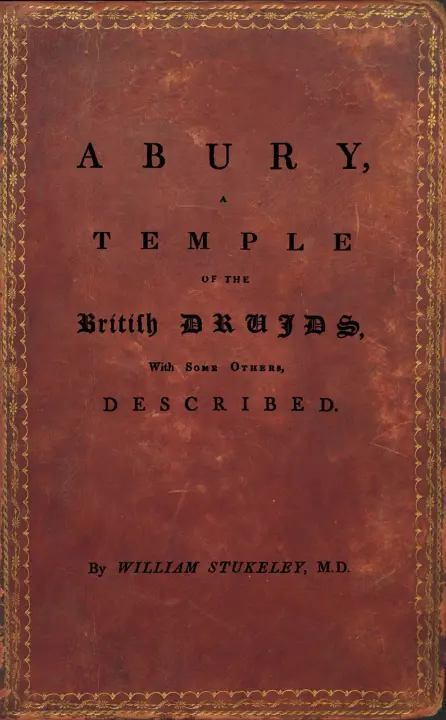
Abury, A Temple of the British Druids, With Some Others, Described
William Stukeley
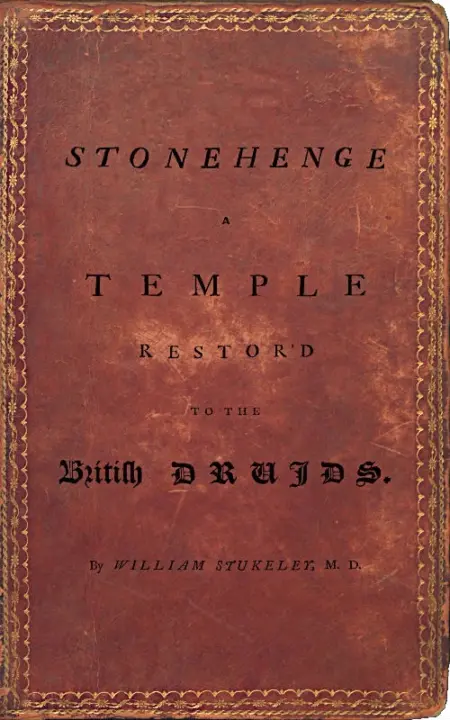
THE CLASSIC COLLECTION · 1740
"Stonehenge, a Temple Restor'd to the British Druids" by William Stukeley is a historical account written in the early 18th century. The book explores the origins and significance of Stonehenge, positing that it was built by the ancient Druids as a temple. Stukeley's investigation encompasses the physical description of the ruins, their architectural features, and the cultural context surrounding them, particularly concerning the Druids' religious practices. The opening of the text introduces Stukeley's fascination with ancient structures and outlines his systematic approach to studying the works of the Druids. He describes his summers spent measuring and contemplating the stone circles across Britain, including the famous Stonehenge. Stukeley argues that these monuments reflect a deep continuity of religious practice from ancient times, positioning the Druids within a historical lineage that traces back to patriarchal religions. His detailed reflection sets the stage for a comprehensive examination of the site's dimensions, material origins, and its place in the broader narrative of British history, revealing the book's intent to preserve and illuminate the memory of these ancient wonders.
Introduction adapted from the source catalogue; source summaries may be automatically generated.
Free to read · English · 48,776 words · No account needed
MAKE TIME FOR A GOOD BOOK
On by default. Untick to stop anonymous reading totals. Each page counts after 10 seconds in view. How this works.
Anonymous counting is on unless you have switched it off.
Therefore at the time of the founding of Stonehenge, the variation was about the same quantity and place, as about A. D. 1620. in our preceding table. Supposing with Dr. Halley, the revolution of this variation be about 700 years, three intire revolutions thereof, bring us to about the year of the city of Rome 280. which is about 460 years before our Saviour’s time: 420 years before Cæsar invaded Britain. About 100 years before our Saviour’s birth, Divitiacus made the Wansdike north of Stonehenge, and drove the possessors of this fine country of the Wiltshire downs, northwards. So that the Druids enjoyed their magnificent work of Stonehenge, but about 360 years. And the very great number of barrows about it, requires, that we should not much shorten the time. Sir Isaac Newton in his Chronology, reckons 19 years for a medium of a king’s reign. So that in that space, there were about 19 kings, in this country. And there seems to be about that number of royal barrows (in my way of conjecturing) about the place.
I observe, this time we have assign’d for the building of Stonehenge, is not long after Cambyses’s invasion of Egypt. When he committed such horrid outrages there, and made such dismal havock, with the priests and inhabitants in general, that they fled the country to all parts of the world. Some went as far as the East Indies, and there taught many of the antient Egyptian customs; as is taken notice of by the learned. It is not to be doubted that some of them fled as far westward, into the island of Britain, and introduced some of their learning, arts and religion, among the Druids; and perhaps had a hand in this very work of Stonehenge: the only one that I know of, where the stones are chizel’d. All other works of theirs, are of rude stones, untouch’d of tool, exactly after the patriarchal and Jewish mode: therefore older.
This was at a time, when the Phœnician trade was at height, the readier a conveyance to Britain: it was before the second temple at Jerusalem was built: before the Grecians had any history.
Directions to the binder.
All the half sheet plates are to be bound up with the book, as single leaves, according to their pages, and without guards, viz. Plate, N^o. 1, 2, 4, 6, 7, 8, 9, 10, 12, 14, 15, 16, 23, 24, 25, 26, 27, 28, 29, 30, 31, 32, 33, 34, 35. Those Plates, N^o. 11, 17, 19, 21, are to be once folded in the middle, and bound up with guards. Those Plates, N^o. 3, 5, 13, 18, 20, 22, are to be folded in three parts, and bound up with guards.
Stonehenge the latest of the Druid temples, Page 1, 17, 66
Older than the time of the Saxons and Danes, 1, 2, 3, 7, 47
Your reading position is saved on this browser. Take it to another device with a library code. Reading pages adapt to text, rather than matching a printed edition.
BEHIND THE BOOK
This eBook is for the use of anyone anywhere in the United States and most other parts of the world at no cost and with almost no restrictions whatsoever. You may copy it, give it away or re-use it under the terms of the Project Gutenberg License included with this eBook or online at www.gutenberg.org. If you are not located in the United States, you will have to check the laws of the country where you are located before using this eBook. Read the source licence.
The original source file, including credits and licence, is retained by this library. Request an original-format copy at no charge. Please include the book title and Project Gutenberg identifier #61567.
KEEP YOUR CURIOSITY GOING
Cécile Tormay

Moritz Busch
John L. Ransom
Frances Wright
Cécile Tormay

Mabel Potter Daggett