THE CLASSIC COLLECTION✦The Life of Mrs. Robert Louis StevensonCLASSIC FREE BOOKS
The Life of Mrs. Robert Louis Stevenson
Nellie Van de Grift Sanchez
THE CLASSIC COLLECTION · 1914
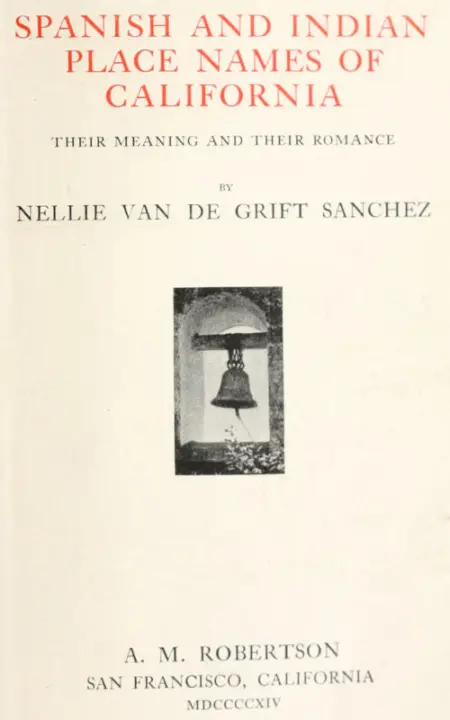
"Spanish and Indian Place Names of California: Their Meaning and Their Romance" by Nellie Van de Grift Sanchez is a historical reference work written in the early 20th century. This volume explores the origins and meanings of California's Spanish and Indian place names, intertwining them with captivating historical anecdotes and cultural narratives to contextualize the legacy of early explorers and settlers. The work aims to serve both as an informative guide for tourists and a resource for educational purposes. At the start of this reference work, the author introduces the purpose and intent behind compiling the stories and meanings of California’s diverse place names. Sanchez articulates the importance of preserving this heritage, emphasizing the romantic historical backdrop that these names convey. She acknowledges the challenges in tracing the origins of many names, particularly those of Indian descent, and highlights the differences in naming conventions between Spanish explorers and local indigenous tribes. The introduction sets the stage for a deeper exploration of specific regions, beginning with San Diego, and promises a wealth of fascinating tales connected to California's geographical names.
Introduction adapted from the source catalogue; source summaries may be automatically generated.
Free to read · English · 62,377 words · No account needed
MAKE TIME FOR A GOOD BOOK
On by default. Untick to stop anonymous reading totals. Each page counts after 10 seconds in view. How this works.
Anonymous counting is on unless you have switched it off.
In the Spanish language articles agree with their nouns in gender and number. The forms of the definite article are el (singular) and los (plural) for the masculine, la (singular) and las (plural) for the feminine. Examples, El Portal (the portal, or gate), Los Gatos (the cats), La Paz (the peace), Las Vírgenes (the virgins).
Agua pronounced Ah´gwah. Spanish Americans often mispronounce this word by leaving out the g, calling it ah´wa.
Aguajito ” Ah-gwah-hee´to.
Alameda ” Ah-lah-may´dthah.
Los Ángeles ” Loce Ahng´hell-ess.
Asunción ” Ah-soon-see-on´, with the o long, as in hope.
El Cajón ” El Kah-hon´, with the o long, as in hope.
Camino Real ” Kah-mee´no Ray-ahl´.
Cañada ” Kahn-yah´dtha, with the d slightly softened like th in then.
Carpintería ” Kar-peen-tay-ree´ah.
Carquínez ” Kar-kee´ness.
Conejo ” Ko-nay´ho.
Corral ” Kore-rahl´.
Dolores ” Do-lo´ress.
Farallones ” Fah-rahl-yo´ness, in Spanish-American, Fa-rah-yo´ness.
Los Gatos ” Loce Gah´tos, the o long, as in hope.
Guadalupe ” Gwa-dah-loo´pay.
La Jolla ” La Hole´yah, or in Spanish-American, Ho´yah.
La Joya ” La Ho´yah.
La Junta ” La Hoon´tah.
Laguna Seca ” Lah-goo´nah Say´cah.
Lagunitas ” Lah-goo-nee´tas.
Matilija ” Mah-tee-lee´hah.
Merced ” Mare-sedth´, with the d slightly softened like th in then.
Mesa ” May´sah.
Ojo ” O´ho, with the j strongly aspirated.
Pájaro ” Pah´hah-ro.
Paso Robles ” Pah´so Ro´blace.
Portolá ” Por-to-lah´.
Punta Arenas ” Poon´tah Ah-ray´nas.
Rodéo ” Ro-day´o.
Salinas ” Sah-lee´nas.
San Gerónimo ” Sahn Hay-ro´nee-mo.
San Jacinto ” Sahn Hah-seen´to.
San Joaquín ” Sahn Wha-keen´.
San José ” Sahn Ho-say´.
San Juan Bautista ” Sahn Whan Bau-tees´ta.
San Julián ” Sahn Hoo-lee-ahn´.
San Luís Obispo ” Sahn Loo-ees´ O-bees´po.
San Martín ” Sahn Mar-teen´.
San Quintín ” Sahn Keen-teen´, colloquially spelled Quentin.
Santa Fé ” Sahnta Fay´.
Santa Inez ” Sahnta Ee-ness´.
San Ysidro ” Sahn Ee-see´dro, also spelled Isidro.
Suñol ” Soon-yole´.
Vallejo ” Val-yay´ho, in Spanish-American Vah-yay´ho.
Las Vírgenes ” Las Veer´hen-ess.
Abalone (the great sea-snail of the Pacific Coast). See page 75.
Acampo (common pasture). See page 282. This name is used here in the sense of “camp,” and was given by the Southern Pacific Railroad years ago, in reference to a camp of wood choppers and Chinese which was located there.
Acolito (acolyte), is in Imperial County.
Adelante (onward, forward), now changed to Napa Junction, is in Napa County. This place was called Adelante in the hope that its location on Napa River would cause it to become the principal city of the valley.
Adobe (sun-dried brick).
Your reading position is saved on this browser. Take it to another device with a library code. Reading pages adapt to text, rather than matching a printed edition.
BEHIND THE BOOK
This eBook is for the use of anyone anywhere in the United States and most other parts of the world at no cost and with almost no restrictions whatsoever. You may copy it, give it away or re-use it under the terms of the Project Gutenberg License included with this eBook or online at www.gutenberg.org. If you are not located in the United States, you will have to check the laws of the country where you are located before using this eBook. Read the source licence.
The original source file, including credits and licence, is retained by this library. Request an original-format copy at no charge. Please include the book title and Project Gutenberg identifier #59251.
KEEP YOUR CURIOSITY GOING
Cécile Tormay

Moritz Busch
John L. Ransom
Frances Wright
Cécile Tormay

Mabel Potter Daggett