THE CLASSIC COLLECTION✦An outlaw’s diary: the CommuneCLASSIC FREE BOOKS
An outlaw’s diary: the Commune
Cécile Tormay
THE CLASSIC COLLECTION · 1892
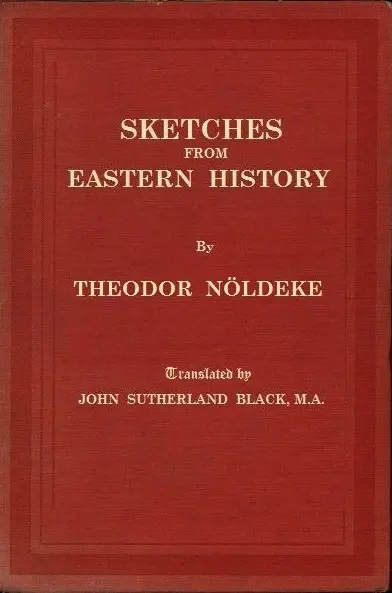
"Sketches from Eastern History" by Theodor Nöldeke is a historical account written in the late 19th century. This work provides a series of essays that explore key aspects of Eastern history, particularly focused on the Semitic races and the rise of Islam. The author, a noted orientalist, aims to provide insights into the culture, religion, and political dynamics of the region, enhancing the understanding of historical figures such as the Islamic prophet Mohammed and his works. At the start of the text, Nöldeke presents the complex task of depicting the moral and psychological characteristics of the Semitic races, acknowledging the challenges and contradictions involved. He critiques previous scholars who have portrayed these traits and outlines his intent to contribute meaningfully to the discourse. The opening engages the reader by elaborating on how geography, religion, and history have shaped the characteristics and civilizations of the Semitic peoples, and it sets the stage for a deeper examination that will unfold in subsequent chapters. Through his rigorous analysis, Nöldeke's work promises to be a valuable resource for both specialists and general readers interested in the history and influence of the Eastern world.
Introduction adapted from the source catalogue; source summaries may be automatically generated.
Free to read · English · 93,547 words · No account needed
MAKE TIME FOR A GOOD BOOK
On by default. Untick to stop anonymous reading totals. Each page counts after 10 seconds in view. How this works.
Anonymous counting is on unless you have switched it off.
Jacobites (Monophysite Syrians), 236;
primate of, 244
John, Monophysite bishop of “Asia,” Church history by, 225
John Barmadeni, competitor for Jacobite Patriarchate, 239
Juristical schools of Islam, 93-95
Kadarites, 91
Karmatians, 89, 152
Kasa, 259
Kenfu, 260
Kerbelá, 82
Khalaf, son of Ahmed, 205
Khálid, Barmecide, 133
Khálid, the Sword of God, 73
Khalífa, 76
Kharijites, 80, 93, 119, 151
Khawárij, 80
Khazars, Mansúr’s relations with the, 138
Kházim, Mansúr’s general, 142
Khorásán, 109, 115, 118, 142, 179, 184
Khujastání, 196
Koran, 21-59;
rationale of its revelation, 22;
literary form, 25;
abrogated readings, 27;
contents, 28;
histories of prophets and saints in, 29;
style and artistic effect, 32, 35;
Medina and Mecca súras, 39;
three periods of, 40-46;
initial letters, 47;
redaction of Zaid, 49;
Othmán’s edition, 50;
codex of Obay, 53;
reading styles, 55;
commentators on, 56;
translations, 58
Ledj, Abyssinian title, 262
Lúlú, his share in suppressing the Zenj, 172, 173
Maan, son of Záida, Omayyad general, 120
Madínat es-Salám, official name of Bagdad, 129
Mahdí, son of Mansúr, 123, 132
Mahmúd of Ghazni, 206
Makdala (Magdala), 272, 281
Mamlúk, 188
Mansúr, 107-145
Maphrián, Jacobite dignitary, 244
Márá, Syrian saint, 229-232
Marcus. See Yavalláhá
Maron, pillar-saint, 228
Maronites, 220
Maslama, the false prophet 49
Mecca, pilgrimage to, 66;
plundered, 81;
sherífs of, 100
Medina, 122, 124, 128
Meisir, 69
Menen, Abyssinian princess, 264
Menilek of Shoa, 263, 277
Merwán II., 112
Moáwiya, 79, 81
Mohammed, son of Abdalláh, the Alid, 120
Mohammed, the Kurd, 162, 197
Mohammed, the Táhirid, 180, 183
Mohammed, son of Wásil, 182, 189
Mohammed Ali of Egypt, 103
Mokhtár, revolutionary leader, 149
Mokhtára, town of, 156, 167
Mongols, 99, 238, 242
Morocco, sultans of, 101
Moslem calendar, 70
Motadid, Caliph, 164, 199
Motamid, Caliph, 158, 170, 191
Mowaffak, brother of Motamid, 158, 160, 174, 195
Munzinger, Werner, 281
Músá, the Turk, 161
Muslim, 62
Mutazila, 91
Negusié of Tigré, 272
Neháwend, battle of, 75
Nestorians, 219, 244, 249
Níshábúr 184, 199, 200
Nosairians, 89
Obaidalláh, founder of Fatimid dynasty, 89
Obay, codex of, 53
Obolla, 157
Okba of Yemen, 143
Omar, Caliph, 74
Omar II., 82
Omayyads, 78, 81, 120, 143
Othmán, Caliph, 77
Othmán’s edition of the Koran, 50
Ottoman Turks, 99
Párs, 179;
conquest of, 189
Paul, Syrian hermit, 229
Persia, in conflict with Islam, 74;
invaded by Mongols, 99;
Shíite States in, 101;
conquered by Arabs, 109;
Eastern, or Irán, 176
Philology, Arabian, 17
Plowden, consul, 275
Quara, 260
Ráfi, his conflict with Amr, 199
Ráfika, founded by Mansúr, 131
Ras Ali of Abyssinia, 258
Rassam, 280
Ráwendí, the, 119
Riyáh, governor of Medina, 122
Rustem, Persian general, 75
Your reading position is saved on this browser. Take it to another device with a library code. Reading pages adapt to text, rather than matching a printed edition.
BEHIND THE BOOK
This eBook is for the use of anyone anywhere in the United States and most other parts of the world at no cost and with almost no restrictions whatsoever. You may copy it, give it away or re-use it under the terms of the Project Gutenberg License included with this eBook or online at www.gutenberg.org. If you are not located in the United States, you will have to check the laws of the country where you are located before using this eBook. Read the source licence.
The original source file, including credits and licence, is retained by this library. Request an original-format copy at no charge. Please include the book title and Project Gutenberg identifier #54782.
KEEP YOUR CURIOSITY GOING
Cécile Tormay

Moritz Busch
John L. Ransom
Frances Wright
Cécile Tormay

Mabel Potter Daggett