THE CLASSIC COLLECTION✦An outlaw’s diary: the CommuneCLASSIC FREE BOOKS
An outlaw’s diary: the Commune
Cécile Tormay
THE CLASSIC COLLECTION · 1892
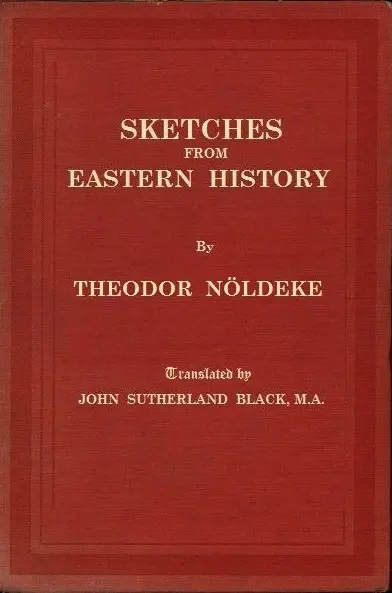
"Sketches from Eastern History" by Theodor Nöldeke is a historical account written in the late 19th century. This work provides a series of essays that explore key aspects of Eastern history, particularly focused on the Semitic races and the rise of Islam. The author, a noted orientalist, aims to provide insights into the culture, religion, and political dynamics of the region, enhancing the understanding of historical figures such as the Islamic prophet Mohammed and his works. At the start of the text, Nöldeke presents the complex task of depicting the moral and psychological characteristics of the Semitic races, acknowledging the challenges and contradictions involved. He critiques previous scholars who have portrayed these traits and outlines his intent to contribute meaningfully to the discourse. The opening engages the reader by elaborating on how geography, religion, and history have shaped the characteristics and civilizations of the Semitic peoples, and it sets the stage for a deeper examination that will unfold in subsequent chapters. Through his rigorous analysis, Nöldeke's work promises to be a valuable resource for both specialists and general readers interested in the history and influence of the Eastern world.
Introduction adapted from the source catalogue; source summaries may be automatically generated.
Free to read · English · 93,547 words · No account needed
MAKE TIME FOR A GOOD BOOK
On by default. Untick to stop anonymous reading totals. Each page counts after 10 seconds in view. How this works.
Anonymous counting is on unless you have switched it off.
Abaga, successor of Hulagu, 248
Abbádán, town of, 157
Abba Selama, 268, 273
Abbásids, 83, 108, 116, 120
Abdalláh, Mansúr’s uncle, 113, 116, 141
Abdalláh, son of Moáwiya, 112
Abdalláh, opponent of Yakúb the Coppersmith, 183
Abderrahmán, founder of Omayyad dynasty in Spain, 143
Abíwerd, battle near, 202
Abú Bekr, 72
Abú Duláma, favourite of Mansúr, 135
Abul-Abbás. See Motadid
Abul-Abbás. See Saffáh
Abul-Alá al-Maarri, 96
Abulfaraj. See Barhebræus
Abú Lahab and Mohammed, 52
Abú Moslem, 111, 114, 115, 117
Abú Salama, 114
Abú Sufyán, head of Omayyad family, 78
Abyssinia, 257
Abyssinian Church, 273
Ahmed, Mongol sovereign, 250
Ahrún, father of Barhebræus, 236
Ahwáz, taken by the Zenj, 158, 161
Aïsha, wife of Mohammed, 78
Alí, son of Husain, 179
Alí, son of Mohammed, leader of the Zenj, 146
Alids, 108, 120, 121
Amr, brother and successor of Yakúb, 195
Amr, governor of Egypt, 81
Arabian philology, 17
Arabs, aristocratic feelings of, 12;
political adaptability, 11;
military talent, 14;
intellectual ability, 15;
poetry of, 18;
art, 19
Armenians, relations of, with Jacobites, 245
Ash‘arí, 92
Attar’athé, sanctuary of, at Mabbog 214
Bábís, 101
Babylonians, science of, 17
Bagdad, 84;
taken by Hulagu, 99, 241;
building of, 129
Baidáwí, his commentary on the Koran, 57
Barhebræus, 236-256;
his works, 255
Barsaumá, brother of Barhebræus, 253
Basra, 125, 147, 155, 158
Basshár, poet, 127
Bell, John, 275
Beru, son of Goshu, 267
Búids, 88
Caaba, veneration of, 66;
carried from Mecca, 90
Calendar, Moslem, 70
Caliphate, 99
Cameron, Consul, 278
Catholicus, title explained, 244
Commander of the Faithful, title assumed by Caliph Omar, 76
Coppersmith, Yakúb the, 176 et seq.
Cufa, 111, 125, 150
D’Abbadie quoted, 265
Damascus, capital of Omayyads, 81
De Jacobis, Bishop, 268
Dervishes, 97;
of the Soudan, 283
Dionysius, Syrian Metropolitan, 238, 239
Dirhem, Sístánese leader, 177, 178
Dogmatic controversies in Islam, 90
Druses, 89
Egypt, conquered, 90, 99;
sultans of, 99
Emír Almúminín, 76
Fakirs, 97
Fatimid Caliphs, 89
Flad, German missionary, 260
Freethinking in Islam, 95
Gallas, 271
Genealogical table, of the Háshimids, 110;
of the Abbásids, 116;
of the Omayyads, 120;
of the Alids, 121;
of the Táhirids, 187;
of Yakúb’s dynasty, 205
Ghulám, 188
Gondar, 258
Goshu of Gojam, 266
Gypsies on lower Tigris, 152
Hákim, Fatimid Caliph, 89
Hárún ar-Rashíd, 84
Hasan, son of Alí, 81
Háshimids, 110
Háshimíya, 129
Házim, Mansúr’s general, 119
Heraclius, emperor, 60, 75
Hierapolis, sanctuary at, 214
Hulagu, grandson of Jenghiz Khan, 99, 242
Humaima, 109, 111
Husain, son of Alí, 82
Ibn Amíd, Coptic author, 241
Ibn Hobaira, supporter of Omayyads, 114
Ibn Khaldún, 99
Ibn Mas‘úd, his codex of the Koran, 53
Ibn Mokaffa, 141
Ibráhím, the Abbásid, 111, 125-127
Ignatius, Jacobite Patriarch, 243, 247
Imám, 66
Isá, Mansúr’s cousin, 124, 127, 140
Islám, 62
Ismáíl the Sámánid, 201
Islam, and Christianity, 5;
rise of, 60;
ethics of, 64;
theology of, 61;
external observances, 65;
survivals of heathenism, 66;
circumcision, 68;
dietary laws, 68;
Church and State, 69;
alms, 68;
position of women, 70;
slavery, 71;
characteristics of, 71;
and the Oriental Christians, 85;
law of, 93;
worship of saints, 102;
vitality of, 104;
headship of (caliphate), 99;
tradition, weight of, 93;
freethinking in, 95
Your reading position is saved on this browser. Take it to another device with a library code. Reading pages adapt to text, rather than matching a printed edition.
BEHIND THE BOOK
This eBook is for the use of anyone anywhere in the United States and most other parts of the world at no cost and with almost no restrictions whatsoever. You may copy it, give it away or re-use it under the terms of the Project Gutenberg License included with this eBook or online at www.gutenberg.org. If you are not located in the United States, you will have to check the laws of the country where you are located before using this eBook. Read the source licence.
The original source file, including credits and licence, is retained by this library. Request an original-format copy at no charge. Please include the book title and Project Gutenberg identifier #54782.
KEEP YOUR CURIOSITY GOING
Cécile Tormay

Moritz Busch
John L. Ransom
Frances Wright
Cécile Tormay

Mabel Potter Daggett