THE CLASSIC COLLECTION✦The queen of the isleCLASSIC FREE BOOKS
The queen of the isle
May Agnes Fleming
THE CLASSIC COLLECTION · 1887
"Sir Noel's Heir: A Novel" by May Agnes Fleming is a fictional work written in the late 19th century. The narrative revolves around a tragic romance entangled in themes of love, betrayal, and the complexities of social expectations. The story begins with the death of Sir Noel Thetford, a young baronet, revealing a fraught family dynamic, particularly between him and his wife, Lady Ada. The opening of the novel describes the stormy night surrounding Thetford Towers as Sir Noel lies dying following a riding accident. The atmosphere is heavy with foreboding, reflecting the turmoil within the household. As Dr. Gale arrives to attend to Sir Noel, the gravity of the situation becomes clear, leading to a tense moment where Sir Noel confronts his impending fate. The scene poignantly captures the weight of his regrets and the emotional strain on Lady Ada as she kneels beside him, underscoring the upcoming trials that will shape their lives. The narrative sets the stage for a deeper exploration of loyalty, duty, and the haunting specter of the past that looms over the characters' futures.
Introduction adapted from the source catalogue; source summaries may be automatically generated.
Free to read · English · 35,395 words · No account needed
MAKE TIME FOR A GOOD BOOK
On by default. Untick to stop anonymous reading totals. Each page counts after 10 seconds in view. How this works.
Anonymous counting is on unless you have switched it off.
The rainy December day closed in a rainier night. Another day dawned on the world, sunless, and chilly, and overcast still.
It dawned on London in murky, yellow fog, on sloppy, muddy streets--in gloom and dreariness, and a raw, easterly wind. In the densely populated streets of the district of Lambeth, where poverty huddled in tall, gaunt buildings, the dismal light stole murkily and slowly over the crowded, filthy streets and swarming purlieus.
In a small upper room of a large dilapidated house, this bad December morning, a painter stood at his easel. The room was bare and cold, and comfortless in the extreme; the painter was middle-aged, small, brown and shriveled, and very much out at elbows. The dull, gray light fell full on his work--no inspiration of genius by any means--only the portrait, coarsely colored, of a fat, well-to-do butcher's daughter round the corner. The man was Joseph Legard, scene-painter to one of the minor city theatres, who eked out his slender income by painting portraits when he could get them to paint. He was as fond of his art as any of the great, old masters; but he had only one attribute in common with those immortals--extreme poverty; for his salary was not large, and Mr. Legard found it a tight fit, indeed, to "make both ends meet."
So he stood over his work this dull morning, however, in his fireless room, with a cheerful, brown face, whistling a tune. In the adjoining room he could hear his wife's voice raised shrilly, and the cries of half a dozen Legards. He was used to it, and it did not disturb him; and he painted and whistled cheerily, touching up the butcher's daughter's snub nose and fat cheeks and double chin, until light footsteps came running up-stairs, and the door was flung wide by an impetuous hand. A boy of ten, or thereabouts, came in--a bright-eyed, fair-haired lad, with a handsome, resolute face, and eyes of cloudless, Saxon blue.
"Ah, Guy!" said the scene-painter, turning round and nodding
good-humoredly. "I've been expecting you! What do you think of Miss
Jenkins?"
The boy looked at the picture with the glance of an embryo connoisseur.
"It's as like her as two peas, Joe; or would be, if her hair was a little redder, and her nose a little thicker, and the freckles were plainer. But it looks like her as it is."
"Well, you see, Guy," said the painter, going on with Miss Jenkins's left eyebrow, "it don't do to make 'em too true--people don't like it; they pay their money, and they expect to take it out in good looks. And now, any news this morning, Guy?"
Your reading position is saved on this browser. Take it to another device with a library code. Reading pages adapt to text, rather than matching a printed edition.
May Agnes Fleming
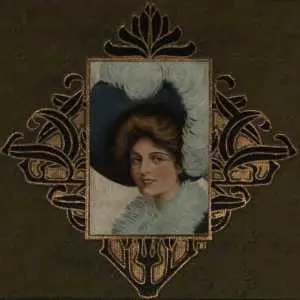
May Agnes Fleming
May Agnes Fleming
May Agnes Fleming
BEHIND THE BOOK
This eBook is for the use of anyone anywhere in the United States and most other parts of the world at no cost and with almost no restrictions whatsoever. You may copy it, give it away or re-use it under the terms of the Project Gutenberg License included with this eBook or online at www.gutenberg.org. If you are not located in the United States, you will have to check the laws of the country where you are located before using this eBook. Read the source licence.
The original source file, including credits and licence, is retained by this library. Request an original-format copy at no charge. Please include the book title and Project Gutenberg identifier #35931.
KEEP YOUR CURIOSITY GOING
Coulson Kernahan

Maurice Baring
Frances Wright
Cécile Tormay

Frederic Jesup Stimson

W. H. P. (William Henry Pope) Jarvis