THE CLASSIC COLLECTION✦An outlaw’s diary: the CommuneCLASSIC FREE BOOKS
An outlaw’s diary: the Commune
Cécile Tormay
THE CLASSIC COLLECTION · 1893
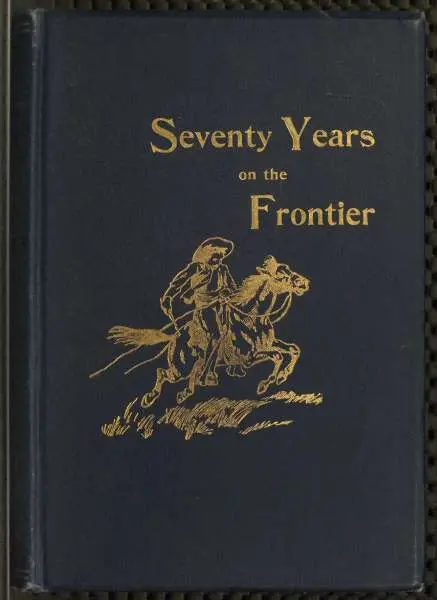
"Seventy Years on the Frontier" by Alexander Majors is a historical memoir written in the late 19th century. The narrative chronicles the author's extensive experiences and adventures on the American frontier, highlighting his contributions to overland freighting and the Pony Express. The book offers an insightful view into the life and challenges faced by pioneers and settlers during a transformative period in American history. The opening of "Seventy Years on the Frontier" introduces Alexander Majors, who reflects on his childhood and early experiences. He recounts his family's migration to Missouri, detailing their encounters with the wilderness and the hardships involved in settling in an untamed land. Through vivid anecdotes, Majors depicts the frontier's stark realities, including the dangers posed by Indigenous populations and the challenges of survival. He shares touching memories of his mother and the resilience instilled in him from a young age, setting the stage for a life characterized by adventure and the forging of a new path across the American landscape.
Introduction adapted from the source catalogue; source summaries may be automatically generated.
Free to read · English · 94,573 words · No account needed
MAKE TIME FOR A GOOD BOOK
On by default. Untick to stop anonymous reading totals. Each page counts after 10 seconds in view. How this works.
Anonymous counting is on unless you have switched it off.
My fears were very soon realized, for when they arrived within a few hundred yards of me and the chief saw me returning with the cattle he had sent his braves to drive off, he commanded his men to make a descent upon me, and he undertook the job of leading them. They raised a hideous yell and started toward me at the top of their horses' speed. If my oxen had not been driven so far and become to some extent tired, I would have had a royal stampede. The animals only ran a few hundred yards until I succeeded in holding them up. By this time the Indians had reached me and my cattle. The braves surrounded the cattle, and the chief came at the top of his horse's speed directly toward me, with his gun drawn up in striking attitude. Of coarse I did not allow him to get in reaching distance. I turned my horse and put spurs to him; he was a splendid animal and it was a comparatively easy matter for me to keep out of the reach of the vicious chief, who did not want to kill me, but desired to scare me, or cause me to run away and leave my herd, or disable me so I could not follow him and his band if they attempted to take the cattle.
This chasing me off for some distance was repeated three times, I returning in close proximity to where his braves surrounded the cattle on every side, some on foot holding their ponies, others on horseback. Those who had alighted were dancing and yelling at the tops of their voices. The third time I returned to where the chief and one of his braves, armed with bow and arrows, were sitting on their horses, some distance from the cattle and in line between me and the group of braves. When I got within thirty or forty yards of him he beckoned me to come to him, for all the communication we had was carried on by means of signs; I did not speak their language nor they mine. I rode cautiously up side by side, a short distance from the chief, with our horses' heads in the same direction. When I had fairly stopped to see what he was going to do, his brave who was on the opposite side from me slid off his horse, ran under the neck of the chief's, and made a lunge to catch the bridle of my horse. His sudden appearance caused the animal to jump so quick and far that he had just missed getting hold of the rein. Had he succeeded in the attempt they would have taken my horse and oxen and cleared out, leaving me standing on the prairie. When he found he had failed in his attempt, he returned to his horse, mounted, and he and the chief rode slowly toward me, for I had reined up my horse when I found I was out of reach. I sat still to see what their next maneuver would be. The brave changed from the left of the chief to the right as they came slowly toward me. When they got within a few feet of me, with the heads of our horses in the same direction, they reined up their ponies and the brave suddenly drew his bow at full bend, with a sharp-pointed steel in the end of the arrow. He aimed at my heart with the most murderous, vindictive, and devilish look on his face and from his eyes that I ever saw portrayed on any living face before or since. Of course there was no time for doing anything but to keep my eye steadfast on his. To show the influence of the mind over the body, while he was pointing the arrow at me I felt a place as large as the palm of my hand cramping where the arrow would have struck me had he shot. While in this position he pronounced the word "say" with all the force he could summon. I did not at that time understand what he meant. The chief relieved my suspense by holding up his ten fingers and pointing to the oxen. I then understood that if I gave him ten of my animals he would not put the dart through me. I felt that I could not spare that number and move on with my train to its destination, and in a country where I had not the opportunity of obtaining others, so I refused. He then threw up five fingers and motioned to the cattle. Again I shook my head. He then motioned me to say how many I would give, and I held up one finger. The moment I did so he gave the word of command to his braves, who were still dancing and screaming round the cattle, and they, whirling into line, selected one of the animals so quickly that one had hardly time to think, and left thirty-three of the oxen and myself standing in the prairie. I had held them there so long, refusing to let them go without following them, I think they were afraid some of my party would overtake me. There was no danger of that had they only known it, for on my return I found all my men at the wagons wondering what had become of me. I had left the camp at daylight and it was after noon when I returned.
Your reading position is saved on this browser. Take it to another device with a library code. Reading pages adapt to text, rather than matching a printed edition.
BEHIND THE BOOK
This eBook is for the use of anyone anywhere in the United States and most other parts of the world at no cost and with almost no restrictions whatsoever. You may copy it, give it away or re-use it under the terms of the Project Gutenberg License included with this eBook or online at www.gutenberg.org. If you are not located in the United States, you will have to check the laws of the country where you are located before using this eBook. Read the source licence.
The original source file, including credits and licence, is retained by this library. Request an original-format copy at no charge. Please include the book title and Project Gutenberg identifier #42195.
KEEP YOUR CURIOSITY GOING
Cécile Tormay

Moritz Busch
John L. Ransom
Frances Wright
Cécile Tormay

Mabel Potter Daggett