THE CLASSIC COLLECTION✦An outlaw’s diary: the CommuneCLASSIC FREE BOOKS
An outlaw’s diary: the Commune
Cécile Tormay
THE CLASSIC COLLECTION · 1893
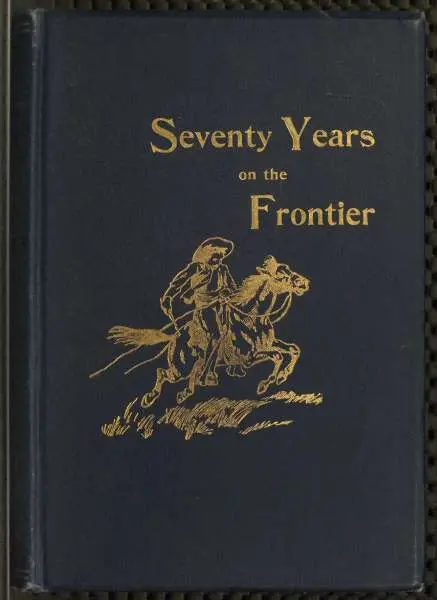
"Seventy Years on the Frontier" by Alexander Majors is a historical memoir written in the late 19th century. The narrative chronicles the author's extensive experiences and adventures on the American frontier, highlighting his contributions to overland freighting and the Pony Express. The book offers an insightful view into the life and challenges faced by pioneers and settlers during a transformative period in American history. The opening of "Seventy Years on the Frontier" introduces Alexander Majors, who reflects on his childhood and early experiences. He recounts his family's migration to Missouri, detailing their encounters with the wilderness and the hardships involved in settling in an untamed land. Through vivid anecdotes, Majors depicts the frontier's stark realities, including the dangers posed by Indigenous populations and the challenges of survival. He shares touching memories of his mother and the resilience instilled in him from a young age, setting the stage for a life characterized by adventure and the forging of a new path across the American landscape.
Introduction adapted from the source catalogue; source summaries may be automatically generated.
Free to read · English · 94,573 words · No account needed
MAKE TIME FOR A GOOD BOOK
On by default. Untick to stop anonymous reading totals. Each page counts after 10 seconds in view. How this works.
Anonymous counting is on unless you have switched it off.
They reached the Santa Clara Valley the 4th of February, 1850, and on that day each year they celebrate their deliverance by a reunion, where in pleasant companionship and around the festive board they recount reminiscences of the past, and live over again those scenes, when young and hopeful, they lived and suffered together.
There are but eleven of the survivors of that party alive to-day, and these are widely scattered east of the Rocky Mountains and on the Pacific Slope. Some are old men, too feeble to travel, and can only be present in spirit and by letter at the annual reunions. Gladly would every Jayhawker welcome one and all of that band, bound together by ties of suffering in a bond of brotherhood which naught but death can sever.
The names and residences of the original party are as follows:
John B. Colton, Kansas City, Mo. Alonzo C. Clay, Galesburg, Ill. Capt. Asa Haines, Delong, Knox County, Ill., died March 29, 1889. Luther A. Richards, Beaver City, Neb. Charles B. Mecum, Perry, Greene County, Iowa. John W. Plummer, Toulon, Ill., died June 22, 1892. Sidney P. Edgerton, Blair, Neb., died January 31, 1880. Edward F. Bartholomew, Pueblo, Colo., died February 13, 1891. Urban P. Davidson, Derby P. O., Fremont County, Wyo. John Groscup, Cahto, Mendocino County, Cal. Thomas McGrew, died in 1866, in Willamette Valley, Ore. John Cole, died in Sonora, Cal., in 1852. John L. West, Coloma, Cal., since died. William B. Rude, drowned in the Colorado River, New Mexico, in 1862. L. Dow Stevens, San José, Cal. William Robinson, Maquon, Ill., died in the desert. ---- Harrison, unknown. Alexander Palmer, Knoxville, Ill., died at Slate Creek, Sierra County, Cal., in 1853. Aaron Larkin, Knoxville, Ill., died at Humboldt, Cal., in 1853. Marshall G. Edgerton, Galesburg, Ill., died in Montana Territory in 1855. William Isham, Rochester, N. Y., died in the desert. ---- Fish, Oscaloosa, Iowa, died in the desert. ---- Carter, Wisconsin, unknown. Harrison Frans, Baker City, Baker County, Ore. Capt. Edwin Doty, Naples, Santa Barbara County, Cal., died June 14, 1891. Bruin Byram, Knoxville, Ill., died in 1863. Thomas Shannon, Los Gatos, Santa Clara County, Cal. Rev. J. W. Brier, wife, and three small children, Lodi City, San Joaquin County, Cal. George Allen, Chico, Cal., died in 1876. Leander Woolsey, Oakland, Cal., died in 1884. Man from Oscaloosa, Iowa, name not remembered, died in California. Charles Clark, Henderson, Ill., died in 1863. ---- Gretzinger, Oscaloosa, Iowa, unknown.
A Frenchman, name unknown, became insane from starvation, wandered from camp near the Sierra Nevada Mountains, captured by the Digger Indians, and was rescued by a United States surveying party fifteen years after.
The following are to-day the sole survivors of the Jayhawk party
of 1849:
Your reading position is saved on this browser. Take it to another device with a library code. Reading pages adapt to text, rather than matching a printed edition.
BEHIND THE BOOK
This eBook is for the use of anyone anywhere in the United States and most other parts of the world at no cost and with almost no restrictions whatsoever. You may copy it, give it away or re-use it under the terms of the Project Gutenberg License included with this eBook or online at www.gutenberg.org. If you are not located in the United States, you will have to check the laws of the country where you are located before using this eBook. Read the source licence.
The original source file, including credits and licence, is retained by this library. Request an original-format copy at no charge. Please include the book title and Project Gutenberg identifier #42195.
KEEP YOUR CURIOSITY GOING
Cécile Tormay

Moritz Busch
John L. Ransom
Frances Wright
Cécile Tormay

Mabel Potter Daggett