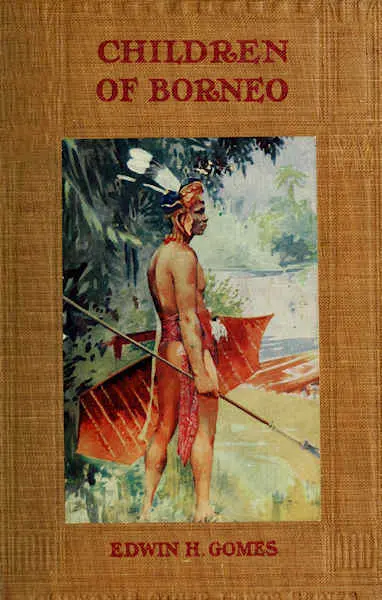
Children of Borneo
Edwin Herbert Gomes
THE CLASSIC COLLECTION · 1911
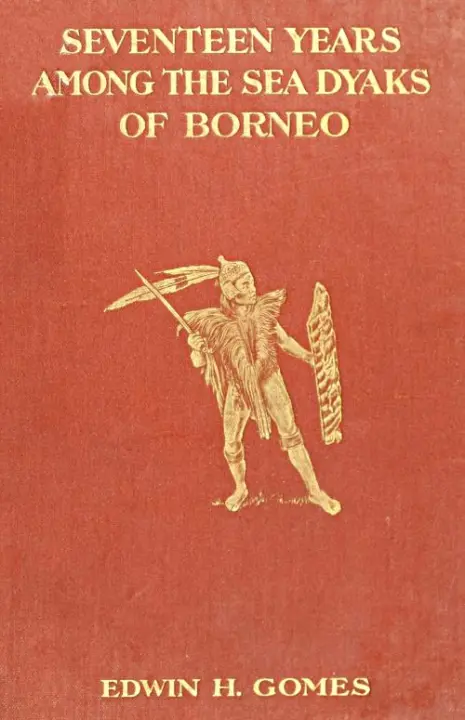
"Seventeen Years Among the Sea Dyaks of Borneo" by Edwin Herbert Gomes is a historical account written in the early 20th century. The book explores the life and customs of the Sea Dyaks, a native tribe in Borneo, drawing from Gomes's extensive experience as a missionary among them. It delves deeply into their traditions, social structure, and the transformative effects of Western influence on their culture. At the start of the book, Gomes sets the stage by describing the lush, untamed jungles of Borneo and the tumultuous history of the Dyaks, emphasizing their past involvement in piracy and head-hunting. He introduces Sir James Brooke, who played a pivotal role in suppressing these practices and bringing order to the region, ultimately paving the way for reforms that impacted the Dyaks' way of life. The opening portion outlines the precarious existence of the Dyaks in the past, detailing the violence and fear that permeated their society. It also foreshadows the significant cultural changes they would face with the advent of Western governance and missionary work, a theme that will be explored in depth throughout the book.
Introduction adapted from the source catalogue; source summaries may be automatically generated.
Free to read · English · 106,654 words · No account needed
MAKE TIME FOR A GOOD BOOK
On by default. Untick to stop anonymous reading totals. Each page counts after 10 seconds in view. How this works.
Anonymous counting is on unless you have switched it off.
=Maias=, the orang-utan (Simia satyrus).
=Makai di ruai=, literally “eating in the public hall of a Dyak house.” Name of a social feast.
=Makai rami=, literally “eating joyfully in large numbers.” Name of a
social feast.
=Mali=, forbidden; tabooed.
=Manang=, a witch-doctor.
=Manang bali=, a witch-doctor who has changed his sex and become a woman.
=Manang bangun=, a witch-doctor who has been “waved upon”—i.e., who has been through the “waving upon” ceremony.
=Manang enjun=, a witch-doctor who has been “trodden upon”—i.e., who has been through the “trodden upon” ceremony.
=Manang mansau=, literally “a ripe manang”—i.e., one who is a fully qualified manang.
=Manang matak=, literally “an unripe manang”—i.e., one who has not been fully initiated into the mysteries of the manang’s profession.
=Manjong=, to shout all together.
=Mencha=, the Sword Dance.
=Mlah pinang=, literally “to split the betel-nut.” To perform the marriage ceremony by splitting the betel-nut.
=Naga=, a dragon. A valuable old jar with the figure of a dragon on it.
=Nampok=, to spend the night at a solitary place in order to obtain some charms from the spirits.
=Nemuai ka Sabayan=, “making a journey to Hades.” Name of a manang
ceremony.
=Nendak=, an omen bird.
=Ngelembayan=, “taking a long sight.” Name of a manang ceremony.
=Nibong=, a thorny palm (Oncosperma tigillaria).
=Nipa=, a palm which grows by the sea and at the mouths of rivers (Nipa
fructicans).
=Orang-utan=, the maias (Simia satyrus).
=Padi=, rice in the husk.
=Pagar api=, literally “a fence of fire.” A spear fixed blade upwards, with leaves tied to it, round which the manangs walk when taking part in their ceremonies.
=Pana=, an offering of food given to the dead by the friends of those who
are in mourning.
=Pandong=, a kind of altar erected in different parts of the veranda of the Dyak house during the Bird Feast.
=Papau=, an omen bird.
=Para piring=, the altar of sacrifice.
=Pelampong=, a wooden float, generally cut in the form of a duck, to which baited hooks are fastened.
=Pelandai=, a love-song.
=Pelian=, a manang ceremony to restore the health of a sick person.
=Pendam=, a burial-ground.
=Pendok=, a tree with fibrous bark.
=Pengap=, an incantation.
=Pengaroh=, a charm.
=Petara=, gods.
=Peti=, a spring trap set to kill wild pig.
=Pinang=, the betel-nut; the areca-nut.
=Piring=, an offering of food.
=Plandok=, the mouse-deer.
Your reading position is saved on this browser. Take it to another device with a library code. Reading pages adapt to text, rather than matching a printed edition.
Edwin Herbert Gomes
BEHIND THE BOOK
This eBook is for the use of anyone anywhere in the United States and most other parts of the world at no cost and with almost no restrictions whatsoever. You may copy it, give it away or re-use it under the terms of the Project Gutenberg License included with this eBook or online at www.gutenberg.org. If you are not located in the United States, you will have to check the laws of the country where you are located before using this eBook. Read the source licence.
The original source file, including credits and licence, is retained by this library. Request an original-format copy at no charge. Please include the book title and Project Gutenberg identifier #57201.
KEEP YOUR CURIOSITY GOING
Wilfrid Scawen Blunt
Wilfrid Scawen Blunt

E. W. (Edgar Watson) Howe
Cécile Tormay

Moritz Busch
John L. Ransom