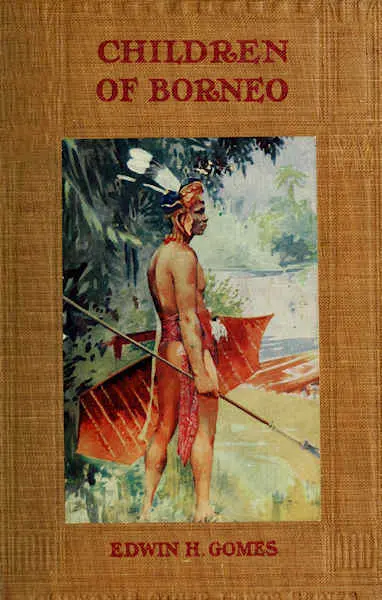
Children of Borneo
Edwin Herbert Gomes
THE CLASSIC COLLECTION · 1911
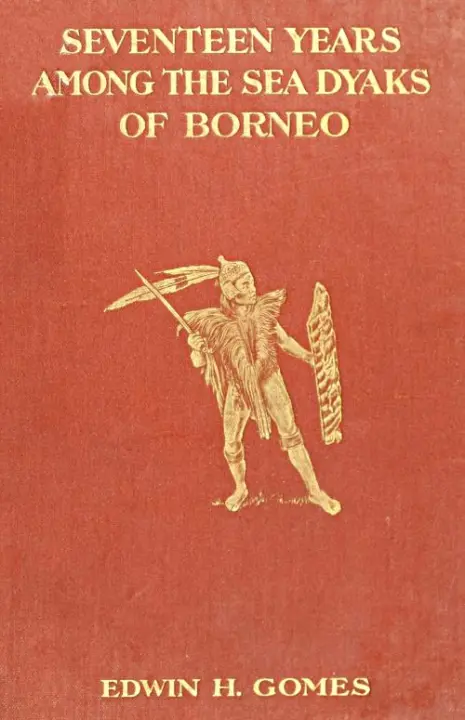
"Seventeen Years Among the Sea Dyaks of Borneo" by Edwin Herbert Gomes is a historical account written in the early 20th century. The book explores the life and customs of the Sea Dyaks, a native tribe in Borneo, drawing from Gomes's extensive experience as a missionary among them. It delves deeply into their traditions, social structure, and the transformative effects of Western influence on their culture. At the start of the book, Gomes sets the stage by describing the lush, untamed jungles of Borneo and the tumultuous history of the Dyaks, emphasizing their past involvement in piracy and head-hunting. He introduces Sir James Brooke, who played a pivotal role in suppressing these practices and bringing order to the region, ultimately paving the way for reforms that impacted the Dyaks' way of life. The opening portion outlines the precarious existence of the Dyaks in the past, detailing the violence and fear that permeated their society. It also foreshadows the significant cultural changes they would face with the advent of Western governance and missionary work, a theme that will be explored in depth throughout the book.
Introduction adapted from the source catalogue; source summaries may be automatically generated.
Free to read · English · 106,654 words · No account needed
MAKE TIME FOR A GOOD BOOK
On by default. Untick to stop anonymous reading totals. Each page counts after 10 seconds in view. How this works.
Anonymous counting is on unless you have switched it off.
=Puni=, a peculiar Dyak superstition that, if food is offered to a man and he goes away without at least touching it, some misfortune is sure to befall him. It is said that he is sure to be attacked by a crocodile, or bitten by a snake, or suffer from the attack of some other animal.
=Rawai=, a Dyak woman’s corset, made of tiny brass rings strung close together on hoops of cane.
=Rarong=, a coffin.
=Remaung di rumah rawong di tanah=, “A tiger in the house, but a frog in the field” (Dyak proverb).
=Rotan=, cane; rattan.
=Ruai=, the public veranda of a Dyak house.
=Rusa=, a deer. A valuable old jar with the figure of a deer on it.
=Sabayan=, Hades.
=Sadau=, the loft of a Dyak house.
=Sakit Rajah=, “the disease caused by the King (of evil
spirits)”—smallpox.
=Sarong=, a long petticoat worn by Malay men and women.
=Saut=, the name of a manang ceremony.
=Serumai=, a one-stringed fiddle.
=Sirat=, a waist-cloth; the usual male attire of the Dyak.
=Sireh=, a vine of the pepper tribe; its leaves are chewed with lime,
gambier, and betel-nut.
=Sumping=, a Dyak observance held after the death of relatives.
=Sumpit=, a blow-pipe.
=Tabak=, a brass dish.
=Tajau=, a valuable jar.
=Tanju=, the uncovered veranda of a Dyak house, where paddy and other things are put out to dry in the sun.
=Tawak=, a large brass gong.
=Tendai=, the bar on which cotton is placed in weaving.
=Tenyalang=, the rhinoceros hornbill (Buceros rhinoceros).
=Tikai buret=, a seat-mat.
=Timang=, to sing to in a monotonous manner.
=Tuai rumah=, the headman or chief of a Dyak house.
=Tuak=, native spirit.
=Tuan=, gentleman; master; sir. The term of respect usually applied to
Englishmen.
=Tuba=, the name applied to a poison from the root of a shrub (Derris alleptica), or of a creeper. The poisonous bark of a tree. There are several kinds of tuba used for tuba-fishing.
=Tugong bula=, “the liar’s mound.” A pile of branches and twigs heaped up in memory of a man who has told a great lie.
=Ulit=, mourning.
Abroad, the Dyak, 333
Achar, 54
Adultery, 69, 132
Affection, domestic, 70
Ah Choy, 241, 248
Ah Fook Cheyne, 249
Ajat, 222
Amusements, sports and, 220
Apai Saloi, 254
Armadillo, 153
Articles buried with the dead, 138
Attap, 42, 150
Augury, 161
Axe, Dyak, 50, 51
Bad times, 326
Bailey, D. J. S., 184
Baiya, 138
Basket-making, 53
Bat, 153
Batu bintang, 188
ilau, 165, 166, 190
krang jiranau, 189
krat ikan sembilan, 188
kudi, 205
lintar, 189
nitar, 189
Beards, 39
Bebaju besi, 171
Bebandong api, 171
Bebayak, 170
Beburong raia, 171
Bedungai, 225
Begiling lantai, 171
Bejampong, 153
Bejit-Manai, 300
Bekliti, 178
Belang-Pinggang, 300
Bepancha, 170
Bepantap Buyu, 172
Beragai, 152
Beremaung, 171
Berenchah, 169
Bermong, 226
Besudi, 178
Betanam pentik, 169
Betel-nut, 151
Betepas, 169
Betiang garong, 170
Betiti tendai, 171
Bilian trees, 151, 211
Blikan, 231
Bliong, 50, 51
Blood, a drop of, 159
Blood-letting, 183
Blow-pipe, 34, 78, 279
Boat-building, 49
Your reading position is saved on this browser. Take it to another device with a library code. Reading pages adapt to text, rather than matching a printed edition.
Edwin Herbert Gomes
BEHIND THE BOOK
This eBook is for the use of anyone anywhere in the United States and most other parts of the world at no cost and with almost no restrictions whatsoever. You may copy it, give it away or re-use it under the terms of the Project Gutenberg License included with this eBook or online at www.gutenberg.org. If you are not located in the United States, you will have to check the laws of the country where you are located before using this eBook. Read the source licence.
The original source file, including credits and licence, is retained by this library. Request an original-format copy at no charge. Please include the book title and Project Gutenberg identifier #57201.
KEEP YOUR CURIOSITY GOING
Wilfrid Scawen Blunt
Wilfrid Scawen Blunt

E. W. (Edgar Watson) Howe
Cécile Tormay

Moritz Busch
John L. Ransom