
Life of Edwin Forrest, the American Tragedian. Volume 2 (of 2)
William Rounseville Alger & Horatio, Jr. Alger
THE CLASSIC COLLECTION · 1899
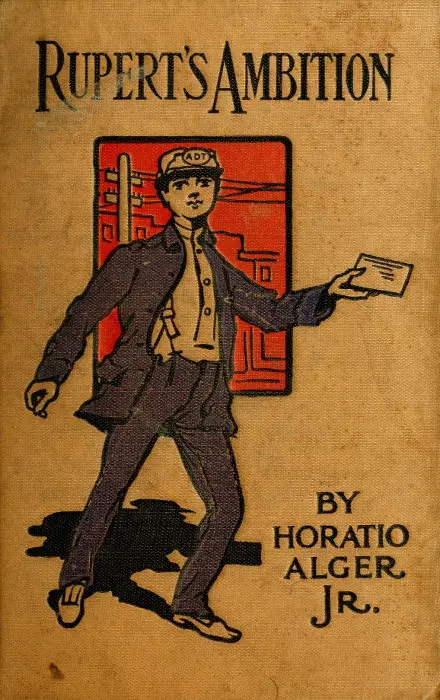
"Rupert's Ambition" by Horatio Alger, Jr. is a novel written in the late 19th century. The story follows a young boy named Rupert Rollins, who faces hardship after losing his job at a dry goods house during a time of economic downturn. Struggling to support his mother and invalid sister, Rupert's journey is one of resilience and determination as he navigates his way through various challenges in search of employment and stability. At the start of the narrative, Rupert experiences the shock of being discharged from his job, which is a primary source of income for his family. He is deeply concerned about their future, particularly as his sister's health adds to the family's challenges. Despite the grim prospect of unemployment, Rupert displays a commendable spirit of optimism and resourcefulness. The opening sections introduce themes of kindness, the effects of economic hardship, and the strength of familial bonds, setting a poignant tone for Rupert's pursuit of a better life.
Introduction adapted from the source catalogue; source summaries may be automatically generated.
Free to read · English · 57,140 words · No account needed
MAKE TIME FOR A GOOD BOOK
On by default. Untick to stop anonymous reading totals. Each page counts after 10 seconds in view. How this works.
Anonymous counting is on unless you have switched it off.
About ten o'clock in the forenoon Clarence Clayton entered the Somerset Hotel and looked about for the Orange County farmer. Clayton was clean shaved, his shoes were brilliantly polished, and there was a rose in his buttonhole.
"My dear old friend," he said, with effusion, as he espied Josiah Onthank sitting near the door, "I hope you are feeling in the best of health this fine morning."
"Thank you, Mr. Clayton. I feel pooty smart. Why, you're all dressed up. You look as if you'd just come out of a bandbox."
"Men in my position have to be particular about their appearance. Now if I was in the country I wouldn't care, but I have an appointment with Mr. Vanderbilt this morning, and, of course, I must be particular."
"Do you know Mr. Vanderbilt?" asked Mr. Onthank, considerably
impressed.
"Intimately. I dined at his house last week."
Mr. Clayton took in with a quick glance the dress and outward appearance of his rustic friend. Mr. Onthank certainly did not look as if he had just stepped out of a bandbox. His clothing was dusty, and his shoes were innocent of blacking.
"My friend," he said, "if you will pardon the suggestion, it would be well to have your boots blacked."
"I didn't bring any blacking with me," responded the farmer. "Besides, I had 'em blacked last Sunday."
"As you are going to Wall Street, and may meet some of the prominent people of the city, it will be well to have them blacked this morning. Leave it to me. I will find a boy who will do it for a nickel."
"I always black my own boots when I am to home."
"In the city we employ bootblacks."
"Five cents seems pooty good pay for blackin' boots. It don't take
more'n five minutes."
"Oh, well, the poor boys need the money. I look upon it in that light."
"To be sure!" and Mr. Onthank began to look upon his companion as a very
kind-hearted man.
Out in the street they came upon a boy who was quite ready to undertake the job. Before he got through, however, he began to think there wasn't much profit in it. The farmer's shoes were of cowhide, and absorbed a great deal of blacking. Still the boy was an expert, and made them look better than they ever had before.
"That's worth a dime," he said.
"I won't pay it," declared the farmer. "Ten cents for blackin' a pair of boots! Why it's ridiculous!"
There might have been an angry discussion, but Clayton drew a dime from his pocket and put it into the boy's outstretched palm.
Your reading position is saved on this browser. Take it to another device with a library code. Reading pages adapt to text, rather than matching a printed edition.
William Rounseville Alger & Horatio, Jr. Alger

William Rounseville Alger & Horatio, Jr. Alger

Horatio, Jr. Alger

Horatio, Jr. Alger
BEHIND THE BOOK
This eBook is for the use of anyone anywhere in the United States and most other parts of the world at no cost and with almost no restrictions whatsoever. You may copy it, give it away or re-use it under the terms of the Project Gutenberg License included with this eBook or online at www.gutenberg.org. If you are not located in the United States, you will have to check the laws of the country where you are located before using this eBook. Read the source licence.
The original source file, including credits and licence, is retained by this library. Request an original-format copy at no charge. Please include the book title and Project Gutenberg identifier #54621.
KEEP YOUR CURIOSITY GOING
Coulson Kernahan

Maurice Baring
Frances Wright
Cécile Tormay

Frederic Jesup Stimson

W. H. P. (William Henry Pope) Jarvis