
Two Women, 1862; a Poem
Constance Fenimore Woolson
THE CLASSIC COLLECTION · 1880
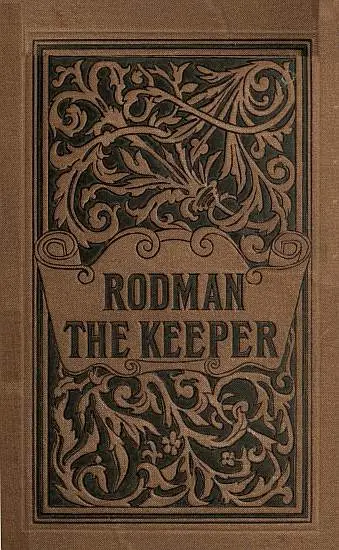
"Rodman the Keeper: Southern Sketches" by Constance Fenimore Woolson is a collection of character-driven sketches written in the late 19th century. The book provides a vivid portrayal of life in the post-Civil War South, particularly focusing on the somber reflections of its main character, John Rodman, who serves as the keeper of a national cemetery. As he navigates his solitude and encounters the memories of the soldiers buried there, the sketches explore themes of loss, duty, and the complex beauty of the Southern landscape." "At the start of the narrative, we are introduced to John Rodman sitting in the doorway of his cottage, reflecting on both his duties as a keeper of the graves of fallen soldiers and the isolation that accompanies them. The cemetery itself is enriched with the memories and stories of those who laid down their lives for their causes, and Rodman is portrayed as a man weighed by both the weight of history and his singular existence amid the ruins of pride and loss. His interactions with local townsfolk reveal an underlying tension between North and South, punctuated by moments of self-reflection and humanity as he tends to the graves of the fourteen thousand soldiers committed to rest there. This opening sets the stage for Rodman's journey through memories, melancholy, and a supreme sense of obligation to honor the fallen."
Introduction adapted from the source catalogue; source summaries may be automatically generated.
Free to read · English · 114,280 words · No account needed
MAKE TIME FOR A GOOD BOOK
On by default. Untick to stop anonymous reading totals. Each page counts after 10 seconds in view. How this works.
Anonymous counting is on unless you have switched it off.
This librarian is Honor Dooris, and it is to her Stephen Wainwright now presents his sheets of manuscript.
"You think I have an odd handwriting?" he said.
"Yes," answered the librarian; "I should not think you would be proud of
it."
"I am not."
"Then why not try to change it? I might lend you my old copies--those I used myself and still use. Here they are." And she took from her desk a number of small slips of paper, on which were written, in a round hand with many flourishes and deeply-shaded lines, moral sentences, such as "He that would thrive must rise at five"; "Never put off till to-morrow what you can do to-day"; and others of like hilarious nature.
"Thanks," said Stephen; "I will take the copies, and try--to improve."
The librarian then began to look through the abstract, and Stephen did
not break the silence.
"Would it not be a good idea for me to read it aloud?" she said, after a while. "I can always remember what I have read aloud."
"As you please," replied Stephen.
So the librarian began, in a sweet voice, with a strong Southern accent, and read aloud, with frowning forehead and evidently but half-comprehension, the chemical abstract which Stephen had prepared.
"It is very hard," she said, looking up at him, with a deep furrow
between her eyebrows.
"But not too hard for a person of determined mind."
The person of determined mind answered to the spur immediately, bent forward over the desk again, and went on reading. Stephen, motionless, sat with his eyes fixed on a spider's web high up in the window. When, too deeply puzzled to go on, the girl stopped and asked a question, he answered it generally without removing his eyes from the web. When once or twice she pushed the manuscript away and leaned back in her chair, impotent and irritated, he took the sheets from her hand, explained the hard parts with clear precision, gave them back, and motioned to her to continue. She read on for half an hour. When she finished, there was a flush on her cheeks, the flush of annoyance and fatigue.
"I must go now," she said, placing the manuscript in her desk, and taking down her broad-brimmed Leghorn hat, yellow as old corn, adorned with a plain band of white ribbon.
"You are not, of course, foiled by a little chemistry," said Wainwright, rising also, and looking at her without change of expression.
"Oh, no," she answered; but still she crossed the room and opened the door, as if rather glad to escape, and, with a parting salutation, left him.
Your reading position is saved on this browser. Take it to another device with a library code. Reading pages adapt to text, rather than matching a printed edition.
Constance Fenimore Woolson

Constance Fenimore Woolson

Constance Fenimore Woolson
Constance Fenimore Woolson
BEHIND THE BOOK
This eBook is for the use of anyone anywhere in the United States and most other parts of the world at no cost and with almost no restrictions whatsoever. You may copy it, give it away or re-use it under the terms of the Project Gutenberg License included with this eBook or online at www.gutenberg.org. If you are not located in the United States, you will have to check the laws of the country where you are located before using this eBook. Read the source licence.
The original source file, including credits and licence, is retained by this library. Request an original-format copy at no charge. Please include the book title and Project Gutenberg identifier #33813.
KEEP YOUR CURIOSITY GOING
Coulson Kernahan

Maurice Baring
Frances Wright
Cécile Tormay

Frederic Jesup Stimson

W. H. P. (William Henry Pope) Jarvis