
Two Women, 1862; a Poem
Constance Fenimore Woolson
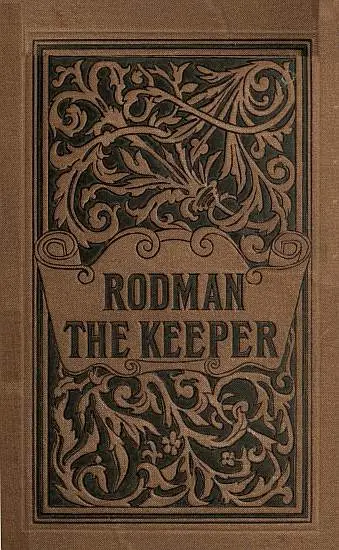
THE CLASSIC COLLECTION · 1880
"Rodman the Keeper: Southern Sketches" by Constance Fenimore Woolson is a collection of character-driven sketches written in the late 19th century. The book provides a vivid portrayal of life in the post-Civil War South, particularly focusing on the somber reflections of its main character, John Rodman, who serves as the keeper of a national cemetery. As he navigates his solitude and encounters the memories of the soldiers buried there, the sketches explore themes of loss, duty, and the complex beauty of the Southern landscape." "At the start of the narrative, we are introduced to John Rodman sitting in the doorway of his cottage, reflecting on both his duties as a keeper of the graves of fallen soldiers and the isolation that accompanies them. The cemetery itself is enriched with the memories and stories of those who laid down their lives for their causes, and Rodman is portrayed as a man weighed by both the weight of history and his singular existence amid the ruins of pride and loss. His interactions with local townsfolk reveal an underlying tension between North and South, punctuated by moments of self-reflection and humanity as he tends to the graves of the fourteen thousand soldiers committed to rest there. This opening sets the stage for Rodman's journey through memories, melancholy, and a supreme sense of obligation to honor the fallen."
Introduction adapted from the source catalogue; source summaries may be automatically generated.
Free to read · English · 114,280 words · No account needed
MAKE TIME FOR A GOOD BOOK
On by default. Untick to stop anonymous reading totals. Each page counts after 10 seconds in view. How this works.
Anonymous counting is on unless you have switched it off.
The long years come and go,
And the Past,
The sorrowful, splendid Past,
With its glory and its woe,
Seems never to have been.
--Seems never to have been?
O somber days and grand,
How ye crowd back once more,
Seeing our heroes' graves are green
By the Potomac and the Cumberland,
And in the valley of the Shenandoah!
When we remember how they died,--
In dark ravine and on the mountain-side,
In leaguered fort and fire-encircled town,
And where the iron ships went down,--
How their dear lives were spent
In the weary hospital-tent,
In the cockpit's crowded hive,
----it seems
Ignoble to be alive!
"Keeper of what? Keeper of the dead. Well, it is easier to keep the dead than the living; and as for the gloom of the thing, the living among whom I have been lately were not a hilarious set."
John Rodman sat in the doorway and looked out over his domain. The little cottage behind him was empty of life save himself alone. In one room the slender appointments provided by Government for the keeper, who being still alive must sleep and eat, made the bareness doubly bare; in the other the desk and the great ledgers, the ink and pens, the register, the loud-ticking clock on the wall, and the flag folded on a shelf, were all for the kept, whose names, in hastily written, blotted rolls of manuscript, were waiting to be transcribed in the new red-bound ledgers in the keeper's best handwriting day by day, while the clock was to tell him the hour when the flag must rise over the mounds where reposed the bodies of fourteen thousand United States soldiers--who had languished where once stood the prison-pens, on the opposite slopes, now fair and peaceful in the sunset; who had fallen by the way in long marches to and fro under the burning sun; who had fought and died on the many battle-fields that reddened the beautiful State, stretching from the peaks of the marble mountains in the smoky west down to the sea-islands of the ocean border. The last rim of the sun's red ball had sunk below the horizon line, and the western sky glowed with deep rose-color, which faded away above into pink, into the salmon-tint, into shades of that far-away heavenly emerald which the brush of the earthly artist can never reproduce, but which is found sometimes in the iridescent heart of the opal. The small town, a mile distant, stood turning its back on the cemetery; but the keeper could see the pleasant, rambling old mansions, each with its rose-garden and neglected outlying fields, the empty negro quarters falling into ruin, and everything just as it stood when on that April morning the first gun was fired on Sumter; apparently not a nail added, not a brushful of paint applied, not a fallen brick replaced, or latch or lock repaired. The keeper had noted these things as he strolled through the town, but not with surprise; for he had seen the South in its first estate, when, fresh, strong, and fired with enthusiasm, he, too, had marched away from his village home with the colors flying above and the girls waving their handkerchiefs behind, as the regiment, a thousand strong, filed down the dusty road. That regiment, a weak, scarred two hundred, came back a year later with lagging step and colors tattered and scorched, and the girls could not wave their handkerchiefs, wet and sodden with tears. But the keeper, his wound healed, had gone again; and he had seen with his New England eyes the magnificence and the carelessness of the South, her splendor and negligence, her wealth and thriftlessness, as through Virginia and the fair Carolinas, across Georgia and into sunny Florida, he had marched month by month, first a lieutenant, then captain, and finally major and colonel, as death mowed down those above him, and he and his good conduct were left. Everywhere magnificence went hand in hand with neglect, and he had said so as chance now and then threw a conversation in his path.
Your reading position is saved on this browser. Take it to another device with a library code. Reading pages adapt to text, rather than matching a printed edition.
Constance Fenimore Woolson

Constance Fenimore Woolson

Constance Fenimore Woolson
Constance Fenimore Woolson
BEHIND THE BOOK
This eBook is for the use of anyone anywhere in the United States and most other parts of the world at no cost and with almost no restrictions whatsoever. You may copy it, give it away or re-use it under the terms of the Project Gutenberg License included with this eBook or online at www.gutenberg.org. If you are not located in the United States, you will have to check the laws of the country where you are located before using this eBook. Read the source licence.
The original source file, including credits and licence, is retained by this library. Request an original-format copy at no charge. Please include the book title and Project Gutenberg identifier #33813.
KEEP YOUR CURIOSITY GOING
Coulson Kernahan

Maurice Baring
Frances Wright
Cécile Tormay

Frederic Jesup Stimson

W. H. P. (William Henry Pope) Jarvis