
Two Women, 1862; a Poem
Constance Fenimore Woolson
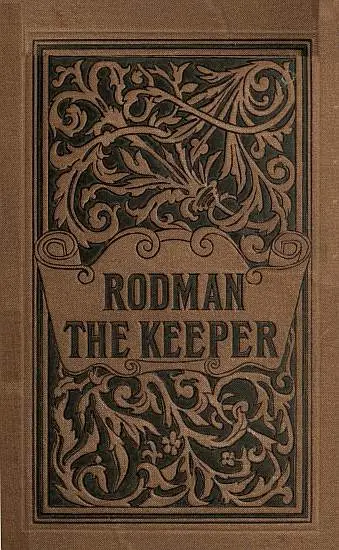
THE CLASSIC COLLECTION · 1880
"Rodman the Keeper: Southern Sketches" by Constance Fenimore Woolson is a collection of character-driven sketches written in the late 19th century. The book provides a vivid portrayal of life in the post-Civil War South, particularly focusing on the somber reflections of its main character, John Rodman, who serves as the keeper of a national cemetery. As he navigates his solitude and encounters the memories of the soldiers buried there, the sketches explore themes of loss, duty, and the complex beauty of the Southern landscape." "At the start of the narrative, we are introduced to John Rodman sitting in the doorway of his cottage, reflecting on both his duties as a keeper of the graves of fallen soldiers and the isolation that accompanies them. The cemetery itself is enriched with the memories and stories of those who laid down their lives for their causes, and Rodman is portrayed as a man weighed by both the weight of history and his singular existence amid the ruins of pride and loss. His interactions with local townsfolk reveal an underlying tension between North and South, punctuated by moments of self-reflection and humanity as he tends to the graves of the fourteen thousand soldiers committed to rest there. This opening sets the stage for Rodman's journey through memories, melancholy, and a supreme sense of obligation to honor the fallen."
Introduction adapted from the source catalogue; source summaries may be automatically generated.
Free to read · English · 114,280 words · No account needed
MAKE TIME FOR A GOOD BOOK
On by default. Untick to stop anonymous reading totals. Each page counts after 10 seconds in view. How this works.
Anonymous counting is on unless you have switched it off.
Adelaide Kellinger had studied her cousin for years. The result of her studies was as follows: She paid, outwardly, no especial attention to him, and she remained perfectly natural herself. This last was a difficult task. If he asked a question, she answered with the plainest truth she could imagine; if he asked an opinion, she gave the one she would have given to her most intimate woman-friend (if she had had one); if she was tired, she did not conceal it; if she was out of temper, she said disagreeable, sharp-edged things. She was, therefore, perfectly natural? On the contrary, she was extremely unnatural. A charming woman does not go around at the present day in a state of nature mentally any more than physically; politeness has become a necessary clothing to her. Adelaide Kellinger never spoke to her cousin without a little preceding pause, during which she thought over what she was going to say; and, as Stephen was slow to speak also, their conversations were ineffective, judged from a dramatic point of view. But Adelaide judged by certain broad facts, and left drama to others. Stephen liked to be with her; and he was a creature of habit. She intended that he should continue to like to be with her; and she relied upon that habit.
Afar off, counting by civilization, not by parallels of latitude, there are mountains in this country of ours, east of the Mississippi, as purple-black, wild, and pathless, some of them, as the peaks of the Western sierras. These mountains are in the middle South. A few roads climb from the plain below into their presence, and cautiously follow the small rivers that act as guides--a few roads, no more. Here and there are villages, or rather farm-centers, for the soil is fertile wherever it is cleared; but the farms are old and stationary: they do not grow, stretch out a fence here, or a new field there; they remain as they were when the farmers' sons were armed and sent to swell George Washington's little army. To this day the farmers' wives spin and weave, and dye and fashion, with their own hands, each in her own house, the garments worn by all the family; to this day they have seen nothing move by steam. The locomotive waits beyond the peaks; the water-mill is the highest idea of force. Half a mile from the village of Ellerby stands one of these water-mills; to it come farmers and farmers' boys on horseback, from miles around, with grist to be ground. And sometimes the women come too, riding slowly on old, pacing cart-horses, their faces hidden in the tubes of deep, long sun-bonnets, their arms moving up and down, up and down, as the old horse stretches his head to his fore-feet and back with every step. When two farm-women meet at the mill-block there is much talking in the chipped-off mountain dialect; but they sit on their horses without dismounting, strong, erect, and not uncomely, with eyes like eagles', yet often toothless in their prime, in the strange rural-American way, which makes one wonder what it was in the life of the negro slaves which gives their grandchildren now such an advantage in this over the descendants alike of the whites of Massachusetts Bay and the plantations of the Carolinas. When the farmers meet at the mill-block, they dismount and sit down in a row, not exactly on their heels, but nearly so: in reality, they sit, or squat, on their feet, nothing of them touching the ground save the soles of their heavy shoes, the two tails of their blue homespun coats being brought round and held in front. In this position they whittle and play with their whips, or eat the giant apples of the mountains. Large, iron-framed men, they talk but slowly; they are content apparently to go without those finer comprehensions and appreciations which other men covet; they are content to be almost as inarticulate as their horses--honest beasts, with few differences save temper and color of hide. Across the road from the mill, but within sound and sight of its wheel, is Ellerby Library. It is a small wooden building, elevated about five feet above the ground, on four corner supports, like a table standing on four legs. Daylight shines underneath; and Northern boys, accustomed to close foundations, would be seized with temptations to run under and knock on the floor: the mountain boys who come to the mill, however, are too well acquainted with the peculiarities of the library to find amusement in them; and, besides, this barefooted cavalry cherishes, under its homespun jacket, an awkward respect for the librarian.
Your reading position is saved on this browser. Take it to another device with a library code. Reading pages adapt to text, rather than matching a printed edition.
Constance Fenimore Woolson

Constance Fenimore Woolson

Constance Fenimore Woolson
Constance Fenimore Woolson
BEHIND THE BOOK
This eBook is for the use of anyone anywhere in the United States and most other parts of the world at no cost and with almost no restrictions whatsoever. You may copy it, give it away or re-use it under the terms of the Project Gutenberg License included with this eBook or online at www.gutenberg.org. If you are not located in the United States, you will have to check the laws of the country where you are located before using this eBook. Read the source licence.
The original source file, including credits and licence, is retained by this library. Request an original-format copy at no charge. Please include the book title and Project Gutenberg identifier #33813.
KEEP YOUR CURIOSITY GOING
Coulson Kernahan

Maurice Baring
Frances Wright
Cécile Tormay

Frederic Jesup Stimson

W. H. P. (William Henry Pope) Jarvis