
Two Women, 1862; a Poem
Constance Fenimore Woolson
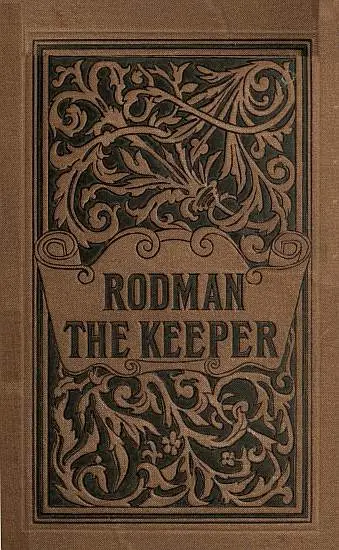
THE CLASSIC COLLECTION · 1880
"Rodman the Keeper: Southern Sketches" by Constance Fenimore Woolson is a collection of character-driven sketches written in the late 19th century. The book provides a vivid portrayal of life in the post-Civil War South, particularly focusing on the somber reflections of its main character, John Rodman, who serves as the keeper of a national cemetery. As he navigates his solitude and encounters the memories of the soldiers buried there, the sketches explore themes of loss, duty, and the complex beauty of the Southern landscape." "At the start of the narrative, we are introduced to John Rodman sitting in the doorway of his cottage, reflecting on both his duties as a keeper of the graves of fallen soldiers and the isolation that accompanies them. The cemetery itself is enriched with the memories and stories of those who laid down their lives for their causes, and Rodman is portrayed as a man weighed by both the weight of history and his singular existence amid the ruins of pride and loss. His interactions with local townsfolk reveal an underlying tension between North and South, punctuated by moments of self-reflection and humanity as he tends to the graves of the fourteen thousand soldiers committed to rest there. This opening sets the stage for Rodman's journey through memories, melancholy, and a supreme sense of obligation to honor the fallen."
Introduction adapted from the source catalogue; source summaries may be automatically generated.
Free to read · English · 114,280 words · No account needed
MAKE TIME FOR A GOOD BOOK
On by default. Untick to stop anonymous reading totals. Each page counts after 10 seconds in view. How this works.
Anonymous counting is on unless you have switched it off.
"We have no such shiftless ways," he would remark, after he had furtively supplied a prisoner with hard-tack and coffee.
"And no such grand ones either," Johnny Reb would reply, if he was a man of spirit; and generally he was.
The Yankee, forced to acknowledge the truth of this statement, qualified it by observing that he would rather have more thrift with a little less grandeur; whereupon the other answered that he would not; and there the conversation rested. So now ex-Colonel Rodman, keeper of the national cemetery, viewed the little town in its second estate with philosophic eyes. "It is part of a great problem now working itself out; I am not here to tend the living, but the dead," he said.
Whereupon, as he walked among the long mounds, a voice seemed to rise from the still ranks below: "While ye have time, do good to men," it said. "Behold, we are beyond your care." But the keeper did not heed.
This still evening in early February he looked out over the level waste. The little town stood in the lowlands; there were no hills from whence cometh help--calm heights that lift the soul above earth and its cares; no river to lead the aspirations of the children outward toward the great sea. Everything was monotonous, and the only spirit that rose above the waste was a bitterness for the gained and sorrow for the lost cause. The keeper was the only man whose presence personated the former in their sight, and upon him therefore, as representative, the bitterness fell, not in words, but in averted looks, in sudden silences when he approached, in withdrawals and avoidance, until he lived and moved in a vacuum; wherever he went there was presently no one save himself; the very shop-keeper who sold him sugar seemed turned into a man of wood, and took his money reluctantly, although the shilling gained stood perhaps for that day's dinner. So Rodman withdrew himself, and came and went among them no more; the broad acres of his domain gave him as much exercise as his shattered ankle could bear; he ordered his few supplies by the quantity, and began the life of a solitary, his island marked out by the massive granite wall with which the United States Government has carefully surrounded those sad Southern cemeteries of hers; sad, not so much from the number of the mounds representing youth and strength cut off in their bloom, for that is but the fortune of war, as for the complete isolation which marks them. "Strangers in a strange land" is the thought of all who, coming and going to and from Florida, turn aside here and there to stand for a moment among the closely ranged graves which seem already a part of the past, that near past which in our hurrying American life is even now so far away. The Government work was completed before the keeper came; the lines of the trenches were defined by low granite copings, and the comparatively few single mounds were headed by trim little white boards bearing generally the word "Unknown," but here and there a name and an age, in most cases a boy from some far-away Northern State; "twenty-one," "twenty-two," said the inscriptions; the dates were those dark years among the sixties, measured now more than by anything else in the number of maidens widowed in heart, and women widowed indeed, who sit still and remember, while the world rushes by. At sunrise the keeper ran up the stars and stripes; and so precise were his ideas of the accessories belonging to the place, that from his own small store of money he had taken enough, by stinting himself, to buy a second flag for stormy weather, so that, rain or not, the colors should float over the dead. This was not patriotism so called, or rather miscalled, it was not sentimental fancy, it was not zeal or triumph; it was simply a sense of the fitness of things, a conscientiousness which had in it nothing of religion, unless indeed a man's endeavor to live up to his own ideal of his duty be a religion. The same feeling led the keeper to spend hours in copying the rolls. "John Andrew Warren, Company G, Eighth New Hampshire Infantry," he repeated, as he slowly wrote the name, giving "John Andrew" clear, bold capitals and a lettering impossible to mistake; "died August 15, 1863, aged twenty-two years. He came from the prison-pen yonder, and lies somewhere in those trenches, I suppose. Now then, John Andrew, don't fancy I am sorrowing for you; no doubt you are better off than I am at this very moment. But none the less, John Andrew, shall pen, ink, and hand do their duty to you. For that I am here."
Your reading position is saved on this browser. Take it to another device with a library code. Reading pages adapt to text, rather than matching a printed edition.
Constance Fenimore Woolson

Constance Fenimore Woolson

Constance Fenimore Woolson
Constance Fenimore Woolson
BEHIND THE BOOK
This eBook is for the use of anyone anywhere in the United States and most other parts of the world at no cost and with almost no restrictions whatsoever. You may copy it, give it away or re-use it under the terms of the Project Gutenberg License included with this eBook or online at www.gutenberg.org. If you are not located in the United States, you will have to check the laws of the country where you are located before using this eBook. Read the source licence.
The original source file, including credits and licence, is retained by this library. Request an original-format copy at no charge. Please include the book title and Project Gutenberg identifier #33813.
KEEP YOUR CURIOSITY GOING
Coulson Kernahan

Maurice Baring
Frances Wright
Cécile Tormay

Frederic Jesup Stimson

W. H. P. (William Henry Pope) Jarvis