THE CLASSIC COLLECTION✦An outlaw’s diary: the CommuneCLASSIC FREE BOOKS
An outlaw’s diary: the Commune
Cécile Tormay
THE CLASSIC COLLECTION · 1911
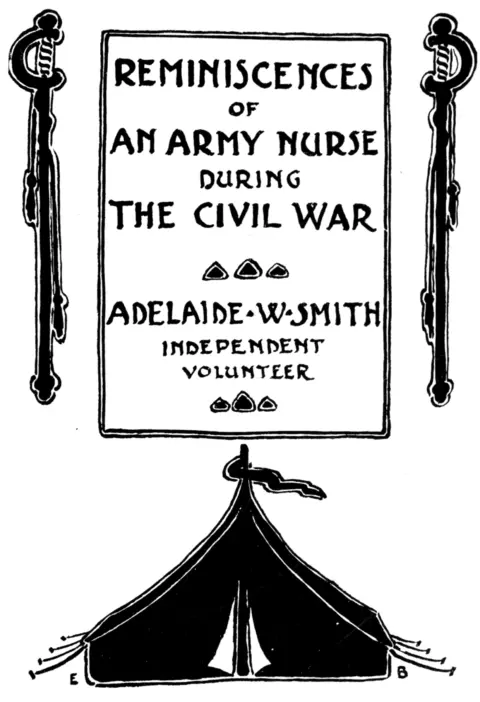
"Reminiscences of an Army Nurse during the Civil War" by Adelaide W. Smith is a historical account likely written in the early 20th century. The narrative reflects on the author's personal experiences as a volunteer nurse during the American Civil War, revealing the hardships and triumphs faced by soldiers and medical staff alike. The text offers a unique perspective into the day-to-day lives and challenges encountered in hospitals and battlefields, shedding light on the often-overlooked contributions of women during this turbulent time in history. At the start of the work, the author sets the stage by expressing her intention to convey the sentiments and atmosphere of the Civil War from a personal viewpoint rather than a historical analysis. She discusses the beginning of the war and the turmoil it caused within families and communities, detailing the early days of the conflict and her transition into nursing soldiers. The opening portion introduces key figures like General Winfield Scott and addresses various events leading up to her service in hospitals, such as early military preparations and the emotional impact of war. Through poignant anecdotes about individual soldiers and nurses, Adelaide W. Smith captures the spirit of sacrifice, camaraderie, and the profound challenges faced by those who cared for the wounded.
Introduction adapted from the source catalogue; source summaries may be automatically generated.
Free to read · English · 52,435 words · No account needed
MAKE TIME FOR A GOOD BOOK
On by default. Untick to stop anonymous reading totals. Each page counts after 10 seconds in view. How this works.
Anonymous counting is on unless you have switched it off.
Point of Rocks Hospital consisted of about a dozen tents, each perhaps fifty feet long, pinned as usual to the ground with wooden pegs. These contained bunks and cots on either side, for about forty or more patients to each tent, and sometimes, when crowded, patients had only straw or hay bags with a blanket on the bare ground, all of which the men nurses were expected to keep in perfect order and cleanliness.
To enter at one end of these tents and see the rows of sick and suffering, despondent men, at once aroused an earnest desire to help them to a little comfort and cheer.
One day, passing through a long ward, I was startled by the sight of a little pinched face with great dark eyes, that looked as if its owner might be about ten or twelve years old. Stepping quickly to the cot I said, “Why, who are you, and where did you come from?”
A feeble voice replied, “I’m Willie, I was here yesterday when you passed, but you didn’t look at me.”
“But where did you come from?”
“I belong to the 37th New Jersey Infantry, in camp a few miles off, and I got sick and they brought me here.”
“How could you be enlisted? How old are you?”
“I’m fifteen. I lied, and swore I was eighteen, and my parents wouldn’t let me go, so I ran away, an’--an’ I guess, I’ll never see mother any more.”
The soldier nurse said he was a typhoid case, with a chance of living, if he could have good care, but that he would not be persuaded to eat. I returned to him at once, saying, “Willie, I hear that you don’t eat anything.”
“I can’t eat.”
“O, but you must. Now, Willie, can’t you think of something you’d
like?”
“Well,” with a suppressed sob, “if I could get anything like mother used to make, perhaps I could.”
“Now tell me, Willie, what it was, what did it look like, and how did
it taste?”
The sick boy’s description was not very clear, but I said cheerfully, “O, I can make that,” and ran off to my tent and soon prepared something which, with a silver cup, spoon, and a tidy serviette, at least looked inviting in contrast with the battered tin cups and plates of camp life. He showed some interest as I said, “Here, Willie, is just what mother used to make.” And he took a few spoonfuls quite cheerfully as I fed him. I asked if it did not taste something like mother made. He thought it did.
Your reading position is saved on this browser. Take it to another device with a library code. Reading pages adapt to text, rather than matching a printed edition.
BEHIND THE BOOK
This eBook is for the use of anyone anywhere in the United States and most other parts of the world at no cost and with almost no restrictions whatsoever. You may copy it, give it away or re-use it under the terms of the Project Gutenberg License included with this eBook or online at www.gutenberg.org. If you are not located in the United States, you will have to check the laws of the country where you are located before using this eBook. Read the source licence.
The original source file, including credits and licence, is retained by this library. Request an original-format copy at no charge. Please include the book title and Project Gutenberg identifier #74812.
KEEP YOUR CURIOSITY GOING
Cécile Tormay

Moritz Busch
John L. Ransom
Frances Wright
Cécile Tormay

Mabel Potter Daggett