THE CLASSIC COLLECTION✦An outlaw’s diary: the CommuneCLASSIC FREE BOOKS
An outlaw’s diary: the Commune
Cécile Tormay
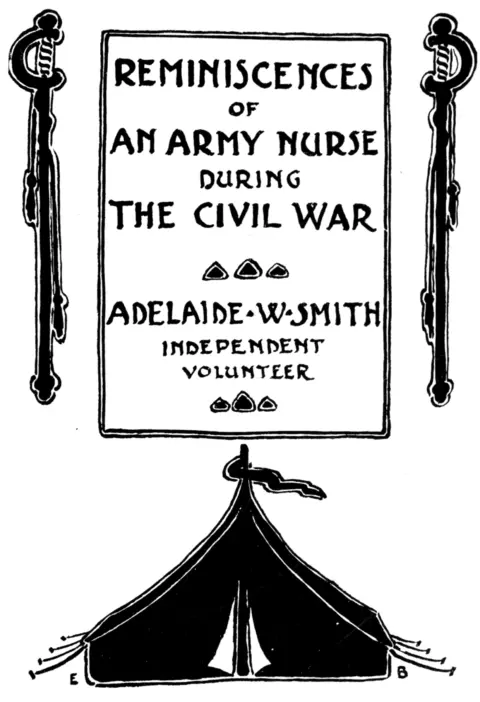
THE CLASSIC COLLECTION · 1911
"Reminiscences of an Army Nurse during the Civil War" by Adelaide W. Smith is a historical account likely written in the early 20th century. The narrative reflects on the author's personal experiences as a volunteer nurse during the American Civil War, revealing the hardships and triumphs faced by soldiers and medical staff alike. The text offers a unique perspective into the day-to-day lives and challenges encountered in hospitals and battlefields, shedding light on the often-overlooked contributions of women during this turbulent time in history. At the start of the work, the author sets the stage by expressing her intention to convey the sentiments and atmosphere of the Civil War from a personal viewpoint rather than a historical analysis. She discusses the beginning of the war and the turmoil it caused within families and communities, detailing the early days of the conflict and her transition into nursing soldiers. The opening portion introduces key figures like General Winfield Scott and addresses various events leading up to her service in hospitals, such as early military preparations and the emotional impact of war. Through poignant anecdotes about individual soldiers and nurses, Adelaide W. Smith captures the spirit of sacrifice, camaraderie, and the profound challenges faced by those who cared for the wounded.
Introduction adapted from the source catalogue; source summaries may be automatically generated.
Free to read · English · 52,435 words · No account needed
MAKE TIME FOR A GOOD BOOK
On by default. Untick to stop anonymous reading totals. Each page counts after 10 seconds in view. How this works.
Anonymous counting is on unless you have switched it off.
“Heartstrong South would have his way
Headstrong North had said him nay,
They charged, they struck; both fell, both bled;
Brain rose again ungloved;”
* * * * *
SIDNEY LANIER, Centennial Poem.
It is not my intention to write history, but it seems advisable to mention in a few brief notes or extracts, for the benefit of the present generation, the sentiments held during the Civil War.
When the first Confederate shot was fired upon the United States flag, then floating over Fort Sumter in Charleston Harbor, many months of unrest, foreboding, and apprehension of a coming terror were experienced by the people of the North. This fatal shot caused the separation of hitherto devoted families; fathers and sons were arrayed against each other, some in hate, some in sorrow; and even mothers, wives and sisters shared this unholy animosity. All took pronounced sides with North or South, except the “copperheads,” whom all loyal Northerners despised.
General Winfield Scott, the hero of many a hard fought Mexican battle, though quite superannuated, was still in command of the United States armies. Imperative, supercilious, an austere disciplinarian, usually adorned with all the ornamentation of his rank, with chapeau and white plumes, he was, especially when well mounted, a conspicuous figure, quite justifying his sobriquet of “Fuss and Feathers.”
In consequence of the secession of South Carolina, on December 20th, 1860, General Anderson, commander of the forts of the harbor of Charleston Bay, evacuated Fort Moultrie six days later.
The “Star of the West,” bringing reinforcements, was fired upon by the Confederates, thus preventing the landing of United States troops.
On April 11th, 1861, General Anderson refused an order to surrender to General Beauregard, who, during the 12th and 13th, ordered a furious bombardment from the surrounding forts upon Fort Sumter. Being unprepared for the attack, General Anderson was compelled to capitulate and to take refuge, with his garrison, on ships outside the harbor. On April 14th, 1861, however, he saved the National flag, which is now carefully preserved in the Museum of the War Department at Washington, no casualties having occurred.
The fort was held by the Confederates till the evacuation of
Charleston, February 17th, 1865.
On April 14th, 1865, General Anderson had the happiness to raise the old flag once more, with his own hands, over the demolished fort.
The following extracts from an unpublished letter of John White Chadwick were selected and kindly given me by Mrs. Chadwick.
SOME EXTRACTS FROM AN ACCOUNT OF A TRIP TO CHARLESTON AND BACK ON THE OCCASION OF THE RAISING OF THE FLAG ON FORT SUMTER AFTER THE CIVIL WAR.
“Land, ho!”
Your reading position is saved on this browser. Take it to another device with a library code. Reading pages adapt to text, rather than matching a printed edition.
BEHIND THE BOOK
This eBook is for the use of anyone anywhere in the United States and most other parts of the world at no cost and with almost no restrictions whatsoever. You may copy it, give it away or re-use it under the terms of the Project Gutenberg License included with this eBook or online at www.gutenberg.org. If you are not located in the United States, you will have to check the laws of the country where you are located before using this eBook. Read the source licence.
The original source file, including credits and licence, is retained by this library. Request an original-format copy at no charge. Please include the book title and Project Gutenberg identifier #74812.
KEEP YOUR CURIOSITY GOING
Cécile Tormay

Moritz Busch
John L. Ransom
Frances Wright
Cécile Tormay

Mabel Potter Daggett