THE CLASSIC COLLECTION✦A dead man’s diaryCLASSIC FREE BOOKS
A dead man’s diary
Coulson Kernahan
THE CLASSIC COLLECTION · 1911
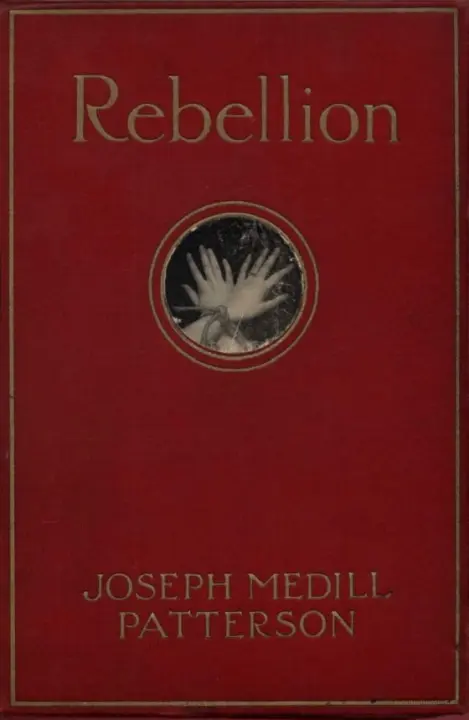
"Rebellion" by Joseph Medill Patterson is a novel written in the early 20th century. The story explores the tumultuous life of Jim Connor, a ward heeler struggling with his alcoholism, strained marriage, and the political dynamics of his job. Through Jim's perspective, it delves into themes of personal failure, the complexities of relationships, and the socio-political environment of the time. At the start of the novel, we are introduced to Jim Connor, enjoying camaraderie in a bar while trying to keep promises to his wife, Georgia. It becomes clear that Jim is trapped in a cycle of drinking, regret, and the fear of confronting Georgia over his late return home for supper. As he reflects on their past and the evolution of their relationship, it is revealed that Jim's alcoholism is a recurring issue that strains their marriage. The opening scenes establish the tone of desperation and discontent that pervades Jim's life, giving readers insight into his conflicted character and the challenges he faces both at home and in the political arena.
Introduction adapted from the source catalogue; source summaries may be automatically generated.
Free to read · English · 59,811 words · No account needed
MAKE TIME FOR A GOOD BOOK
On by default. Untick to stop anonymous reading totals. Each page counts after 10 seconds in view. How this works.
Anonymous counting is on unless you have switched it off.
Stevens called up Georgia's room in the morning to ask how she had slept and she reported, "Well--that is, pretty well," which wasn't true, for she had tossed wretchedly through the night. By careful brushing and buying a shirtwaist she managed to measurably freshen her appearance, though she reached the office with tired eyes and hectic splotches beneath her eyes. Al was there before her waiting with white face.
"Georgia," he began miserably, "I've been hunting the town for you.
Where have you been?"
"Alone."
"You've frightened us half to death. Mother's sick over it."
"You can have Jim in the house, or me, but not both of us."
She would give him no more satisfaction, and he was turning away angry at her obstinacy, when Mason came up to greet her.
"Good morning."
"Good morning."
Al quickly divined that here was the man. It was written in the way he looked at her, and in Georgia's sudden sidelong glance at Al to see if he saw.
"I'd like a word with you," said the brother to the lover, tapping him on the shoulder with studied rudeness, "now."
Stevens didn't understand the situation, but he was properly resentful, and lowered at the stranger. In these subtle days of commerce, finger-tips on collar bones may convey all that was once meant by a glove in the face.
"My brother, Mr. Stevens," she explained. They did not shake hands. Mason was not quite sure from the young fellow's expression just what might happen, but he was sure it had better not happen right there. "Let's get out of the office--and you can have as many words as you want," said he. Georgia arose to go with them.
"No, don't you come," said Stevens.
"I think perhaps it would be better."
"But it wouldn't. You stay here," the man answered with great positiveness. She sank obediently in the chair, to the disgusted amazement of her brother, and let them go alone.
"Were you out with her last night?"
"Yes."
The lad sunk his hand to his coat pocket, his wild young brain aflame with violence and romance and vengeance and the memory of Moxey's sweetheart's uncle who had slain the despoiler of his home. Stevens was near death and he knew it, but he never batted an eye as Al reported later to Moxey.
"I knew it damned well. She said she was alone." His hand tightened on the automatic, pressing down the safety lock, and he pointed the gun, so that he could shoot through his pocket and kill.
"She was, after eleven. I left her then."
"Prove it. You've got to," insultingly.
Your reading position is saved on this browser. Take it to another device with a library code. Reading pages adapt to text, rather than matching a printed edition.
BEHIND THE BOOK
This eBook is for the use of anyone anywhere in the United States and most other parts of the world at no cost and with almost no restrictions whatsoever. You may copy it, give it away or re-use it under the terms of the Project Gutenberg License included with this eBook or online at www.gutenberg.org. If you are not located in the United States, you will have to check the laws of the country where you are located before using this eBook. Read the source licence.
The original source file, including credits and licence, is retained by this library. Request an original-format copy at no charge. Please include the book title and Project Gutenberg identifier #56455.
KEEP YOUR CURIOSITY GOING
Coulson Kernahan

Maurice Baring
Frances Wright
Cécile Tormay

Frederic Jesup Stimson

W. H. P. (William Henry Pope) Jarvis